









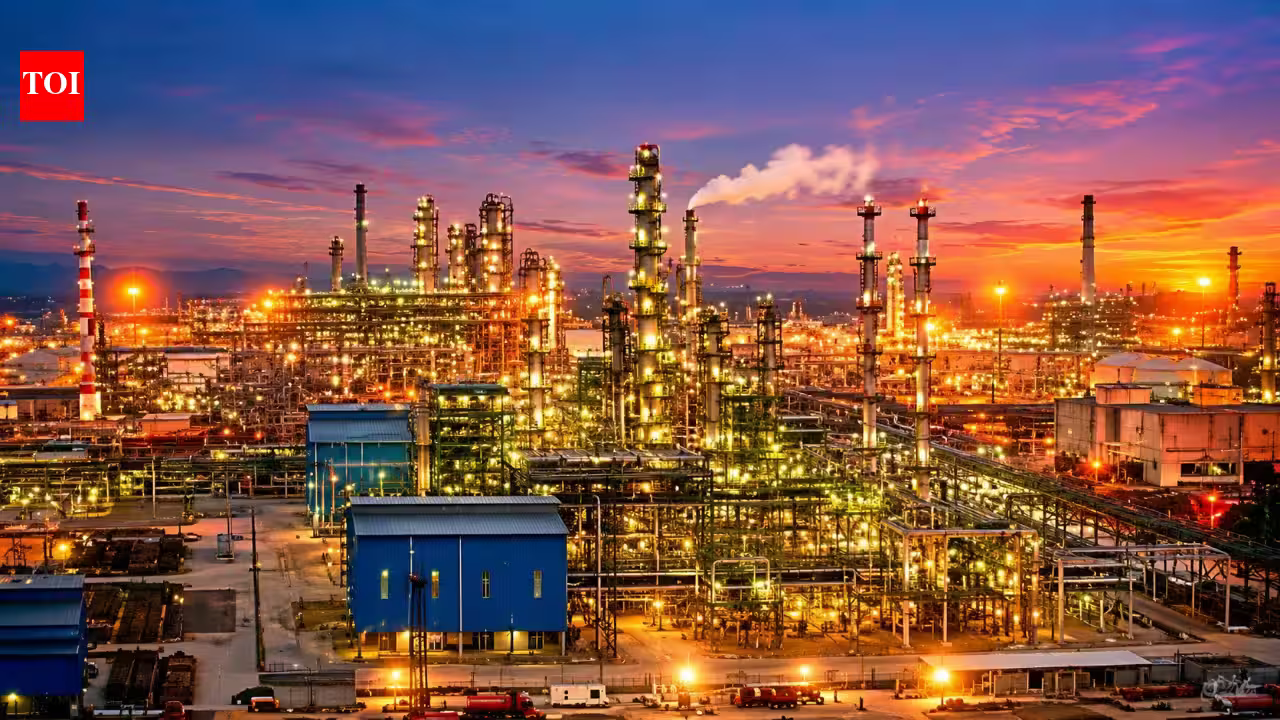
India has implemented a groundbreaking policy by establishing specific production targets for individual public and private-sector refineries and upstream companies. This strategic move aims to fortify the nation’s domestic supply infrastructure, particularly in the aftermath of recent disruptions to imports caused by geopolitical instability in the Middle East. The Ministry of Petroleum and Natural Gas recently issued a directive outlining maximum LPG production levels for a total of 21 refineries and upstream entities.
Collectively, these facilities are now capable of producing an impressive 63,810 tonnes of LPG daily. This figure represents more than double India’s projected domestic LPG production for the fiscal year 2025-26 and accounts for approximately 70% of the country’s daily consumption needs. Crucially, these mandated targets will be activated primarily during periods of supply shortage or disruption, ensuring a robust safety net for the nation’s energy security.
Among the various entities, Reliance Industries’ older refinery has been allocated the highest target, slated to produce up to 18,000 tonnes of LPG per day. Eighteen refineries owned and operated by public-sector oil companies have been collectively tasked with an output of 31,470 tonnes per day. Specifically, Reliance’s 33-million-tonne-a-year Domestic Tariff Area (DTA) refinery in Jamnagar, Gujarat, which supplies products within India, received an 18,000-tonne-per-day target. It is important to note that its 35.2-million-tonne-a-year refinery at the same location, dedicated solely to exports, was not assigned a target under this new framework. Nayara Energy’s 20-million-tonne-a-year refinery in Vadinar has been given a target of 4,480 tonnes per day. Furthermore, gas producers and processors like ONGC and GAIL, which generate LPG from natural gas, have been assigned a combined target of 6,460 tonnes daily.
India’s significant reliance on LPG imports has long been a concern. In 2025-26, the country consumed 33.2 million tonnes of LPG, equating to approximately 91,000 tonnes per day. Domestic production during this period stood at 13.1 million tonnes, or around 35,900 tonnes per day, leaving a substantial gap filled by imports. The remaining 21.3 million tonnes, or roughly 58,400 tonnes daily, were sourced from overseas, meaning over 64% of India’s LPG requirements were met through imports. This vulnerability was starkly exposed when conflicts in the Middle East effectively closed the Strait of Hormuz, a critical maritime route through which India received 90% of its imports, particularly from key suppliers like Saudi Arabia.
In response to this crisis, the government implemented emergency measures in March, instructing refineries to reroute certain streams traditionally used for petrochemical production towards LPG. Initially, sales to industrial and commercial users were temporarily halted, with supplies gradually reinstated thereafter. For households, the interval between LPG refill bookings was extended, and consumers were actively encouraged to transition to piped natural gas, a supply less affected by the regional conflict. These emergency interventions successfully boosted domestic LPG production to approximately 55,000 tonnes per day at the peak of the crisis. As supply conditions improved from mid-June, the emergency orders mandating maximized production were progressively withdrawn. The current order establishes facility-specific production levels, moving beyond reliance solely on ad-hoc emergency directives.
Beyond setting production quotas, the new regulations also obligate refineries and upstream companies to maintain adequate infrastructure for the storage, evacuation, and transport of LPG. They are also required to undertake all technically and economically viable measures to enhance production. The official directive explicitly states, “It is hereby ordered that all public sector, joint venture and private sector oil refining companies, and upstream oil companies shall develop, augment and at all times maintain adequate infrastructure for storage, evacuation and transport of Liquefied Petroleum Gas (LPG) either by itself or through other entities viz railways or road tankers adequate for the specified quantities.” Companies are further mandated to “implement all technically and economically feasible measures and technologies such as naphtha-to-LPG conversion, gasoline-based fluid catalytic cracking unit to petro-fluid catalytic cracking unit, or other upgrades, to maximise LPG production beyond current minimum producible quantities as specified in the Schedule, with intimation to Centre for High Technology or any other authorised agency, whenever such an upgrade is undertaken.” This includes implementing strategies like converting naphtha into LPG and upgrading fluid catalytic cracking units where feasible. The government retains the authority to direct refineries, oil marketing companies, and upstream companies to increase LPG production to a specified level for a defined period if it deems such action necessary to ensure sufficient domestic LPG availability and fair pricing. The ministry emphasized that “if Central Government is of the opinion that it is necessary in public interest to ensure adequate availability, equitable distribution and availability at fair prices of domestic LPG, it may by itself or through Centre for High Technology or any other authorised agency, by order in writing, issue direction to oil refining companies, oil marketing companies and upstream oil companies to ramp up the LPG production levels for such quantity and period specified therein, including compliance with any restrictions on alternative uses of input streams required to produce the LPG.” Companies will be required to comply with these increased production mandates within the timeframe set by the government.
This comprehensive production schedule will undergo biannual reviews, with updates published on January 1 and July 1 of each year. These adjustments may incorporate LPG production from newly established refineries and upstream companies, as well as additional output from existing facilities resulting from infrastructure enhancements, technological advancements, or improvements in evacuation, supply, transport, or distribution capabilities. This new framework represents a proactive and structured approach, built upon the lessons learned from the emergency measures implemented during the Middle East crisis, where household LPG supplies were prioritized and industrial and commercial users faced restrictions. India has now established a systematic mechanism to ensure refineries and upstream companies can be directed to maintain or increase LPG production whenever supply disruptions threaten national energy security.