








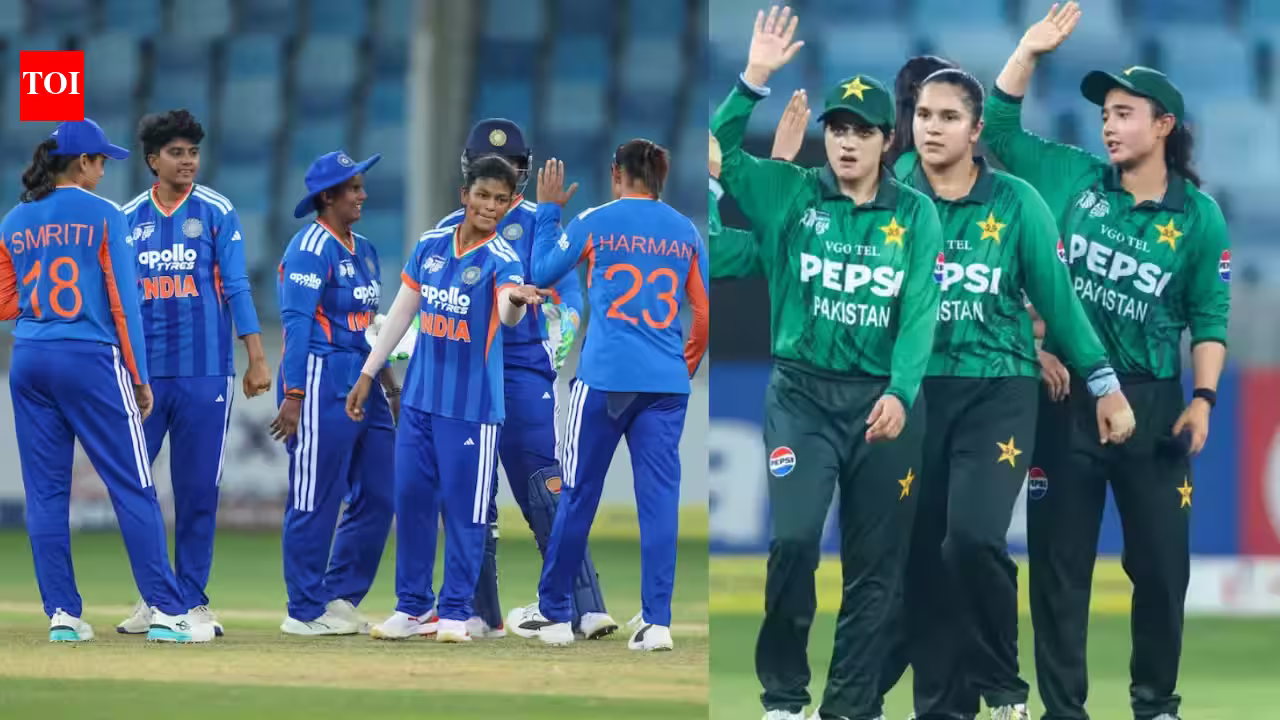
DUBAI – The contrast between the scorecard at the Dubai International Stadium and the post-match sentiments emerging from the Pakistan camp was nothing short of surreal. In a high-stakes Women’s Asia Cup clash that saw India dismantle Pakistan with clinical precision, the gap between reality and rhetoric reached an all-time high.
While India celebrated a thumping seven-wicket victory—a performance that firmly established their dominance—Pakistan mentor Wahab Riaz opted to defy the optics, doubling down on his assertion that his squad remains the “best side” in the tournament.
A Total Collapse: The Statistical Nightmare
The contest itself was a one-sided affair that lasted just over 26 overs in total. Pakistan, batting first, produced an innings that can only be described as a complete systematic failure. The batting lineup, which had aspirations of challenging the tournament favorites, crumbled under the pressure applied by India’s spin-heavy attack.
The tone was set early when Shafali Verma bowled Muneeba Ali for 13, triggering a procession that the Pakistani middle order proved incapable of stopping. The young duo of Shree Charani and Prema Rawat proved to be the architects of Pakistan’s destruction. Charani claimed a ruthless 3/7, while Rawat matched the intensity with figures of 3/9. Deepti Sharma provided the finishing blow, chipping in with 2/5.
By the time the final wicket fell in the 19th over, Pakistan had been bundled out for a staggering 55 runs. It was not just a defeat; it was a record-breaking collapse, marking Pakistan’s lowest-ever total in T20 International history. The previous nadir—63 all out against India in 2012—was comfortably surpassed, leaving the team with deep, structural questions to answer.
India’s response was a formality. They required only 8.4 overs to reach the target, losing three wickets in the process. Captain Harmanpreet Kaur steered the chase home with an unbeaten 18, ensuring that the result was never in doubt.
Riaz Defies the Narrative
In the immediate aftermath of the loss, the expectation was a sobering critique of the team’s performance. Instead, Wahab Riaz delivered a masterclass in optimism. Despite his side now requiring a victory against Hong Kong to merely keep their semifinal hopes alive, Riaz remained steadfast in his belief regarding the team’s championship potential.
“I believe that all the players in our team are very skillful and they just need to trust themselves,” Riaz told reporters. “I still believe Pakistan is the best side in this Asia Cup to lift the trophy because the conditions really suit us.”
For the neutral observer, the statement felt disconnected from the carnage on the pitch. Yet, Riaz’s perspective seems rooted in a long-term vision—one that prioritizes the integration of new blood over the preservation of veteran stability.
The Conflict Over Squad Selection
The tournament has been marked by controversy regarding Pakistan’s roster composition. Former captain Sana Mir had previously voiced concerns over the management’s decision to drop seven experienced players ahead of the Asia Cup, suggesting that such wholesale changes were disruptive to the team’s rhythm.
Riaz, however, was uncompromising in his rebuttal. He framed the selection as a necessary evolution for a team that had stagnated on the international stage.
“Sana Mir has her own opinion. I have nothing to do with that opinion,” Riaz retorted. “We have made changes with the future in mind. The players who were playing before had played a lot of World Cups and Asia Cups, but we weren’t getting the results. So it was time to go with new faces and bring new girls into the mix to build the team for the upcoming tournaments.”
Riaz’s defense of the selection process was blunt: he argued that the previous core had simply failed to deliver the required returns. Whether the gamble on youth will pay off remains to be seen, but the immediate pressure on the current squad is immense.
The Path Forward
The win propelled India to six points, securing their spot in the semifinals with a flawless record. They have looked every bit the title favorites, showcasing versatility in their bowling and composure in their chases.
For Pakistan, the path is significantly narrower. Sitting on two points, they face a must-win scenario against Hong Kong. Should they fail to replicate the form Riaz insists they possess, their exit from the tournament will be swift and painful.
The mentor’s confidence may be a way to shield his young squad from the mental toll of a heavy defeat, but the numbers suggest that the “parallel universe” Pakistan is currently inhabiting needs to align with the reality of international cricket very quickly if they are to salvage anything from this Asia Cup campaign. Whether this is an exercise in misplaced faith or a calculated long-term strategy, the next 48 hours will reveal if Pakistan can translate their mentor’s words into a winning performance.
Disclaimer: This content is auto-generated and paraphrased.
Source: Read Original News