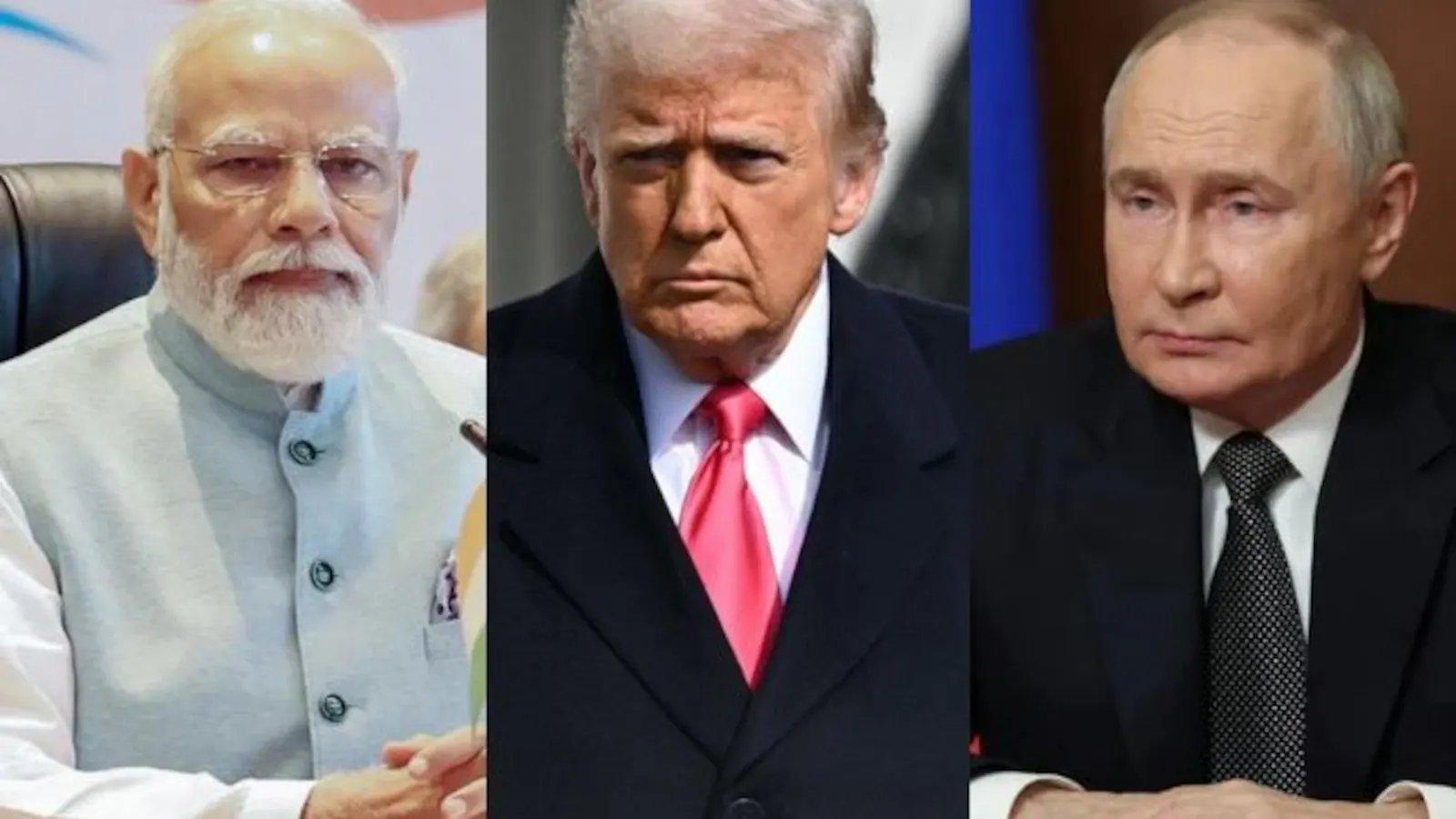







Formerly Iran’s second-largest oil customer, Indian financial institutions were forced to withhold crude oil payments following the 2018 US sanctions.
In 2018, in his first term as US President, Donald Trump withdrew from his predecessor Barack Obama’s nuclear accord with Iran and re-imposed economic sanctions on the Islamic republic, trapping its oil money.

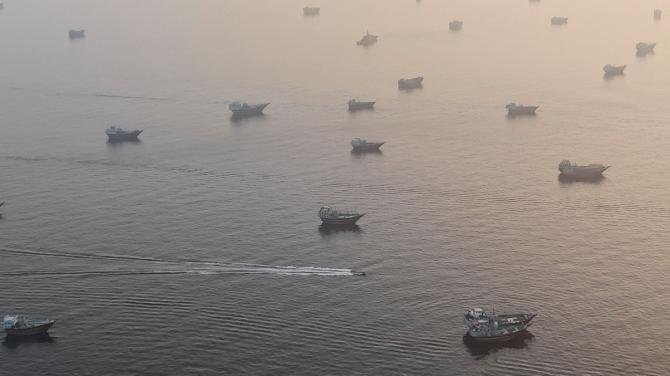
IMAGE: A drone view shows vessels in the Strait of Hormuz, as seen from Musandam, Oman, June 15, 2026. Photograph: Reuters
And in 2026, Iran has initiated negotiations with the Trump administration aimed at unblocking tens of billions of dollars in frozen assets held overseas, a move Iranian officials hope will stabilise the country’s crisis-hit economy.
While Iranian officials estimate the total value of assets blocked abroad to be at least $100 billion, external experts suggest the actual figure may be significantly lower.
According to a report in The Wall Street Journal newspaper, Tehran is prioritising the phased release of an initial $24 billion of these funds.
Origin of the Frozen Assets
While some assets have remained frozen since the 1979 Islamic Revolution, the vast majority of the blocked funds stem from oil sales to major Asian economies, including China, India, South Korea and Japan.
These revenues became trapped in international banking systems following the US decision in 2018 to withdraw from the Obama-era nuclear accord and reinstate sweeping economic sanctions.
Because global oil transactions are overwhelmingly conducted in US dollars, the US treasury department has been able to effectively cut off non-compliant foreign financial institutions from the global dollar clearing system, The Wall Street Journal explained.
Impact on the Iranian Economy
The economic stakes for Tehran are considerable. Analysts told The Wall Street Journal that securing even a partial release of the funds would provide immediate relief to Iran’s domestic markets.
The restricted funds are distributed across several jurisdictions, reflecting Iran’s historical trading relationships before the re-imposition of sanctions, according to The Wall Street Journal:
China: As Iran’s largest oil buyer, China holds an estimated $20 billion to $50 billion in frozen Iranian assets.
India: Formerly Iran’s second-largest oil customer, Indian financial institutions were forced to withhold crude oil payments following the 2018 US sanctions.
South Korea: Approximately $7 billion originally frozen in South Korea was previously transferred to Qatar as part of a diplomatic prisoner exchange with the US.
However, Washington halted the transfer of these humanitarian funds following the October 7, 2023 attacks on Israel by Hamas.
Iraq: Washington recently blocked Iraq from making payments to Iran for critical electricity and natural gas imports, amounting to $15 billion.
Qatar: After the October 7, 2023 Hamas attack on Qatar, the US withheld Qatari payments of $6 billion to Tehran.
Additional Iranian assets amounting to $8 billion remain locked in Japan, Luxembourg, Oman and the United States.