









Amnesty International Accuses Indian Police of Excessive Force Against Student Protesters
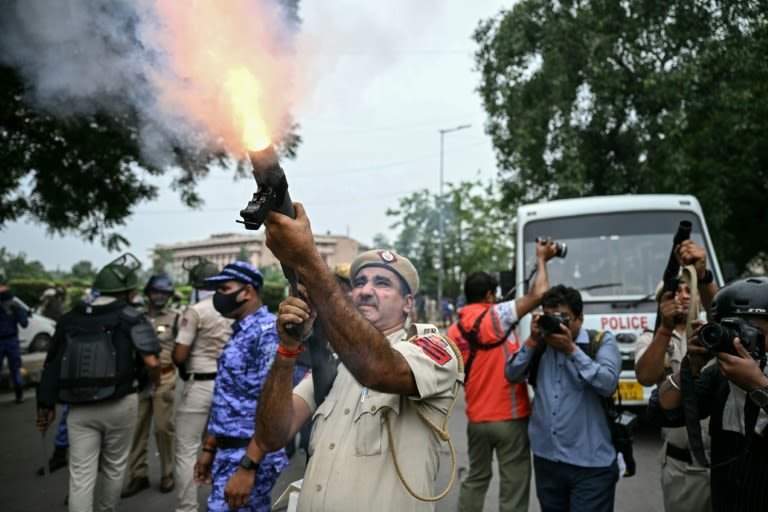
NEW DELHI – A scathing new report released by Amnesty International on Monday has ignited a fresh controversy in India, alleging that law enforcement agencies utilized “excessive and unlawful force”—including electric shock devices and pellet-firing shotguns—to suppress youth-led demonstrations that recently rocked the nation.
The protests, which were sparked by widespread outrage over leaks in the national medical entrance examinations, culminated in the resignation of the country’s education minister last month. The unrest eventually broadened into a significant movement addressing systemic issues such as youth unemployment and broader concerns regarding the governance style of Prime Minister Narendra Modi’s administration.
Conflicting Narratives on Violence
The rights group’s findings directly challenge the official stance held by Indian authorities. In a Supreme Court hearing held last week, the Delhi Police maintained that their use of force was entirely reactive, claiming that officers only engaged after protesters “resorted to violence.” According to the police, groups of “anti-social elements masquerading as aggrieved students” were responsible for inflicting “grievous injuries” on security personnel during a march toward parliament on July 20.
However, Amnesty International asserts that its investigation, based on verified visual evidence and witness testimonies, tells a different story. The report documents the use of “pellet-firing shotguns, tear gas launchers, grenades, batons and electric shock devices” against protesters in both the capital, New Delhi, and the eastern state of Bihar.
“The weapons were deployed in a manner that breached international law and standards and domestic policing guidelines,” Amnesty stated. While the group acknowledged that there were “isolated incidents” of demonstrators throwing stones, they characterized the police reaction as “state-sanctioned violence masked as crowd control.”
In one alarming revelation, Amnesty confirmed two instances in Bihar’s Siwan district where a police officer allegedly used “lethal force against a crowd.” Fortunately, no fatalities were reported in these specific incidents.
High-Stakes Legal and Political Battle
The publication of the report coincides with a major legal development; last Thursday, India’s Supreme Court established an independent panel tasked with investigating violence perpetrated by both police and demonstrators during the course of the protests.
The political stakes remain high. On Friday, opposition leader Rahul Gandhi staged a sit-in outside a Delhi police station, flanked by a 19-year-old protester who claimed to have sustained injuries from pellets during the July 20 march. Gandhi has demanded a formal investigation into the shooting, prompting local officers to register a case based on the complaint.
A Growing Challenge for the Modi Administration
The demonstrations, organized in part by the youth-led “Cockroach Janta Party,” have evolved into the most significant domestic challenge Prime Minister Modi has faced since securing a third consecutive term in 2024. What began as a focused protest against examination irregularities has transformed into a wider manifestation of frustration over economic opportunities and concerns about what critics describe as an increasingly authoritarian political climate.
As the Supreme Court-appointed panel begins its inquiry, the findings from Amnesty International highlight the urgent need for accountability regarding excessive force used by security forces, a move that rights advocates hope will prevent future escalations against peaceful dissent.