





India’s Strategic Pivot: Curbing ‘Black Mass’ Exports to Fuel Battery Sovereignty
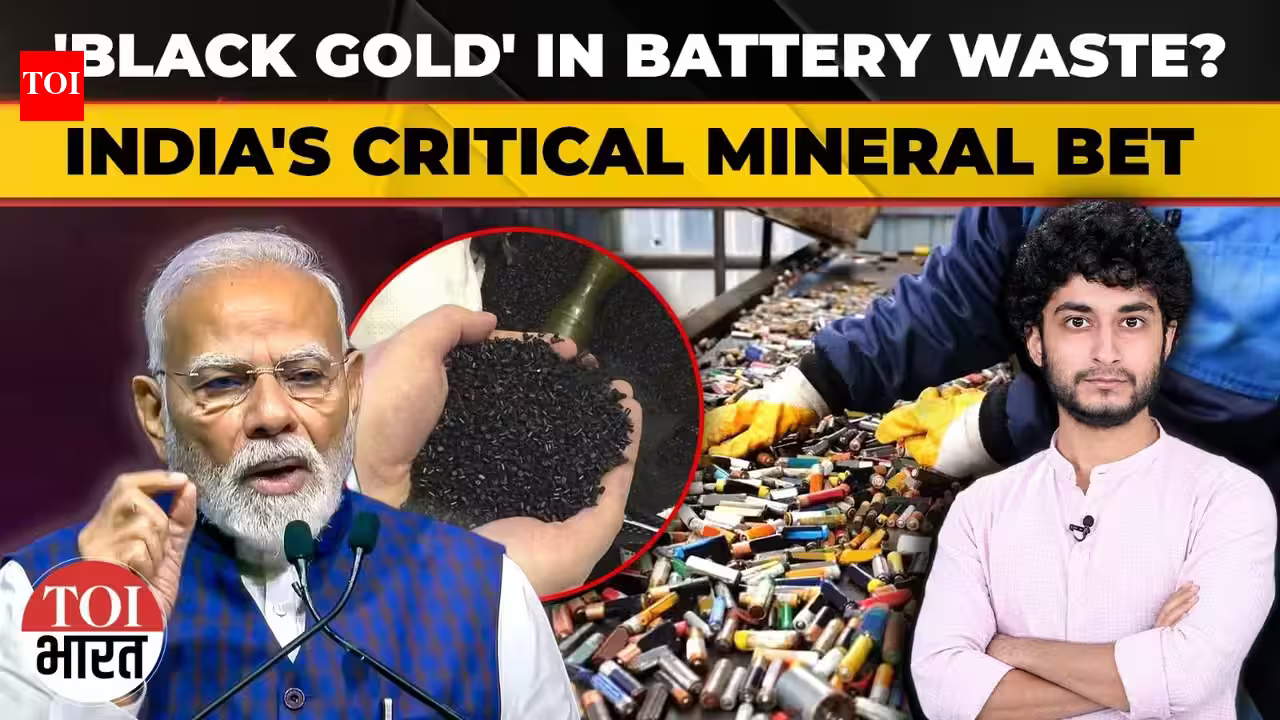
In a decisive move to secure its energy transition, the Indian government has imposed a blanket ban on the export of lithium-ion battery “black mass.” This pulverized byproduct, derived from shredding spent batteries, acts as a concentrated reservoir of high-value minerals including lithium, nickel, cobalt, and manganese. By halting the outflow of these materials, New Delhi aims to nurture a burgeoning domestic recycling ecosystem and capture the critical minerals essential for the country’s electric vehicle (EV) revolution.
The Logic Behind the Ban
For years, India has been almost entirely dependent on foreign imports to satisfy its hunger for battery-grade minerals. As the nation pivots toward widespread EV adoption and large-scale grid storage solutions, the vulnerability of these global supply chains has become a national security concern.
“Black mass” is often referred to as ‘urban mining.’ Rather than relying on traditional geological mining, which is environmentally taxing and capital-intensive, recovering minerals from electronic waste is significantly more efficient. By keeping this material within its borders, India is forcing a shift: instead of shipping raw waste abroad for processing, domestic firms are now incentivized to establish sophisticated hydrometallurgical and pyrometallurgical facilities to refine these minerals locally.
The Recycling Opportunity
The economic potential of circular battery management is substantial. As the first generation of EVs and consumer electronics reach their end-of-life, the volume of discarded batteries is expected to spike. If India can successfully aggregate and process this waste, it could transform a mounting environmental hazard into a strategic asset.
Domestic recycling offers a dual advantage: it mitigates the environmental impact of hazardous battery disposal while simultaneously creating a secondary supply chain. This could eventually provide Indian manufacturers with a more stable, price-predictable stream of raw materials, insulating them from the volatility of global commodity markets.
Significant Hurdles to Overcome
Despite the clear strategic intent, the road to a self-reliant battery economy is fraught with systemic bottlenecks. The most immediate challenge is the country’s nascent refining capacity. While the ban restricts exports, India currently lacks the high-end industrial infrastructure required to refine black mass into battery-grade chemicals at scale. Converting crude black mass into high-purity lithium carbonate or cobalt sulfate requires advanced chemical expertise that is still in its infancy domestically.
Furthermore, the “collection gap” remains a major logistical nightmare. India’s informal sector has long dominated the scrap market, often operating without the safety or technological standards required for handling toxic battery components. Formalizing this supply chain—ensuring that spent batteries reach organized recycling plants rather than informal dump sites—is critical.
Beyond logistics, there is the issue of cost and technological maturity. Processing black mass is currently an expensive endeavor compared to importing virgin minerals from established global suppliers. Without significant subsidies, R&D tax breaks, and policy support for infrastructure development, domestic recyclers may struggle to compete on price in the short term.
The Road Ahead
The export ban is a bold, protectionist step toward mineral independence, but it is only the first phase. To succeed, India must pair this restriction with aggressive investments in refining technology and a robust regulatory framework that incentivizes battery collection. If the government can successfully bridge the gap between waste collection and chemical refinement, India could position itself as a global hub for circular battery manufacturing, turning its discarded waste into the very fuel that powers its future.
Disclaimer: This content is auto-generated for informational purposes only.
Source: Read Original News