









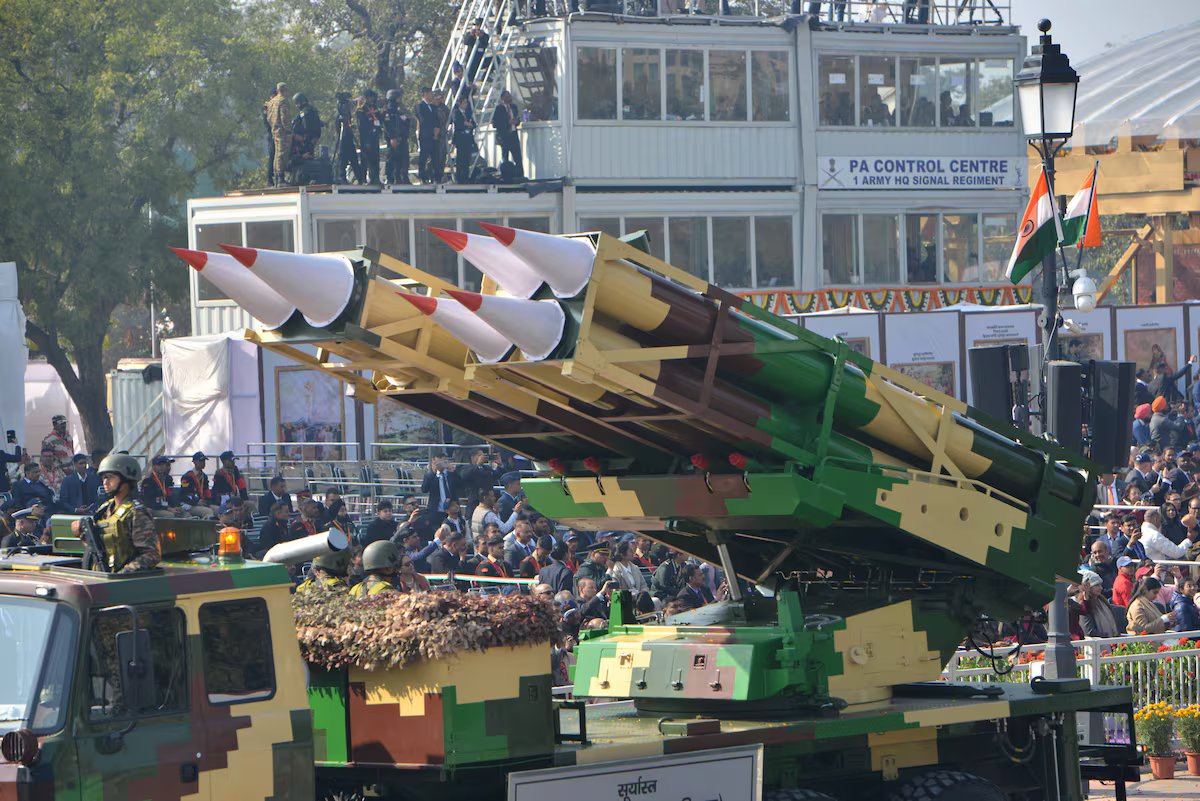
India Empowers Private Sector to Accelerate Missile Production Amid Global Supply Strains
NEW DELHI — In a major shift aimed at bolstering national security and achieving greater self-reliance, the Indian government has officially approved the transfer of advanced technologies for its entire fleet of conventional missile systems from state-run research organizations to private-sector defense manufacturers.
The initiative, described by the Ministry of Defence as an “important milestone,” is designed to dismantle long-standing production bottlenecks. By moving beyond a reliance on state-owned entities, India aims to modernize its industrial base, reduce dependence on foreign imports, and rapidly scale the development and manufacturing of sophisticated defense systems.
A Response to Global Lessons
The decision comes as ongoing conflicts in Ukraine and the Middle East have served as a wake-up call for global powers. The intensity of these wars has rapidly depleted ammunition stockpiles, exposing significant vulnerabilities in national replenishment capabilities. Notably, shortages of U.S.-made Patriot interceptors have strained air-defense networks in Ukraine and caused anxiety among U.S. allies in the Middle East, highlighting the critical need for a surge-capable domestic defense industry.
Closer to home, the move reflects hard lessons learned from India’s own regional security environment. Analysts point to the country’s brief 2025 border conflict with Pakistan as a pivotal example.
“The hostilities with Pakistan lasted four days, but if they had dragged on, India too might have faced a problem with missile stockpiles because missiles were extensively used during the conflict,” said Manoj Joshi, a distinguished fellow at the Observer Research Foundation in New Delhi. “In the case of the conflict involving Iran, which has lasted longer than expected, even a country like the U.S. faced problems with some munitions.”
Expanding the Industrial Base
Historically, India’s missile programs have been helmed by the Defence Research and Development Organization (DRDO), with production restricted to a small number of state-run enterprises. This centralization often created a “bottleneck” effect, limiting the speed at which the armed forces could replenish their inventories.
While the government has not released a granular list of which technologies are moving to the private sector, officials suggest the transfer covers a vast spectrum, ranging from air-defense interceptors to advanced air-to-air and surface-to-surface missiles.
This decision to ramp up missile production marks a significant step in the government’s “Atmanirbhar Bharat” (Self-Reliant India) mission. By leveraging the agility of private firms, the defense ministry hopes to create a more resilient, competitive, and productive ecosystem.
A New Era for Indian Defense
India’s private sector has increasingly stepped into roles previously reserved for the state. Companies are already active in the production of unmanned aerial vehicles (drones) and have been formally invited to contribute to the nation’s ambitious fifth-generation fighter jet program.
Industry experts believe that incorporating the private sector is not merely a logistical upgrade but a strategic necessity. “This restructuring is important,” Joshi added. “It is the path that most countries follow” to ensure that when crises occur, the industrial supply chain can pivot to meet the urgent needs of the military.
As the government finalizes the implementation of these transfers, the move is expected to attract significant investment into the Indian defense sector, ultimately strengthening the country’s posture as a regional security pillar.