







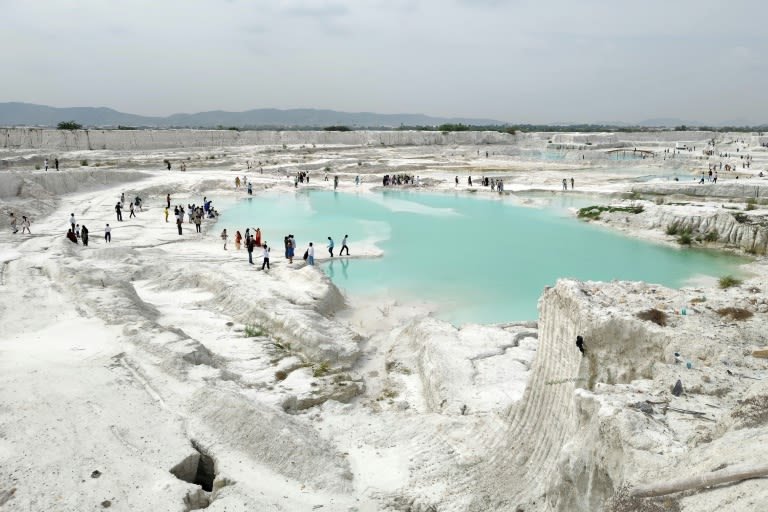
An unexpected phenomenon is unfolding in Kishangarh, Rajasthan, where a massive accumulation of marble waste has been transformed into a surprising tourist magnet. This expansive site, resembling a snow-covered valley rather than an industrial dumping ground, is drawing considerable attention from travelers, filmmakers, and social media enthusiasts alike. Kishangarh, a vital center for marble processing in India news, is responsible for this unique landscape.
The striking white terrain is composed of marble slurry and discarded stone, byproducts generated during the cutting and polishing of marble and granite blocks. This vast expanse stretches over 82 acres (33 hectares) and receives an astounding 5,500 tonnes of slurry daily from more than 1,200 processing units, solidifying its status as one of Asia’s largest such disposal areas. Despite its industrial origins, this “wasteland” has remarkably evolved into an improbable attraction.
Couples are frequently seen posing amidst the chalk-white mounds for pre-wedding photographs, while film crews and music video producers utilize the distinctive backdrop for their projects. Visitors also indulge in horseback riding across the undulating landscape, captivated by its unusual and picturesque appearance. Social media has played a significant role in propelling the site’s popularity, with many comparing its gleaming surface to breathtaking alpine scenery. The illusion is further enhanced after rainfall, when water collects in the depressions between the waste piles, forming vivid blue pools that strikingly accentuate the “mountain vista.”
However, beneath this captivating facade lies a serious environmental concern. Authorities have consistently raised alarms about the ecological ramifications of marble waste disposal in the region. Risks range from airborne dust, which can impact respiratory health, to the more insidious threat of groundwater contamination. Studies have already detected elevated levels of salinity, hardness, and certain heavy metals in water samples collected from the surrounding areas, underscoring the severity of the issue.
In response to these concerns, India’s top environmental court issued a series of corrective measures in January. These directives included crucial guidelines aimed at promoting the reuse of slurry, advocating for sustainable practices over uncontrolled dumping. The tribunal’s order starkly highlighted the lack of adequate environmental safeguards, noting, “There is no engineered liner system, no decanting wells, no dust suppression mechanisms, no monitoring of air or groundwater, and no protective green belt.”
Despite these pressing environmental dangers and the warnings from authorities, the striking, otherworldly scenery continues to draw crowds of visitors, who seemingly remain undeterred by the underlying risks, choosing instead to revel in the site’s unique aesthetic appeal. The dichotomy between the site’s allure and its environmental impact presents a complex challenge for local authorities and environmental bodies as they strive to manage both the burgeoning tourism and the critical need for sustainable waste management practices. For further details on this unique site and its environmental implications, you can read the original report.