








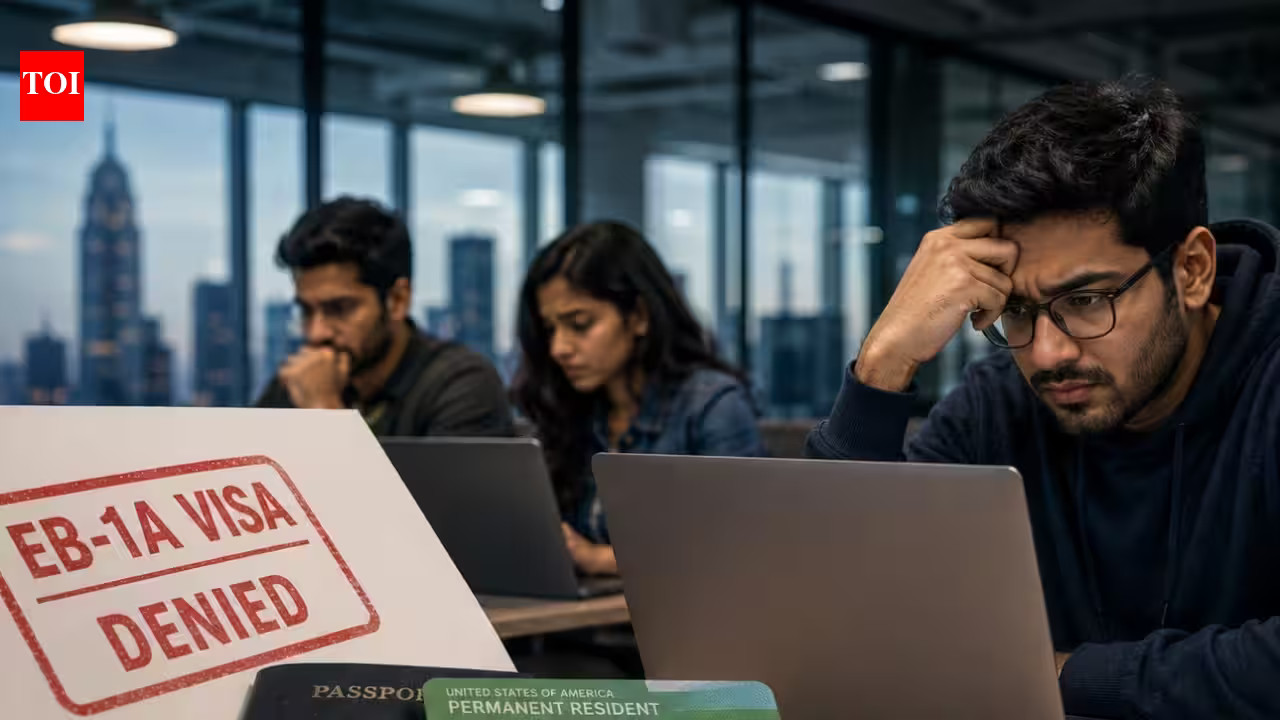
Indian technology professionals are facing a significant hurdle in their pursuit of permanent residency in the United States, as the approval rate for the EB-1A green card category, designed for individuals with extraordinary ability, has plummeted. This decline is particularly pronounced for Indian applicants, whose approval rate for the first half of fiscal year 2026 has dropped to a stark 35%, a significant decrease from the 49.1% recorded for the entirety of fiscal year 2025. This downturn is largely attributed to a more stringent stance on skilled-worker immigration adopted by the current US administration.
The EB-1A visa serves as a pathway to a US green card for those who can demonstrate exceptional abilities in fields such as science, art, education, business, or athletics. Historically, this category has been a preferred route for many, including executives of multinational corporations, due to its relatively shorter processing time of approximately three to four years, a stark contrast to the nearly 15-year waiting period associated with the EB-2 category. However, data compiled by the US immigration platform Boundless Immigration, based on USCIS figures, paints a concerning picture. In fiscal year 2025, Indian applicants submitted 14,250 EB-1A petitions, with 6,993 approved and 1,474 rejected. The first two quarters of fiscal year 2026 saw 7,316 petitions from Indians, resulting in only 2,571 approvals and 1,131 denials.
Xiao Wang, co-founder and CEO of Boundless Immigration, highlights that this downward trend has disproportionately affected tech professionals from India and China, who collectively represent the largest volume of EB-1A filings. This intensified scrutiny aligns with broader measures implemented by the Donald Trump administration to restrict skilled-worker immigration, especially impacting H-1B visa holders, a group predominantly composed of Indian nationals.
Immigration experts contend that the reduced approval rates do not stem from a decline in applicant quality or changes in existing immigration law. Instead, they attribute this shift to a deliberate change in executive policy, characterized by a more hostile approach towards immigration. Joel Yanovich, Senior Attorney at Ganey Law Group, notes that immigration adjudicators are now demanding an unreasonably high bar for approval, reflecting the administration’s mandate. Wang further elaborates that while meeting three of the ten prescribed criteria for extraordinary ability was once considered sufficient, the current environment necessitates strong evidence for specific criteria, such as “performing in a leading or critical role for distinguished organizations” and “commanding a high salary relative to others in your field,” effectively making them “table-stakes” for approval. US-based immigration attorney Rajiv Khanna corroborates this sentiment, stating that the government has made the adjudication process exceptionally difficult, despite some judicial challenges to the methodologies employed.
The current climate has left many Indian applicants in a predicament, especially those entangled in the extensive EB-2 and EB-3 backlogs. Yanovich observes a blend of fatigue and pragmatism among applicants. Some are exploring options like relocating abroad to work for multinational companies as managers or executives for a year, a strategy to qualify for the EB-1(C) category. For those with financial means, the EB-5 investment visa remains a viable and increasingly popular option for Indian applicants. Furthermore, there’s a growing interest among individuals considering emigration to Canada or the UK, or even returning to India. Wang notes a noticeable surge in inquiries about Canada’s Global Talent Stream and the UK’s Global Talent visa, particularly from Indian professionals seeking alternative avenues for skilled migration.