








The Great Defence Skill Gap: Why Degrees Aren’t Enough for the Battlefield
India’s defence manufacturing sector is experiencing a historic surge. With production hitting a record ₹1.78 lakh crore in FY 2025-26 and exports climbing 62.66% year-on-year, the nation is rapidly transforming into a global defence hub. However, as the industry eyes a production target of ₹3 lakh crore by 2029, a structural crisis is brewing: the workforce pipeline is failing to keep pace with the harsh, unforgiving realities of military engineering.
Industry experts and academics warn that the problem is not a lack of engineering graduates, but a lack of “battle-ready” professionals. While traditional engineering curricula cover theoretical physics and design, they often neglect the ruggedization required for military hardware. Whether a system can survive extreme vibration, desert heat, salt fog, or electromagnetic interference—and whether it can be repaired in a field environment—is rarely taught in classrooms.
Revising the Academic Blueprint
The transition from a laboratory prototype to a deployable military product is where the “real engineering” happens. Founders like Pooja Yadav of Astraniti and Kiran Vagga of TISA Aerospace argue that the sector requires a fundamental shift in educational focus. They emphasize that while standard degrees provide the basics, specialized domains like materials science, RF engineering, avionics, and systems integration demand hands-on, multi-disciplinary expertise.
Leading institutions are beginning to pivot. BITS Pilani, for instance, has launched the Centre for Research Excellence in National Security (CRENS) and is introducing specialized B.E. programs in AI and Autonomous Systems. Professor V. Ramgopal Rao highlights that the “Practice School” model—which mandates up to seven and a half months of structured industry internships—is critical. By integrating students into real-world defence projects, universities can bridge the gap between “inventing” and “deploying.”
The “Intern-to-Hire” Imperative
For students eyeing a career in this high-growth sector, the conventional wisdom of “top-tier” degrees is losing its edge. Today’s defence startups are prioritizing practical capability over pedigree. Recruitment is increasingly favoring graduates—often from Tier 2 and Tier 3 colleges—who demonstrate “system-level thinking.”
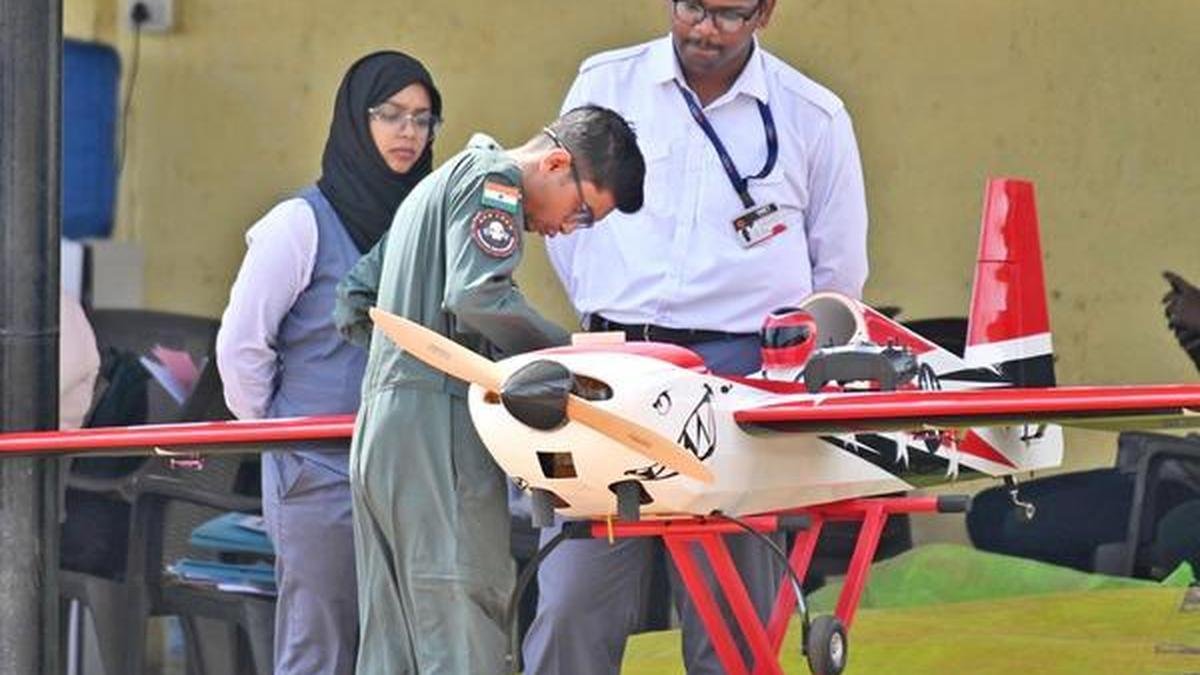
Employers are now utilizing an “intern-to-hire” pipeline to vet talent. They look for students who have engaged in competitive robotics, UAV projects, or have experience debugging hardware. As Subbu Venkatachalam of CUMI notes, students who arrive with exposure to computational modeling of material behavior and hands-on testing are significantly more employable. The ability to work across mechanical, electronic, and software domains is no longer an asset; it is a necessity for modern aerospace and naval projects.
Policy, Veterans, and the Startup Ecosystem
The policy framework supporting this growth, most notably the iDEX (Innovations for Defence Excellence) scheme, has been instrumental in funding over 650 startups. However, the ecosystem faces criticism regarding its accessibility. Experienced veterans, who possess critical operational knowledge of how equipment is maintained and utilized under fire, report significant hurdles in accessing government support.
Experts suggest that the future of the sector lies in a collaborative model where veterans and young engineers work in tandem. While engineers provide design depth, veterans provide the “field reality” that manuals cannot convey. Moving forward, the effectiveness of the defence sector will depend on whether policy can evolve to integrate these experienced hands alongside fresh talent.
The Road Ahead: A Call for Targeted Skilling
By 2030, India’s defence and aerospace workforce is projected to swell to nearly 2.85 lakh professionals. With specialized roles in radar, propulsion, and quantum communications expected to face a 40–45% vacancy rate without intervention, the education sector must move beyond generalized engineering.
To meet the 2029 production targets, technical education must prioritize:
- Ruggedization and Testing: Teaching how equipment performs under combat stressors.
- Cross-functional Training: Ensuring mechanical engineers understand software integration, and vice-versa.
- Industry-Integrated Learning: Strengthening the collaboration between colleges, accredited testing laboratories like the TBRL, and the end-user (the Armed Forces).
In the race to modernize, India’s greatest challenge is not merely building more equipment, but cultivating a generation of engineers who understand that in the defence sector, a prototype is only as good as its ability to survive the battlefield.
Disclaimer: This content is auto-generated for informational purposes only.
Source: Read Original News