








India’s Bullet Train Ambitions: Costs Near Double as Indigenous Rail Development Gains Momentum
India’s ambitious high-speed rail landscape is undergoing a significant transformation. While the flagship Mumbai-Ahmedabad bullet train project faces substantial cost escalations nearly nine years after its foundation stone was laid by Prime Minister Narendra Modi, the nation is simultaneously pivoting toward domestic manufacturing to drive its high-speed future.
Rising Costs and Timeline Adjustments
The estimated expenditure for the 508-km corridor has surged to approximately Rs 2.1 lakh crore, nearly doubling from the original projection of Rs 1.1 lakh crore. A proposal seeking formal approval for this revised budget was recently placed before the Union Cabinet.
According to government sources, the primary drivers for this fiscal hike include prolonged land acquisition processes in Maharashtra, statutory clearance delays, and complexities in the international procurement of train sets. While the full corridor is now slated for completion by 2030, the government remains optimistic about operationalizing the first segment—likely between Surat and Bilimora—by August 2027. Most of the additional funding required to bridge the gap is expected to be sourced through budgetary support.
Engineering Marvels and Shinkansen Technology
Despite the financial hurdles, progress on the ground is visible. The National High-Speed Rail Corporation Limited (NHSRCL) is currently deep into construction, with viaducts spanning across Gujarat and Maharashtra. The project remains a feat of modern engineering, featuring:
- The Thane Creek Tunnel: A challenging 7-km undersea tunnel segment.
- Specialized Infrastructure: The inclusion of seven mountain tunnels, 17 river bridges, and the deployment of Japan’s ballastless J-Slab track system.
- World-Class Standards: The system is designed for operational speeds of 320 kmph, leveraging proven Japanese Shinkansen technology.
The Push for “Make in India” High-Speed Rail
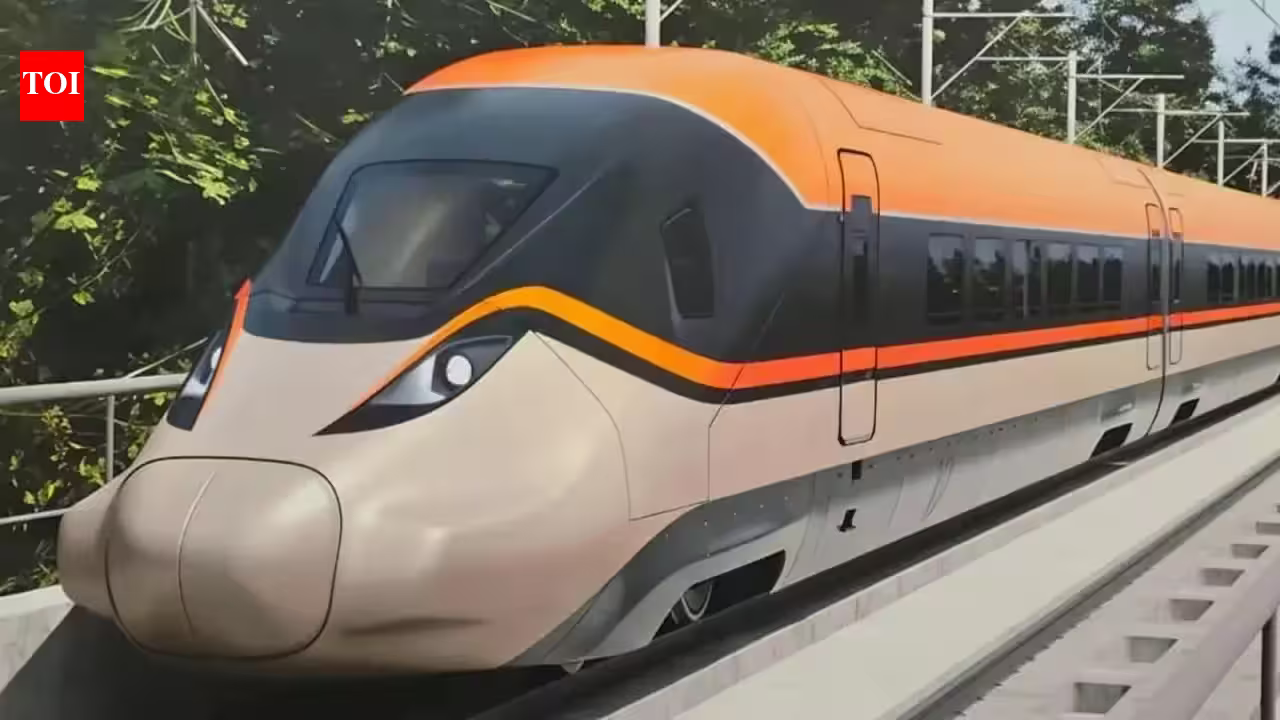
Perhaps the most significant development in India’s rail narrative is the transition to indigenous manufacturing. The Integral Coach Factory (ICF) in Chennai has awarded a contract worth Rs 866.87 crore to BEML Limited to design and manufacture two prototype eight-coach high-speed trainsets.
These domestic trains, currently carrying the codename “B-28,” are being designed for an operating speed of 250 kmph and a design speed of 280 kmph. BEML has established a dedicated facility, the ‘Aditya’ High-Speed Rail Complex in Bengaluru, to manufacture these units. Unlike European or Japanese models designed for colder climates, the Indian trainsets are being specifically engineered to withstand India’s unique heat and dust conditions.
Looking Toward the Future
The government is already looking beyond the Ahmedabad-Mumbai corridor, with seven additional high-speed routes under active consideration, including links between Bengaluru-Chennai, Bengaluru-Hyderabad, and the Mumbai-Pune-Bengaluru corridor. With Railway Minister Ashwini Vaishnaw hinting that future iterations of these bullet trains will be capable of reaching speeds of 350 kmph, India appears committed to establishing itself as a global player in the high-speed rail sector.