








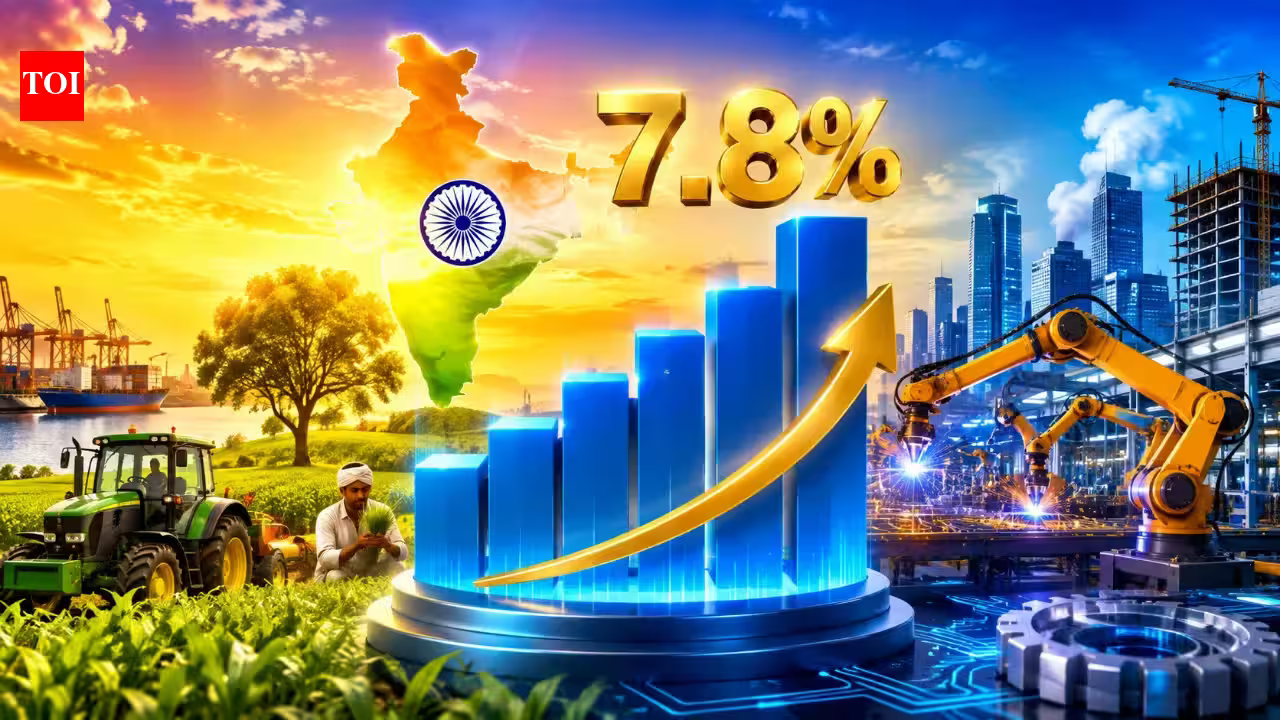
India’s Growth Engine Defies Global Turmoil with 7.8% GDP Surge in Q1
Against a backdrop of geopolitical instability, volatile commodity prices, and flickering global demand, India has cemented its position as the world’s fastest-growing major economy. Official data released this week shows that the nation’s GDP growth reached 7.8% for the April-June quarter of the 2026-2027 fiscal year.
This performance not only comfortably surpassed the Reserve Bank of India’s (RBI) 7% projection but also significantly outperformed other global heavyweights. While the pace is a slight moderation from the 8.6% recorded in the previous quarter, it marks a robust improvement over the 6.9% expansion seen during the same period last year.
The Seven Pillars of Resilience
Chief Economic Adviser V. Anantha Nageswaran attributed this strength to the cumulative impact of structural reforms implemented over the last decade. The growth has been broad-based, fueled by several key engines:
- Domestic Consumption: Private final consumption expenditure grew by 7.1%, acting as a massive buffer against external economic shocks. High-frequency indicators—including a 15.4% surge in GST collections and double-digit growth in electricity and fuel demand—point to a confident consumer base.
- The Services Powerhouse: Expanding by 10%, the tertiary sector remains a primary engine of growth. Real estate led the charge with a 24.7% rise, while financial, IT, and professional services maintained a steady 12.1% growth rate.
- Manufacturing Grit: Despite rising input costs, the secondary sector grew by 8.6%. Specifically, manufacturing output increased by 9.2%, bolstered by strong production figures in electrical equipment and machinery.
- A Shift in Investment: Gross Fixed Capital Formation soared by 11.9%, more than doubling the growth recorded in the same quarter last year. This signals a healthy appetite for long-term productive investment from both the public and private sectors.
- Export Diversification: India’s exports rose by 12%, with massive gains in electronics (57.4%) and engineering goods (17.7%). Strategic diversification of both products and markets has allowed India to navigate a difficult global trade environment.
- Agricultural Support: With a better-than-expected monsoon, the primary sector grew by 3.6%, providing vital support to rural incomes and helping to keep food inflation in check.
- Record FDI: India attracted $30.7 billion in gross foreign direct investment during the first quarter—the highest in at least 15 years—underscoring sustained global investor confidence.
Navigating the “Middle East” Risk
While the economy is currently thriving, policymakers remain cautious. The ongoing conflict in the Middle East poses a tangible threat to energy supplies. Because India remains a major importer of crude oil, a prolonged disruption could threaten to widen the import bill, strain the current account, and re-ignite inflationary pressures.
Nageswaran noted that while the domestic momentum is “very strong,” global uncertainties regarding interest rates and commodity supply chains persist. “At some point, they may have an impact on economic activity in the country,” he warned. “But as of now, domestic momentum and export performance have combined to deliver another quarter of very strong growth.”
Outpacing the World
India’s performance stands in stark contrast to the sluggish growth of other major economies. While India clocked 7.8%, other nations struggled to find similar momentum: China posted 4.3%, the United States grew at 2.1%, and major European economies like France and Italy saw growth remain at or below 1%.
As the government moves into the next quarter, the focus will remain on maintaining this delicate balance between sustaining domestic investment and managing the volatility spilling over from global geopolitical flashpoints. For now, however, India’s growth story remains firmly on track, proving that its diverse, consumption-led economy is more resilient than ever.