






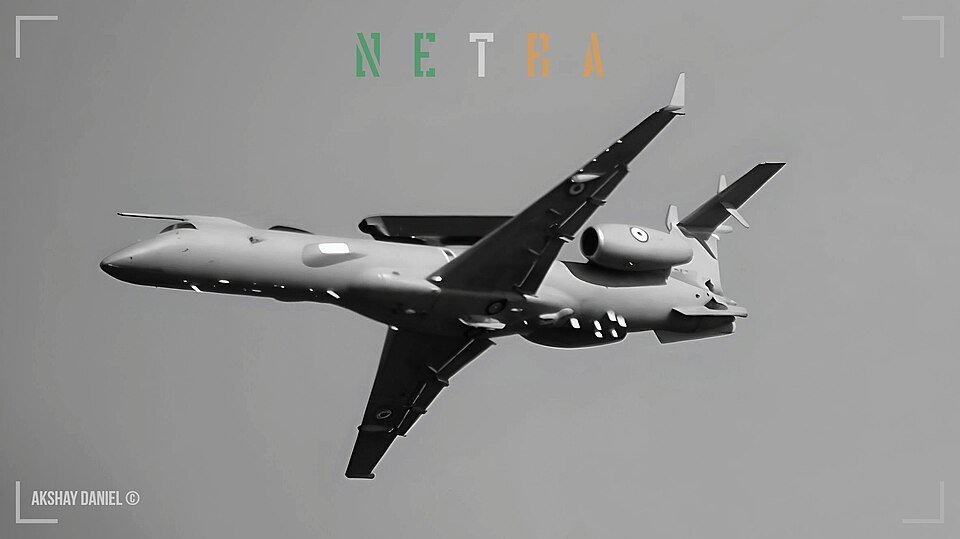
More than 20 years after India embarked on one of its most ambitious indigenous aerospace programmes, the Indian Air Force (IAF) has formally accepted the Netra Airborne Early Warning and Control (AEW&C) system in its full operational configuration.
The Final Operational Clearance (FOC) certificate of the home-made AEW&C system to the IAF from the Defence Research and Development Organisation (DRDO) has completed a programme that has evolved from an experimental concept into one of the IAF’s most important airborne command and control assets.
The clearance follows years of development, extensive user trials and operational deployments, giving the service a fully validated system designed to detect, track and manage aerial and maritime threats far beyond the reach of ground-based radars.
Bengaluru, Karnataka: At DRDO Netra Final Operational Clearance (FOC) ceremony, Scientist & Director, Centre for Airborne Systems (CABS), DRDO, K. Rajalakshmi Menon says, “The pride of India, the jewel of the IAF, and the dream of every Indian. The Indian Air Force’s pursuit of… pic.twitter.com/S6YFQRDC1I
— IANS (@ians_india) June 25, 2026
The achievement comes at a time when airborne surveillance aircraft have become indispensable to modern air operations.
Recent conflicts have demonstrated that the ability to detect threats early, coordinate fighters and build a real-time picture of the battlespace can prove as decisive as combat aircraft themselves.
Unlike a conventional radar station fixed to the ground, an AEW&C aircraft operates at high altitude, allowing its sensors to look far beyond the Earth’s curvature.
From that vantage point, it can detect hostile aircraft, cruise missiles, unmanned systems and even maritime targets hundreds of kilometres away while directing friendly aircraft and relaying information to commanders on the ground.
For India, the FOC represents more than the completion of a certification process. It marks the point at which an indigenous system, developed jointly by DRDO, the IAF and Indian industry, has completed every stage of operational evaluation and is now cleared for unrestricted frontline service.
Final Operational Clearance clears India’s Netra AEW&C for frontline service
The Netra programme was conceived with a clear objective: to provide the Indian Air Force with an indigenous airborne early warning capability while reducing reliance on imported surveillance platforms.
“The AEW&C system consists of sensors mounted on an aircraft for locating and providing early warning of airborne and sea surface targets and hostile emissions. The system also provides comprehensive information to controllers on board the aircraft as well as to ground stations,” a DRDO official told Aerospace Global News.
According to the official, DRDO was tasked with developing the complete mission avionics suite and integrating it onto the Embraer EMB-145 platform.
“Three aircraft were delivered in the Initial Operational Clearance configuration, and the Final Operational Clearance has now been completed. As per the mandate, mission systems have been integrated on all three aircraft. Development trials were conducted with the user fully associated with the evaluation process,” the official said.
While the aircraft entered service after receiving Initial Operational Clearance several years ago, FOC confirms that every mission system has successfully completed operational testing and validation with the Indian Air Force.
It effectively certifies the aircraft in its full operational configuration after years of refinement and user feedback.
India’s Netra AEW&C combines radar, intelligence and battle management
Although often described as a “flying radar”, the Netra is considerably more than that.
The aircraft carries an Active Electronically Scanned Array (AESA) radar mounted in a dorsal structure above the fuselage, providing surveillance across approximately 240 degrees.
Supported by Identification Friend or Foe (IFF) equipment, electronic support measures, communication support systems, mission computers, secure data links and satellite communications, the aircraft creates a comprehensive picture of the battlespace in real time.

Its radar can detect and track multiple airborne targets simultaneously while the onboard mission crew coordinates fighter aircraft, monitors hostile emissions and shares information with command centres.
The aircraft also extends the reach of India’s ground-based radar network. By operating at altitude, it can detect low-flying aircraft and cruise missiles that might otherwise remain hidden behind terrain or below the radar horizon.
For an air force operating across diverse terrain stretching from the Himalayas to the Indian Ocean, that capability provides commanders with valuable additional reaction time during fast-moving operations.
How India rebuilt its airborne surveillance programme after early setbacks
The road to Netra has been far longer than the aircraft itself suggests.
India’s pursuit of an indigenous airborne surveillance capability began in the early 1980s under what became known as Project Guardian.
The programme later evolved into the Airborne Surveillance Platform (ASP), centred on a modified HS-748 Avro aircraft fitted with an indigenous rotodome.
The Avro Airavat
Nope, this is not AI: meet the HS 748 Airborne Surveillance Platform, code-named “Airavat”,
Initiated by India’s DRDO to develop an Airborne Early Warning System, the Airborne Surveillance Platform (ASP) underwent three years of prototype testing before being… pic.twitter.com/vCxtZFDSuD
— Francisco Cunha (@OnDisasters) April 19, 2026
That effort suffered a devastating setback on 11 January 1999 when the prototype aircraft crashed near Arakkonam in southern Tamil Nadu during a test flight, killing four DRDO scientists and four Indian Air Force personnel.
The accident temporarily halted India’s ambitions to field an indigenous airborne early warning platform and forced a comprehensive reassessment of the programme.
Rather than abandoning the concept, DRDO returned to the drawing board.
The government approved a fresh programme in 2004, this time selecting the Embraer EMB-145 regional jet as the host aircraft while assigning the Centre for Airborne Systems (CABS) responsibility for developing the indigenous mission suite.
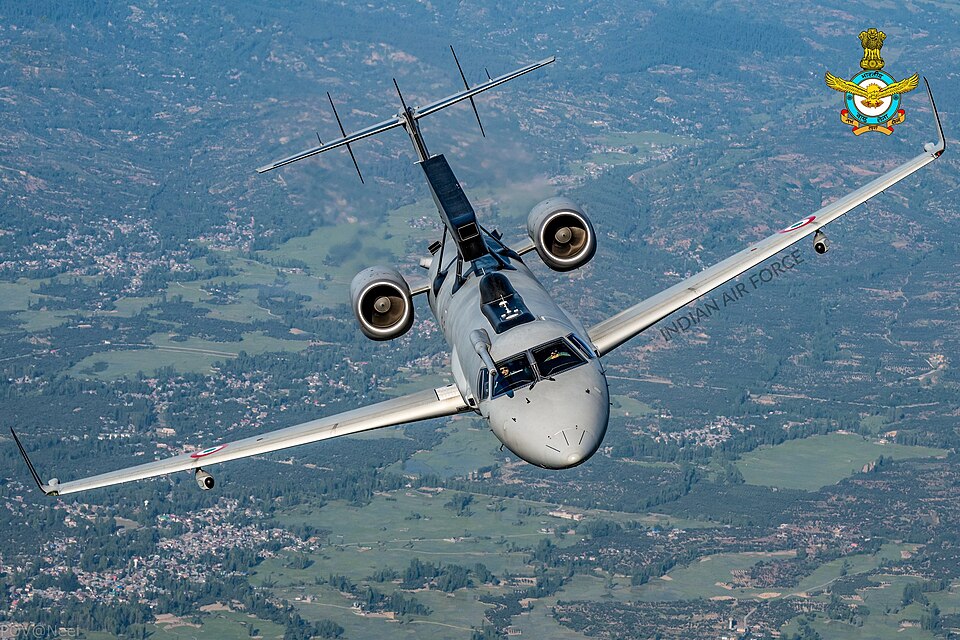
Three Embraer aircraft were subsequently acquired from Brazil and modified to accommodate the radar, mission systems and operator workstations that would form the basis of the Netra fleet.
The first aircraft flew in its AEW&C configuration in 2011 before entering a lengthy programme of testing, systems integration and operational evaluation involving both DRDO scientists and Indian Air Force personnel.
Operational experience helped shape India’s Netra AEW&C system
Receiving Final Operational Clearance was not simply the result of laboratory testing or flight evaluations.
It reflects years of operational use during exercises and real-world missions, allowing both DRDO engineers and Indian Air Force crews to refine the aircraft’s capabilities.
Between the Initial Operational Clearance and FOC, the system underwent a series of upgrades aimed at improving both performance and reliability.
Engineers enhanced the aircraft’s electronic support measures, refined the radar’s ability to detect low-flying targets and replaced legacy communications equipment with software-defined radios to strengthen its network-centric capabilities.
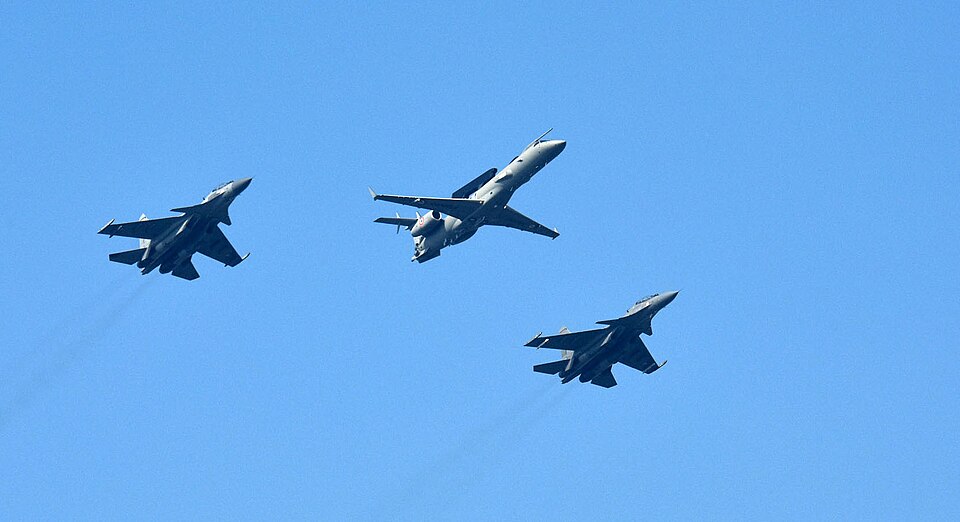
The aircraft’s ability to exchange information securely with fighters, ground stations and other airborne assets was also improved, creating a more resilient command-and-control network.
Those improvements were introduced while the aircraft remained available for operational tasking, allowing the Air Force to evaluate the system under realistic conditions rather than solely through developmental trials.
According to the DRDO official, the programme has always been driven by close cooperation between scientists, industry and the user.
“The system has been indigenously developed through close collaboration among the Indian Air Force, DRDO and associated industries to significantly enhance airborne surveillance, situational awareness and battle management capability,” the official said. “It represents India’s ability to design, integrate and sustain a highly complex airborne mission system.”
Netra deployments underline India’s need for airborne command aircraft
Although many aspects of the aircraft’s missions remain classified, senior Air Force leaders have acknowledged that Netra has already proved its operational value.
Speaking during the FOC ceremony, Air Marshal Awadhesh Kumar Bharti, Deputy Chief of the Air Staff, referred to the aircraft’s employment during the 2019 Balakot air strikes and more recently during Operation Sindoor. He praised the system’s operational reliability and highlighted the flexibility that comes with owning and developing an indigenous platform.
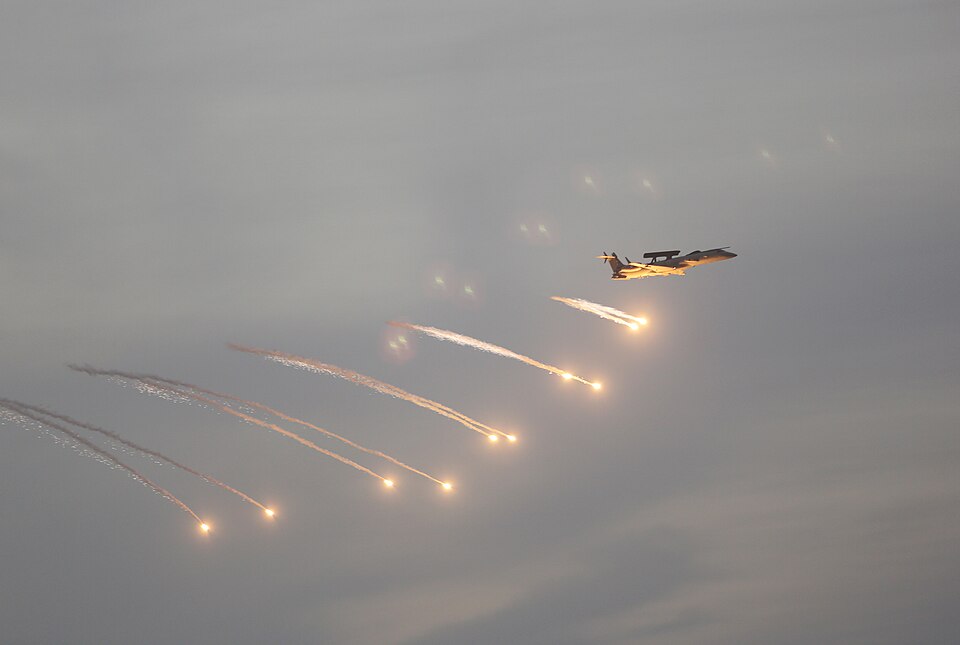
Unlike imported systems, domestically developed mission equipment can be modified as operational requirements evolve.
The Deputy Chief said indigenous technologies give the services the ability to adapt systems to changing battlefield conditions more quickly, an increasingly important consideration as air forces respond to emerging threats ranging from cruise missiles to unmanned aircraft and electronic warfare.
He also credited the close partnership between the IAF, DRDO and industry for delivering the programme into frontline service.
India still faces a shortage of AEW&C and AWACS aircraft
While the FOC completes an important chapter for Netra, it does not resolve the Indian Air Force’s long-standing shortage of airborne early warning aircraft.
The IAF currently operates three Israeli Phalcon AWACS mounted on Russian Il-76 aircraft alongside the three Embraer-based Netra platforms, although one of the Netra aircraft has continued supporting development activities.
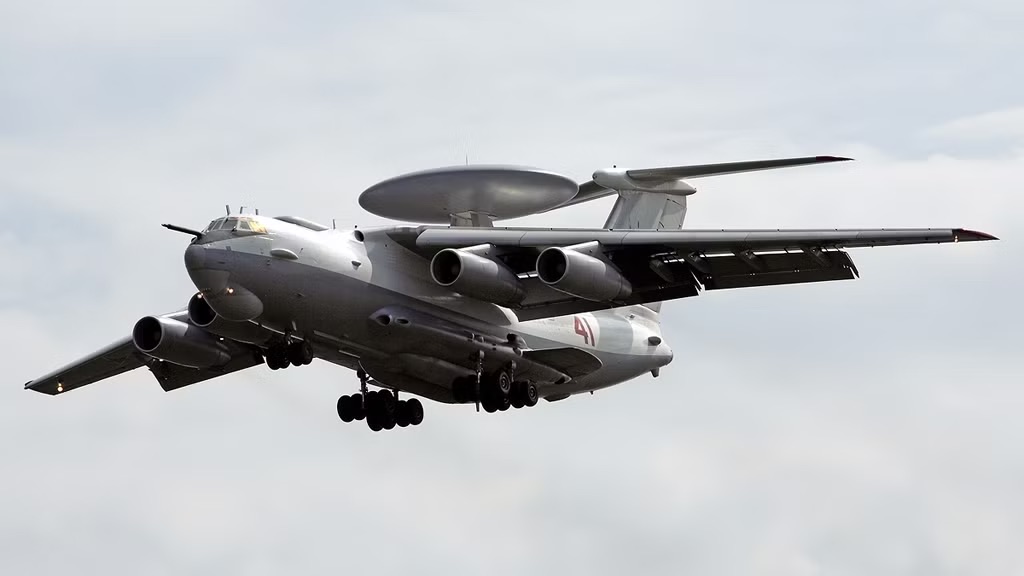
Together, they provide only a fraction of the airborne surveillance coverage considered necessary for a country of India’s geographical size and strategic responsibilities.
The requirement has become increasingly pressing as neighbouring air forces continue expanding their own airborne surveillance fleets.
Pakistan operates Saab 2000 Erieye aircraft as well as Chinese-built ZDK-03 airborne warning systems, while China fields multiple AWACS variants supporting long-range air operations.
“Recent operational lessons have further reinforced the importance of maintaining persistent airborne surveillance during periods of heightened military activity,” an IAF official opined.
Rather than marking the end of the programme, Final Operational Clearance clears the way for the next phase of India’s indigenous AEW&C development.
Netra Mk1A, A321 and A330 aircraft form India’s AEW&C expansion plan
The government has already approved the acquisition of six additional Netra Mk1A aircraft, an improved version of the current platform that will build on the experience gained during the first programme.
These aircraft are expected to strengthen the Air Force’s medium-range airborne surveillance capability while maintaining continuity in mission systems and training.
Alongside that effort, DRDO is developing a more capable AEW&C system based on former Air India Airbus A321 aircraft.
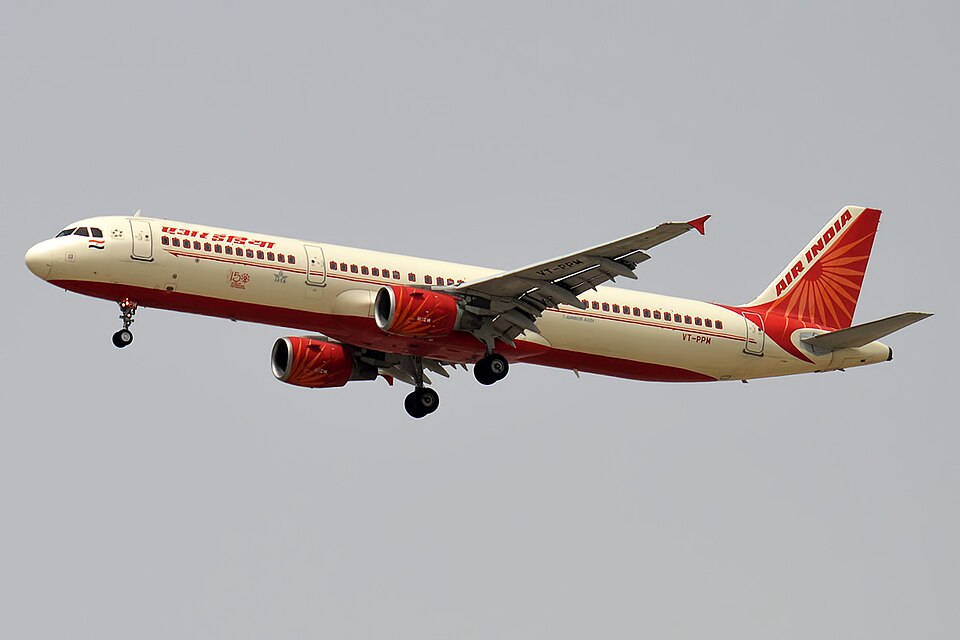
Unlike the current Embraer platform, the A321 offers greater endurance, additional payload capacity and the potential for near-360-degree radar coverage.
The aircraft will also accommodate a more powerful mission suite designed to detect and track a broader range of airborne threats over longer distances.
Looking further ahead, India also intends to field six larger AWACS aircraft based on the Airbus A330 platform.
These aircraft are expected to provide true all-round radar coverage together with significantly greater endurance, allowing them to undertake long-duration surveillance and battle management missions comparable with the world’s leading airborne warning systems.
Together, the three programmes will create a layered airborne surveillance architecture capable of supporting tactical operations close to India’s borders while also extending strategic coverage deep into surrounding airspace and maritime approaches.
Featured image: IAF