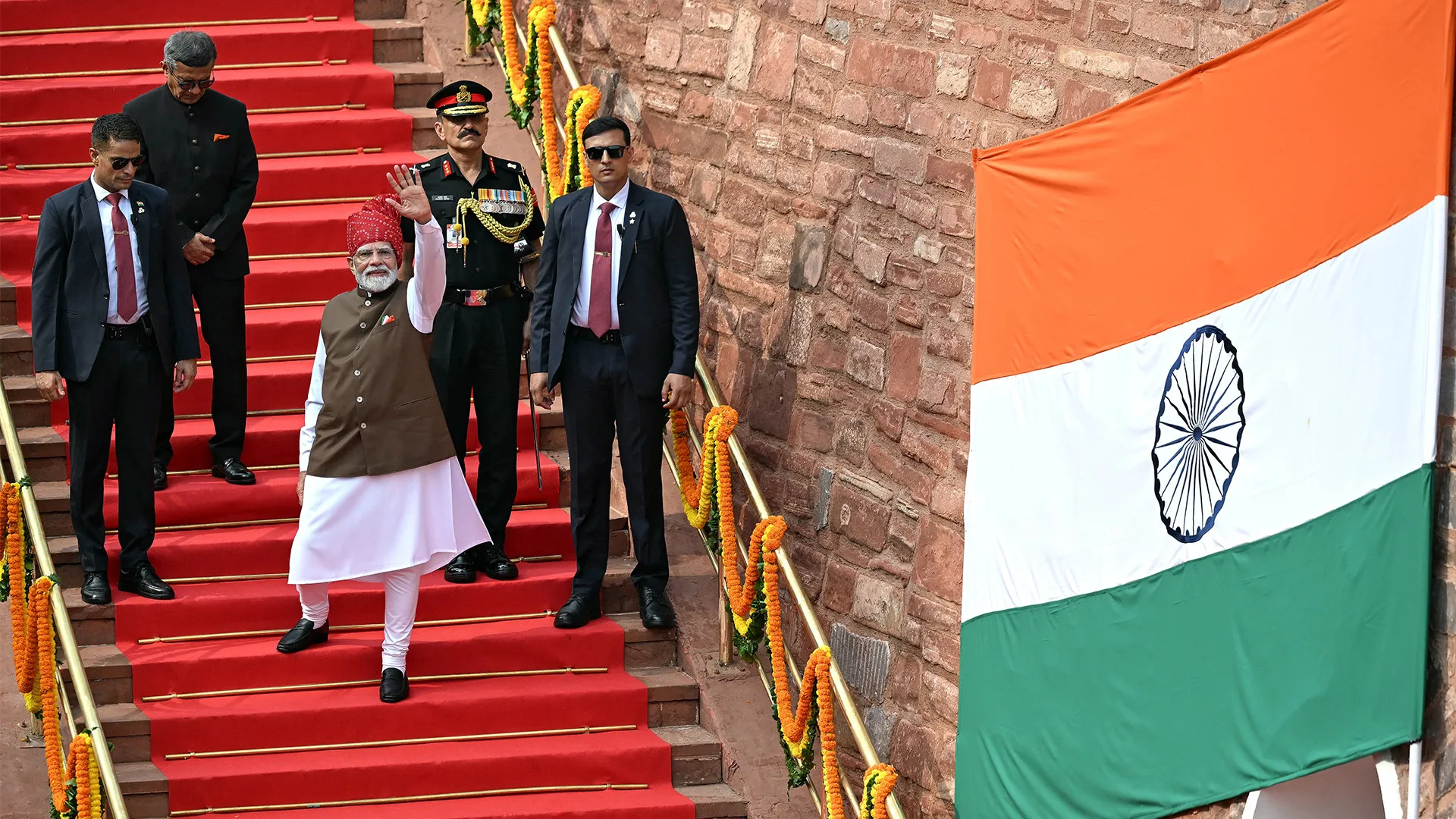








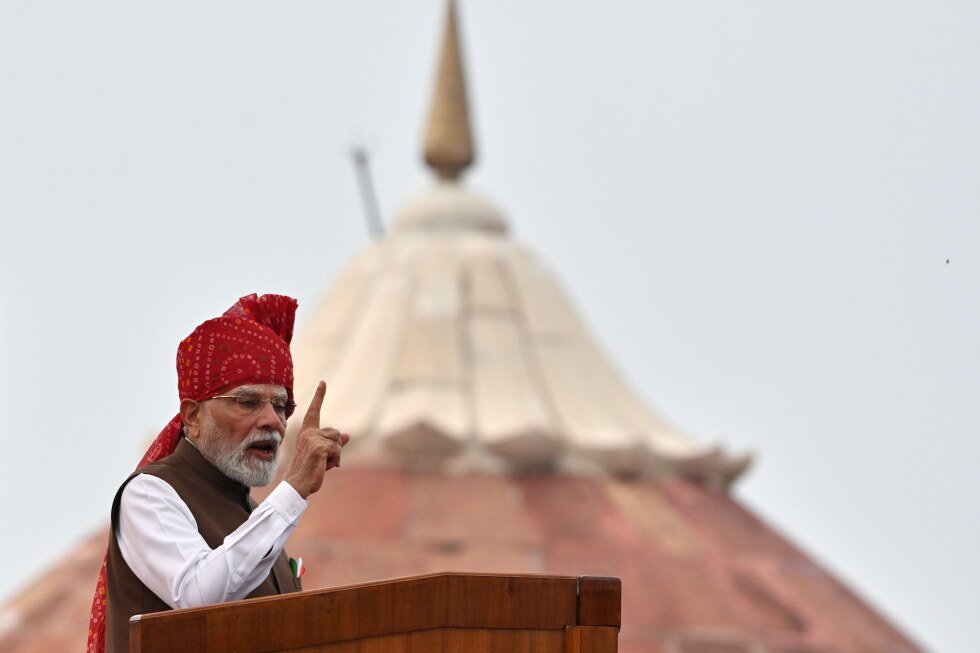
During his address marking India’s 79th Independence Day from the iconic Red Fort in New Delhi, Indian Prime Minister Narendra Modi declared on Saturday that the country’s decades-long Maoist insurgency was nearing its conclusion. However, he swiftly pivoted to warn of a new and evolving threat: “dimagi Naxals,” a term he used to describe individuals who espouse the movement’s underlying ideology. Modi asserted that the physical manifestation of Maoist violence, once considered India’s most significant internal security challenge, was “breathing its last” due to sustained security operations.
For many decades, the Naxalite movement, deeply inspired by the doctrines of Chinese revolutionary leader Mao Zedong, mounted a formidable challenge to state authority across vast stretches of central and eastern India. Originating in 1967 with an uprising in the village of Naxalbari, it championed the rights of landless farmers, the rural poor, and Indigenous communities, leading to the tragic loss of thousands of lives among civilians, rebels, and security personnel. Modi stated that this movement had “destroyed the future” of generations and attributed the sharp decline in Maoist violence since his 2014 ascent to power to his government’s robust security and development initiatives.
Despite the declared success against armed rebels, Modi emphasized the need to identify and isolate these “dimagi Naxals” or “intellectual Naxals,” whom he accused of actively seeking opportunities to instigate violence and unrest, thereby attempting to lead society astray. This phrase, “dimagi Naxal,” resonates strongly with the politically charged label “urban Naxal,” a term frequently employed by Modi and leaders of his Bharatiya Janata Party to categorize activists, academics, intellectuals, and other vocal critics of his administration. Critics, including international rights organizations like Amnesty International and Human Rights Watch, contend that such labels are increasingly used to stigmatize and silence dissent. They accuse the government of employing anti-terror laws, sedition provisions, and foreign-funding regulations to suppress civil society and target those who critique its policies.
In a related development, Modi also unveiled a series of initiatives designed to bolster India’s self-reliance across critical sectors, from defense to agriculture, with a pronounced focus on empowering the youth. This outreach to young people comes in the wake of a significant youth-led protest movement, known as the Cockroach Janta Party. This movement had emerged as a rare challenge to Modi’s government and played a role in the resignation of his education minister. Although Modi did not directly reference these protests, his speech consistently highlighted initiatives for young Indians, including artificial intelligence skills training and complimentary online coaching for competitive examinations. He proudly declared India’s transformation from a “fragile” economy to the world’s fastest-growing major economy over the past decade and reiterated his government’s ambitious goal of achieving developed nation status by 2047, coinciding with the centenary of India’s independence.
Jairam Ramesh, a prominent leader of the opposition Congress party, dismissed Modi’s “dimagi Naxals” remark as mere political rhetoric. He pointed out Modi’s previous use of “urban Naxals” for opponents and suggested that the shift to “dimagi Naxals” signifies a consistent pattern of vilification. Ramesh further accused Modi of initially demonizing certain ideas as extremist, only to eventually adopt them, citing the example of the caste census. He argued that the government initially dismissed the demand for a caste census as “urban Naxal” thinking before ultimately embracing it, signaling, according to Ramesh, Modi’s “desperation” and a cynical political maneuver. For more on the political landscape in India, consider exploring our India news category.