






India’s Power Demand Skyrockets to Record High Amidst Widening Supply Gaps
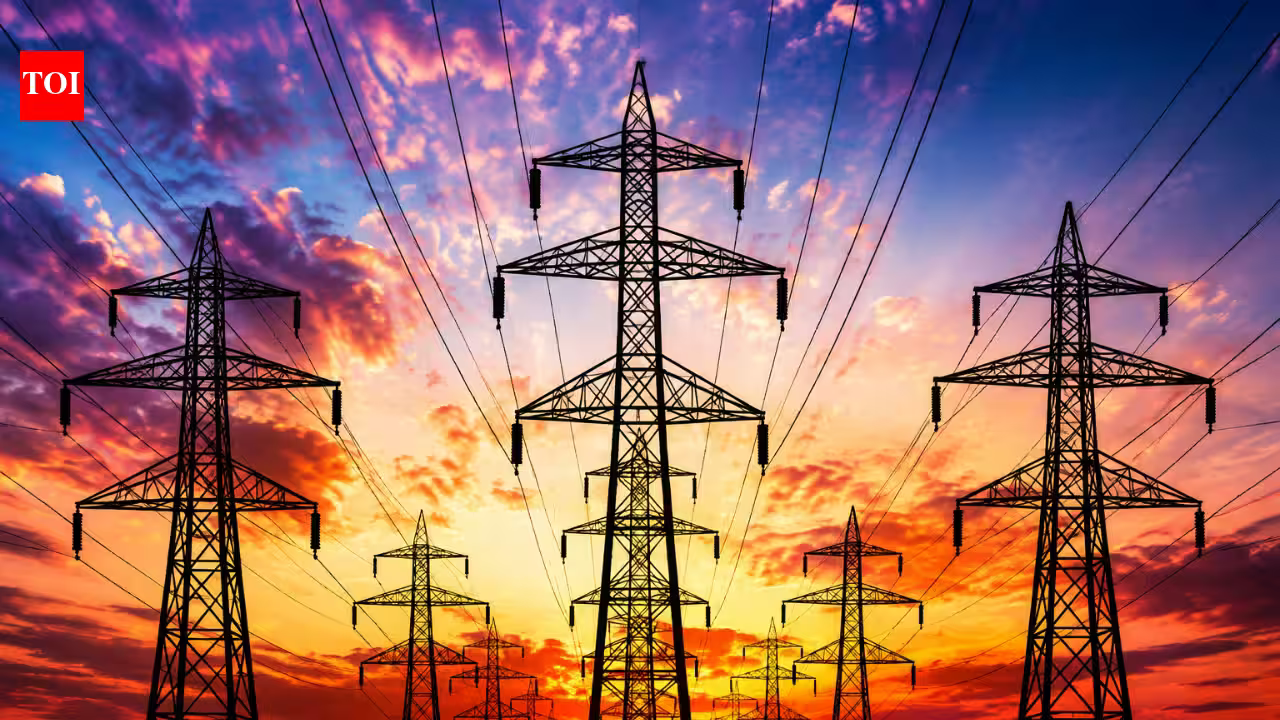
New Delhi, India – [Date of Publication] – India’s electricity grid is experiencing unprecedented pressure, with peak demand soaring by approximately 12% during the April-June period compared to the previous year. This surge culminated in a record-breaking peak demand of 270.8 GW in May, according to information presented to the Rajya Sabha on Monday.
Evening Shortfall Reaches Critical Levels
The strain on the nation’s power infrastructure became particularly pronounced during non-solar hours in June. Peak electricity demand reached 255,172 MW, while the available supply stood at 252,127 MW. This resulted in a significant shortfall of 3,045 MW, a stark increase from the gaps observed in the preceding months.
The supply deficit has shown a concerning upward trend: a gap of 1,225 MW was recorded in April, which then widened to 1,326 MW in May before escalating to the substantial 3,045 MW in June.
The northern region bore the brunt of this June shortfall, accounting for the largest share. Its evening peak demand registered 95,919 MW, with only 93,269 MW being met, leaving a substantial gap of 2,650 MW.
El Niño Conditions and Growing Demand
In a written reply to the Rajya Sabha, Minister of State for Power, Shripad Naik, attributed this surge in electricity requirements, in part, to the development of El Niño conditions. “During April to June 2026, overall rise in electricity peak demand was around 12% as compared to corresponding period last year,” the minister stated, highlighting the rapid expansion in energy consumption.
Despite these noticeable supply gaps, the government maintains that the country possesses adequate power availability. India’s installed generation capacity reached an impressive 548.86 GW as of June 2026, with a significant 324.7 GW added since April 2014, underscoring substantial investment in power infrastructure.
Transmission and Distribution Bottlenecks Highlighted
The primary cause for the discrepancy between electricity requirement and supply has been largely attributed by the government to constraints within state-level transmission and distribution networks. This suggests that while generation capacity may be sufficient, the ability to efficiently deliver power to consumers remains a challenge.
State-level figures from May illustrate this localized pressure. Bihar’s evening peak demand hit 8,702 MW, with only 7,784 MW supplied. In Maharashtra, a demand of 32,193 MW was met by 31,338 MW. Similarly, Punjab recorded an evening peak demand of 12,812 MW against a met supply of 12,352 MW.
Energy Mix and Future Outlook
Thermal power continued to be the dominant source of electricity generation during the three summer months, although its share saw a gradual decline. It accounted for 72.71% of total generation in April, dropping to 69.90% in May, and further to 68.39% in June.
Conversely, the share of renewable energy, including large hydro projects, demonstrated a positive trend, increasing from 24.13% in April to 28.11% in June. This indicates a growing contribution from cleaner energy sources to the national grid.
The government affirmed, “At present, there is no particular challenge in managing peak demand with fossil fuel resources supplemented by renewable resources.” However, it acknowledged that the integration of renewable energy would necessitate substantial growth in storage systems at an “exponential rate” over the medium to long term.
Future projections by the government envision the addition of approximately 39.88 GW of battery energy storage capacity and 10.95 GW of pumped-storage capacity between FY2027-28 and FY2029-30. This ambitious plan underscores India’s commitment to bolstering grid stability and facilitating a larger share of intermittent renewable energy sources.