







India’s Rice Surplus Paradox: Subsidies Fuel Global Dominance Amid Fiscal Strain
SISONEE, INDIA: India’s transformation from a food-insecure nation struggling to stave off famine into a global agricultural powerhouse is a modern marvel of science and policy. However, this success story is now haunting New Delhi. Decades-old subsidy frameworks, designed to encourage production, have triggered an unprecedented rice surplus that is straining the national treasury and fueling trade tensions on the international stage.
The Cost of Success
The fiscal burden of these incentives has become impossible to ignore. Rice subsidies now account for more than two-thirds of India’s massive food subsidy bill, which has doubled over the last decade to an estimated 2.28 trillion rupees ($24.1 billion) for the 2025/26 cycle.
Agricultural economist Ashok Gulati argues that the current system effectively weaponizes taxpayer funds to subsidize consumers in other countries. By offloading surpluses into the global market at deeply discounted rates, India is arguably undercutting the livelihoods of farmers in rival nations. Currently, Indian rice trades at a roughly $110-per-ton discount compared to benchmark Thai grain, leaving regional competitors frustrated.
A Technological Revolution
The root of this bounty lies in advancements like the Swarna-SUB1 rice variety, introduced in 2009. By cross-breeding high-yield strains with flood-tolerant genetics, scientists unlocked the potential of eastern India, a region previously plagued by monsoon-driven disasters.
Farmers like Chandramohan Yadav in Bihar have seen their fortunes shift dramatically. His village, located near the flood-prone Kosi River, once struggled to produce enough to feed its own inhabitants. Today, regional production has surged, with Bihar’s output climbing 182% in just 15 years. Across the country, total production hit a record 154 million tons in the 2025/26 season, far eclipsing the 107 million tons required to sustain India’s 1.4 billion people.
The Political Minefield
While the federal government seeks to reign in spending, it faces a complex political deadlock. Rice-producing states frequently offer “bonuses” above the federal Minimum Support Price (MSP) to court rural voters. This practice has created a cycle of overproduction that ignores market signals, leading to a surplus so vast that local storage facilities are overflowing.
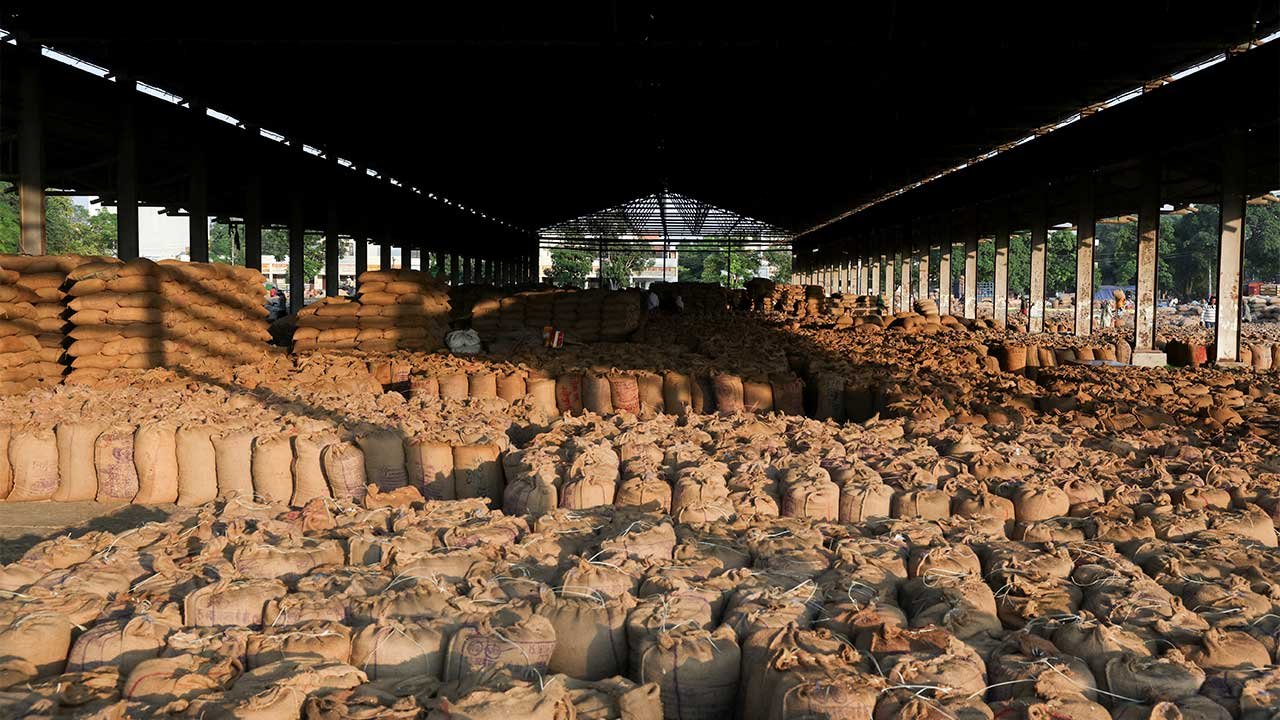
Industry figures report a dire lack of warehouse space, with private millers waiting months for government agencies to collect stocks. Despite internal pressure from the federal finance ministry to pivot toward crops like oilseeds and pulses—which India currently spends billions to import—state leaders remain tethered to rice production. In a nation where agriculture employs over 40% of the workforce, tampering with price supports is seen as a political third rail, evidenced by the mass protests that forced a government retreat on farm reforms in 2021.
Global Friction
As India secures a 40% share of the global rice trade, the diplomatic fallout is intensifying. Washington has accused New Delhi of “dumping” grain below cost, while trade bodies in the U.S. label the practices unfair. Similar complaints have echoed from Bangkok and Hanoi, as India’s record stocks place downward pressure on global prices.
As researchers prepare to introduce even more resilient grain varieties in the coming years, government projections indicate that the output-demand gap will only widen. With record-high stocks and no clear roadmap for subsidy reform, India finds itself in a precarious position: possessing the world’s most abundant supply of grain while struggling to manage the economic and political weight of its own harvest.
Disclaimer: This content is auto-generated for informational purposes only.
Source: Read Original News