






Deadly Synergy: Rising Incidence of Simultaneous Heatwaves and Pollution Plagues India
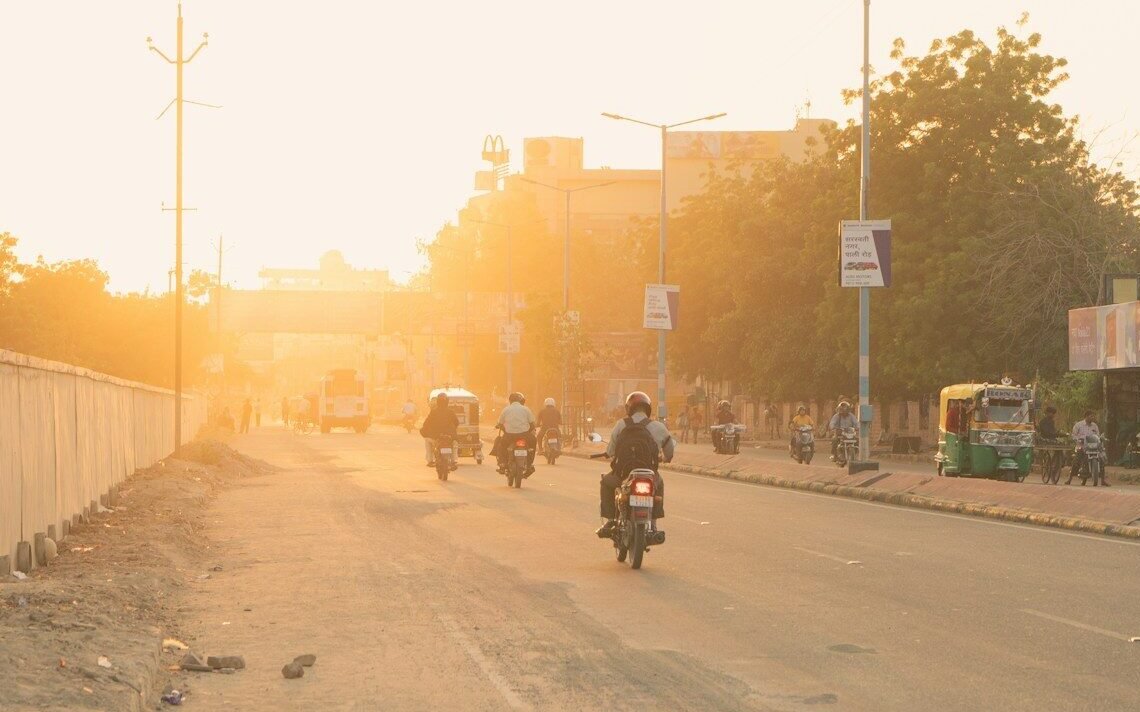
India is facing a rapidly escalating public health crisis as extreme heat and severe air pollution increasingly converge, creating “compound events” that pose a significantly greater risk to the population. A groundbreaking study conducted by researchers at Hong Kong Baptist University has shed light on this worrying trend, analyzing climate and air quality data from across the country between 2017 and 2024.
The findings indicate a sharp uptick in these dual-hazard occurrences, particularly in the period following 2020. This intersection of environmental stressors is not merely a coincidental alignment; it is a systemic shift driven by evolving atmospheric dynamics that threaten to undermine traditional efforts to improve air quality.
Northern India at the Epicenter
The research highlights that Northern India is especially vulnerable to these dual extremes. The data presents a harrowing reality: during April 2022, over 70% of the severe PM2.5 pollution episodes recorded in the northern regions occurred simultaneously with punishing heatwaves.
This regional concentration is tied to large-scale atmospheric circulation patterns. When high-pressure zones establish themselves over Northern India, they act as a double-edged sword. First, these systems intensify ground-level heat by suppressing cooling air currents. Second, they alter wind patterns, effectively trapping and transporting harmful pollutants into the region, which then stagnate due to the lack of atmospheric dispersion.
The Chemistry of Stagnation
Beyond simply trapping existing pollutants, these hot, stagnant conditions actively fuel the production of new hazards. The study reveals that the intense heat accelerates complex chemical reactions in the atmosphere, leading to a surge in the formation of secondary organic aerosols (SOA). These aerosols constitute a major, hazardous component of PM2.5 particles.
According to the research, the production of these secondary pollutants was found to be approximately 2.3 times higher during compound heat-pollution events compared to isolated pollution incidents. This creates a feedback loop where the heat itself makes the air significantly more toxic.
Redefining Air Quality Strategy
Lead author Huibin Dai emphasizes that historical environmental policies have often treated heatwaves and air pollution as separate entities. However, the latest findings suggest that this siloed approach is no longer adequate.
“This study shows that large-scale atmospheric circulation can simultaneously intensify heat and promote secondary aerosol formation,” Dai noted. “It highlights an important pathway through which climate variability can influence both weather extremes and air quality.”
The implications for policymakers are significant. Addressing air pollution in India will require more than just emission reduction strategies at the source; it now necessitates a sophisticated understanding of how shifting weather patterns and atmospheric chemistry exacerbate local air quality. As climate change continues to increase the frequency and intensity of heatwaves, these compound events are expected to become more prevalent in India’s densely populated urban centers.
Looking ahead, the research team intends to model how these compound extremes will evolve under various climate change scenarios. By quantifying the specific impacts on public health, the researchers hope to provide a robust scientific foundation for early warning systems, risk mitigation strategies, and long-term climate adaptation plans designed to protect vulnerable communities from this lethal, dual-threat environment.
Disclaimer: This content is auto-generated for informational purposes only.
Source: Read Original News