








The Digital Legacy of Neverwinter Nights
When Neverwinter Nights first launched, it arrived as a technological milestone in the landscape of role-playing games. While its predecessors, such as Baldur’s Gate and Icewind Dale, established the foundation for digital party-based combat, Neverwinter Nights shifted the architectural paradigm. By restricting each player to a single character and introducing the revolutionary role of the Dungeon Master (DM), the game effectively digitized the traditional tabletop experience. The DM role allows a human participant to manipulate the game world in real-time, spawning enemies, controlling non-player characters, and adjusting narrative beats on the fly. This functionality moved the game beyond a static software product and into the realm of a dynamic, interactive storytelling engine.
For many within its enduring community, the game acts as a bridge between high-fidelity gaming and the social collaborative nature of tabletop systems. Servers like Arelith function as massive, persistent miniature worlds, while others maintain curated, bespoke campaigns. This versatility remains the core reason why, decades after its release, the platform continues to thrive. It represents a direct translation of pen-and-paper mechanics, where the digital environment serves as the table, the grid, and the rulebook simultaneously.
A Sophisticated Construction Kit
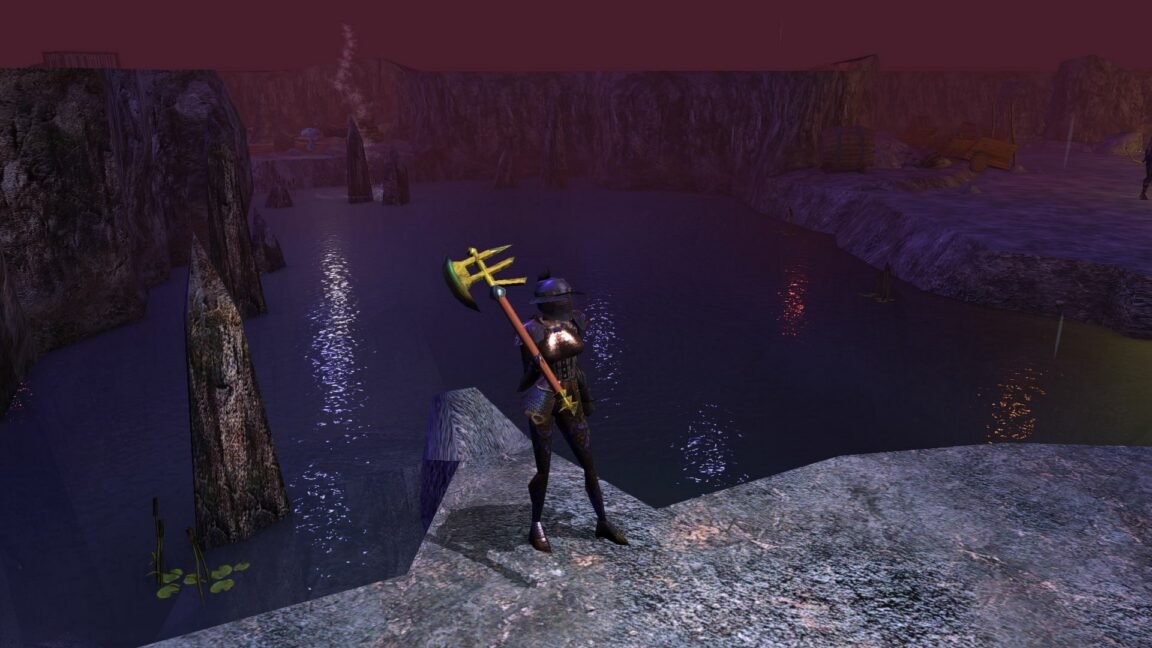
The true technical longevity of Neverwinter Nights stems from its design as a construction kit. Unlike modern titles that often gate their assets behind proprietary, locked-down engines, this platform provides users with an accessible, high-powered modding suite. The Aurora Toolset, included with the game, was a landmark in software accessibility. It allows users to design, script, and implement entire quest lines without requiring an advanced degree in computer science.
The architecture of the engine relies on modularity. By utilizing tile-based area generation, the game lowers the barrier to entry for prospective world-builders. While these tiles may appear simple compared to the procedural generation techniques of the modern era, they possess an inherent efficiency. Creators can assemble a dungeon, populate it with encounters, and set the logic for traps or puzzles in a matter of minutes. This balance between ease of use and creative depth is precisely what allowed a dedicated community to keep the game alive, effectively turning a retail product into a permanent development environment.
The Efficiency of Tile-Based Design
From a technical standpoint, the tile-based approach serves a dual purpose: it optimizes system performance and accelerates the creative workflow. Modern game development often requires massive assets and complex geometry, which can be daunting for amateur designers. In contrast, the Neverwinter Nights engine uses a discrete grid system that snaps together, ensuring that pathfinding and object collision are handled reliably by the engine by default.
This design constraint is not a limitation; it is a catalyst for productivity. Because the heavy lifting of spatial geometry is handled by the tile set, designers can dedicate their focus to the nuances of narrative structure, complex scripting, and balanced encounter design. For long-term users, the interface has become a second language, allowing for the rapid deployment of complex environments that remain stable and functional. It is a testament to the game’s architecture that even with contemporary hardware, the engine remains remarkably responsive and capable of hosting complex, multi-layered scenarios.
Scripting for Dynamic Interactions
The scripting language employed by Neverwinter Nights—based on C-like syntax—is arguably the most powerful component of its ecosystem. It allows for event-driven programming, where specific player actions can trigger complex changes in the environment. A player pulling a lever might trigger a script that unlocks a door, spawns a wave of enemies, and alters the global variable of an ongoing quest.
This level of control empowers designers to build complex, reactive worlds that feel alive. By utilizing these tools, developers of community-run servers have created systems that simulate economies, faction reputations, and persistent character growth that persists across login sessions. The elegance of the scripting environment allows these creators to achieve sophisticated results that would typically require a much larger team in a standard development cycle. Consequently, the user-generated content often rivals, and in some cases exceeds, the complexity of the official, pre-packaged campaigns.
The Longevity of User-Generated Worlds
The most striking aspect of the Neverwinter Nights phenomenon is the shift in how the community consumes the product. Many veteran users have spent thousands of hours within the environment without ever finishing the original, developer-made campaigns. For these users, the product is not a game to be “beaten,” but a digital studio in which to build.
This community-centric longevity illustrates a key principle in software design: provide users with the tools to create, and they will build a ecosystem that far outlasts the intended commercial lifespan of the product. By providing a low barrier to entry, a high ceiling for complexity, and the necessary infrastructure for multiplayer connectivity, the developers created a platform that effectively functions as a perpetual-motion machine of content creation. Even as gaming technology has advanced toward photorealism and massive open-world scales, the unique synthesis of accessibility and depth found in the Neverwinter Nights toolset remains a benchmark for how developers can empower their audience to become architects of their own virtual realities.
Disclaimer: This content is auto-generated for informational purposes only.
Source: Read Original News