







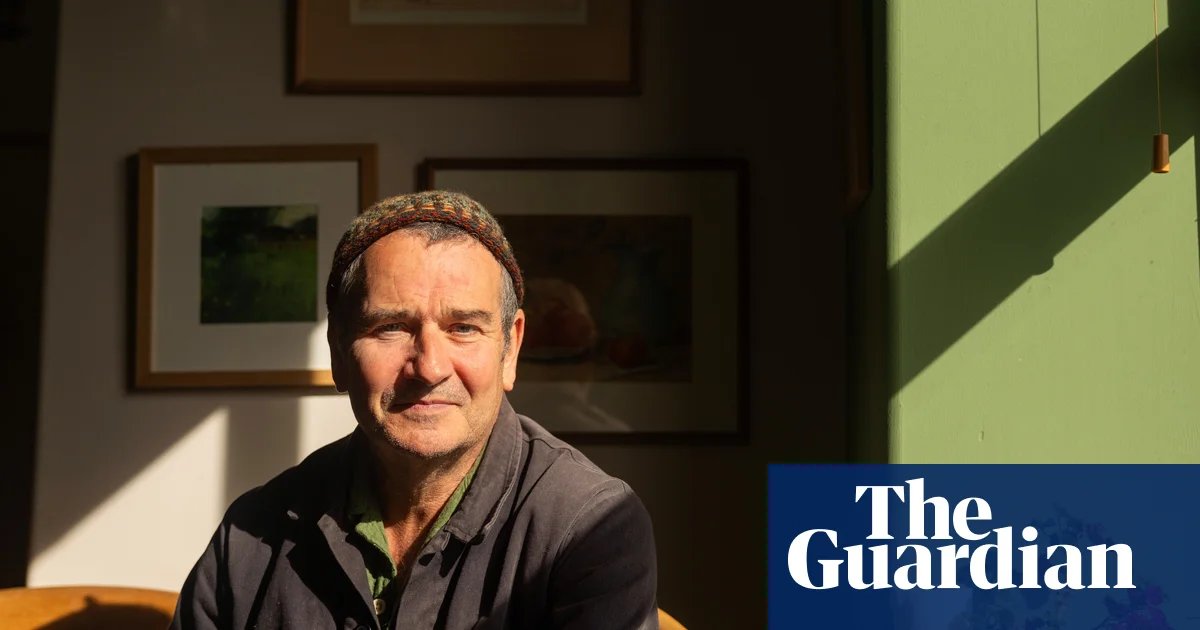
In the autumn of 1987, a young Mark Cocker sat in a field near Norwich, observing a jay methodically burying acorns to sustain itself through the impending winter. He documented the experience for his first Country Diary contribution to the Guardian. Thirty-nine years later, those jay-planted seeds have matured into full-grown oaks, and Cocker has reached a significant milestone: the completion of his 1,000th column for what is recognized as the oldest continuous nature column in any English-language newspaper.
The Country Diary traces its origins to 1904, initiated by Thomas Coward, a naturalist and retired textile bleacher. Today, the column serves as a vital platform for a diverse cohort of 30 contributors, ranging from scientists and farmers to thatchers and foragers. Despite the breadth of expertise represented by this group, Cocker’s tenure has provided a consistent, deeply reflective voice on the state of the British landscape.
Reflecting on his journey, Cocker highlights the stark shifts in biodiversity he has witnessed throughout his career. In his upcoming piece, he revisits Flint Clough in the Peak District, a site that fueled his passion for ornithology when he was just 12 years old. As a boy, the area was teeming with species such as cuckoos, golden plovers, and the twite—a finch once synonymous with the Pennines that has since teetered on the brink of regional extinction. Conversely, recent visits to the same site revealed a resurgence of raptors that would have been unimaginable to his younger self, including multiple buzzards, peregrines, marsh harriers, and red kites.
Mastering the column—which demands a concise 360-word narrative—is a challenge Cocker likens to the craft of haiku. “You’ve got to awaken the subject from its dormancy and get straight into the theme,” he explained. According to the current Country Diary editor, Paul Fleckney, Cocker possesses a rare ability to bridge hyper-detailed naturalistic observation with the broader philosophical implications of the ecological era.
This skill is central to his latest publication, The Nature of Seeing, which explores how modern society might re-engage with the natural world. Cocker argues that we have lost a fundamental “level of attention” to our environment, citing Inuit fishers who can navigate fog-bound coastlines by recognizing the subtle variations in bird songs. He suggests that the Country Diary acts as a necessary repository for reclaiming that lost connection.
In an age defined by the climate and biodiversity crises, Cocker views the column as more than just a record of seasonal shifts; he sees it as a space for examining the “meta-story” of humanity’s relationship with the rest of life. “Meaning has been poured on to the diary because it is a repository now for a sense of the impending crisis which assails all life,” he noted.
As the longest-serving contributor following the recent retirement of Phil Gates, Cocker remains a staunch advocate for the power of the medium. He maintains that the discipline of close observation is essential, not only for the sake of the environment but for a deeper understanding of our own existence. For Cocker, the purpose of his writing remains constant: to open the eyes and ears of his readers to the wonders that persist, even in an increasingly fragile world.
Disclaimer: This content is auto-generated for informational purposes only.
Source: Read Original News