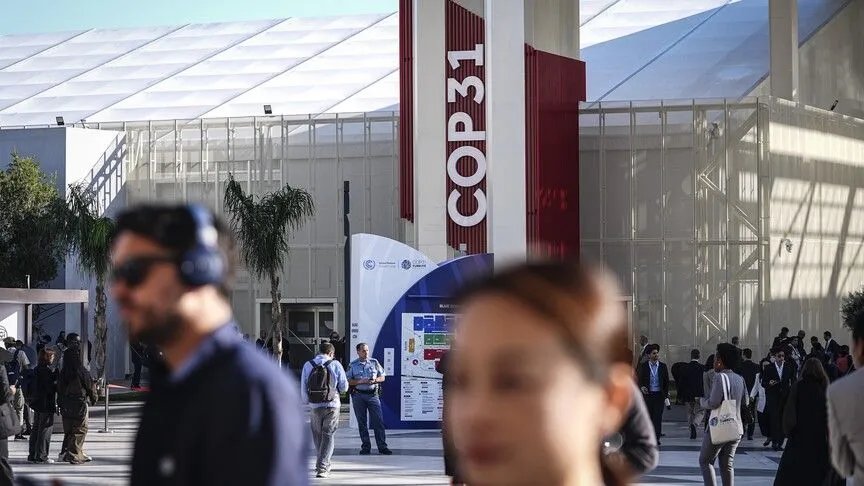







ANTALYA – The global insurance sector has moved to the forefront of climate action, with experts arguing that the industry’s advanced risk-modeling capabilities are essential for shaping long-term climate resilience and damage prevention strategies.
Speaking on the sidelines of the Insurance House event at COP31 in Antalya, Butch Bacani, head of insurance at the UN Environment Programme (UNEP), emphasized that the insurance industry’s proficiency in assessing physical threats offers a roadmap for hazard mitigation. By utilizing sophisticated data to predict where and how climate-driven disasters may occur, the sector provides insights that allow governments and organizations to reinforce infrastructure long before a crisis strikes.
“The insurance industry’s expertise in assessing physical threats can guide broader efforts in damage prevention and hazard mitigation,” Bacani stated. He noted that while eliminating all climate-related hazards is impossible, the role of the insurer remains a critical safety net. The primary mandate of the industry, according to Bacani, is to manage residual disaster risks by ensuring that insurance coverage remains both affordable and accessible, while providing the necessary financial liquidity to help communities recover and rebuild in the immediate aftermath of a disaster.
The event, hosted by the Turkish Insurance Association in collaboration with the UNEP Finance Initiative, brought together global stakeholders to discuss the intersection of sustainable insurance and international resilience strategies. A central theme of the discussions was the need to shift from reactive financial relief to proactive risk management.
However, Bacani warned that the insurance sector cannot shoulder the burden of global climate instability in isolation. He called for a more integrated approach across the financial and political spectrum, urging policymakers, commercial banks, and corporate investors to weave climate resilience into the core of their operations.
“Policymakers, banks, and corporate investors need to integrate climate resilience into their credit approvals and insurance planning,” Bacani explained. By embedding these risk-modeling insights into the early stages of capital allocation and credit underwriting, the financial sector can incentivize climate-smart development, effectively reducing the overall exposure of the global economy to extreme weather events.
For these strategies to be effective, Bacani highlighted the urgent need for climate adaptation plans to evolve into clear, “investable” frameworks. Currently, many national climate initiatives lack the technical specificity required to attract private investment. By standardizing risk metrics and clarifying the economic benefits of climate-proofing, nations can create a more predictable environment for long-term investments.
The COP31 summit served as a critical platform for these discussions, acting as a bridge between scientific climate modeling and practical financial execution. According to Bacani, the global deals and financial commitments formalized during the conference are not merely symbolic; they are intended to provide a concrete foundation for countries to execute their national climate action plans over the coming years.
As extreme weather events increase in frequency and intensity, the insurance industry is increasingly seen as a vital partner in the global effort to adapt. By moving the focus from the payout phase to the prevention phase, stakeholders believe that the financial sector can help transform climate resilience from a policy goal into a measurable, economic reality. The success of these initiatives will ultimately depend on the ability of governments and private institutions to adopt the risk-modeling transparency championed by the UNEP and its partners at this year’s climate summit.
Disclaimer: This content is auto-generated for informational purposes only.
Source: Read Original News