








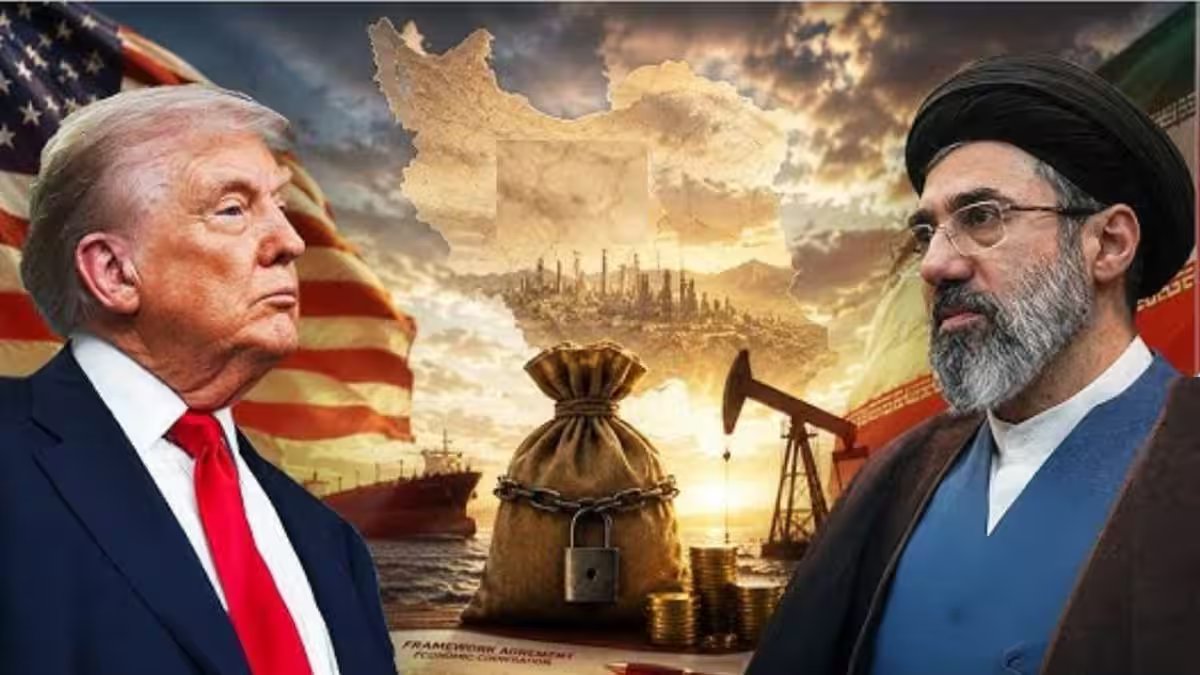
The ongoing Iran war has undeniably shifted its primary battleground from conventional military engagements to a sophisticated economic offensive. Washington, under the Trump administration, has significantly escalated its reliance on a multi-pronged strategy encompassing severe sanctions, stringent oil restrictions, pervasive financial pressure, and a naval blockade targeting Iranian ports. This aggressive approach is meticulously crafted to systematically deplete Tehran of the vital revenue and international economic access it requires for sustenance, with the ultimate objective of compelling concessions from the Iranian regime. The critical question now looming is whether this intensified economic coercion will ultimately force Iran to capitulate, or if the mounting economic ramifications will increasingly spread, impacting the United States and its allies.
Months into this protracted conflict, the Trump administration has demonstrably intensified its focus on these economic levers. The strategy is designed to isolate Tehran financially and physically, hindering its ability to generate income and engage in global trade. Recent statements from US Treasury Secretary Scott Bessent indicate Washington’s intent to introduce even more stringent economic measures against Iran, surpassing previous sanctions campaigns. Reports from Reuters highlight Bessent’s assertions that the United States is preparing “unprecedented measures,” while simultaneously leveraging the naval blockade of Iranian ports as a sustained component of its pressure campaign. This underscores that the current economic strategy is far more comprehensive than merely another round of sanctions; it represents a concerted effort to combine financial isolation with direct pressure on the physical movement of Iran’s crucial oil exports and other commodities.
The potential ramifications of this economic isolation for Iran are profound, and the next phase of these measures could extend beyond just Iranian entities. Reuters has reported that Washington is contemplating secondary sanctions against independent Chinese refineries, colloquially known as “teapots,” that continue to purchase Iranian crude oil. Furthermore, Chinese banks facilitating the processing of Iranian oil revenues could also find themselves under increasing pressure. Such actions would be immensely significant, given that China remains the primary destination for Iran’s oil exports. Kpler data, cited by Reuters, revealed that China acquired over 80% of Iran’s shipped oil in 2025, with these independent Chinese refineries accounting for a substantial portion of that trade. The overarching objective, therefore, is to complicate the operations of Iran’s economic network, even when transactions involve companies situated outside Iran’s direct jurisdiction. The United States has already targeted tankers, insurance providers, and other maritime trade components associated with Iranian oil. In July, Washington imposed additional Iran-related sanctions on insurers and tankers, further tightening the net around Tehran’s critical oil trade. However, targeting Chinese businesses introduces a distinct level of risk. The imposition of secondary sanctions could propel Washington into a direct economic confrontation with Beijing, potentially disrupting a crucial source of crude oil for Chinese refiners and escalating broader geopolitical tensions.
While there is little doubt that the economic pressure is inflicting considerable hardship on Iran, the combination of sanctions, disrupted oil exports, and the naval blockade has significantly impeded Tehran’s ability to earn and transfer foreign currency. However, economic hardship does not inherently translate into political concessions. Iran has, over many years, developed sophisticated mechanisms to operate under sanctions, including establishing alternative trading arrangements, informal financial channels, and resilient networks designed to maintain oil flow despite international restrictions. This historical context is crucial, as Washington is attempting a strategy that has been tried before: leveraging economic pain to compel a shift in Tehran’s strategic behavior. The Trump administration is banking on the assumption that the cumulative pressure will eventually become too costly for Iran to absorb. Nevertheless, analysts have consistently warned that sanctions often require substantial time to yield political results and may not, in isolation, deliver the specific concessions Washington desires. The Associated Press has reported that the administration’s renewed sanctions strategy faces skepticism regarding its ability to achieve a rapid breakthrough, given the mixed results of decades of economic pressure. This creates the central uncertainty of the current conflict: precisely how much economic pain can Iran realistically withstand, and conversely, how much economic disruption can the United States and its international partners tolerate?
The strategic importance of the Strait of Hormuz dramatically complicates this geopolitical calculation. For Washington, reopening this vital waterway has become increasingly critical, as the unimpeded flow of normal shipping is essential for restoring global energy markets. Conversely, for Tehran, restricting traffic through the Strait provides one of its most potent means of imposing costs that extend far beyond its borders. Recent reports indicate a sharp decline in commercial traffic through Hormuz following a series of attacks on vessels and renewed US threats of intensified economic pressure. This signifies that the economic conflict is no longer confined solely to Iran. A prolonged disruption in the Strait could lead to a significant increase in oil and shipping costs, negatively impact global insurance markets, and exert substantial pressure on economies heavily reliant on Gulf energy supplies. Moreover, such disruption could generate considerable political pressure on Washington if rising fuel prices begin to adversely affect American consumers. This inherent paradox lies at the heart of the current strategy. The US seeks to leverage economic pressure to force Iran to bear the costs of restricting Hormuz. However, the longer Hormuz remains disrupted, the greater the likelihood that Iran’s economic weapon will also impose substantial costs on the United States and the broader global economy.
The ongoing confrontation is, therefore, evolving into a critical test of competing strategic calculations. Washington firmly believes that Iran’s profound dependence on oil revenue, foreign trade, and access to international finance grants the United States considerable leverage. Tehran, on the other hand, is betting that it possesses the resilience to absorb significant economic hardship while simultaneously utilizing the Strait of Hormuz and regional instability to escalate the costs of sustained US pressure. While the US retains the capacity to further tighten sanctions, target foreign companies engaging with Iran, and restrict the movement of Iranian oil, every escalation carries the inherent risk of retaliation, particularly through disruptions to shipping and energy markets. This is precisely why the economic front could ultimately prove more intricate and unpredictable than conventional military engagements. While a battlefield offers relatively clear metrics of success, such as destroyed territory, eliminated weaponry, or repelled attacks, economic warfare is considerably more challenging to quantify. A nation’s currency can weaken without necessarily leading to governmental collapse. Oil exports can plummet without compelling political surrender. Sanctions, while inflicting immense hardship, may not always result in a negotiated settlement. For Washington, the ultimate measure of success will be whether economic pressure can effectively elicit the desired political concessions from Tehran. For Iran, the calculation is fundamentally different: whether it can endure the economic squeeze long enough for the cumulative economic and political costs of this undeclared war to become uncomfortably high for Washington and its allies.
Consequently, the Iran conflict is now entering a pivotal phase where elements such as sanctions, oil, financial institutions, maritime tankers, and the Strait of Hormuz wield almost as much influence as conventional military weaponry. As the conflict prolongs, the central question shifts beyond merely who can inflict greater damage to which side possesses the enduring capacity and willingness to continue paying the escalating price.