








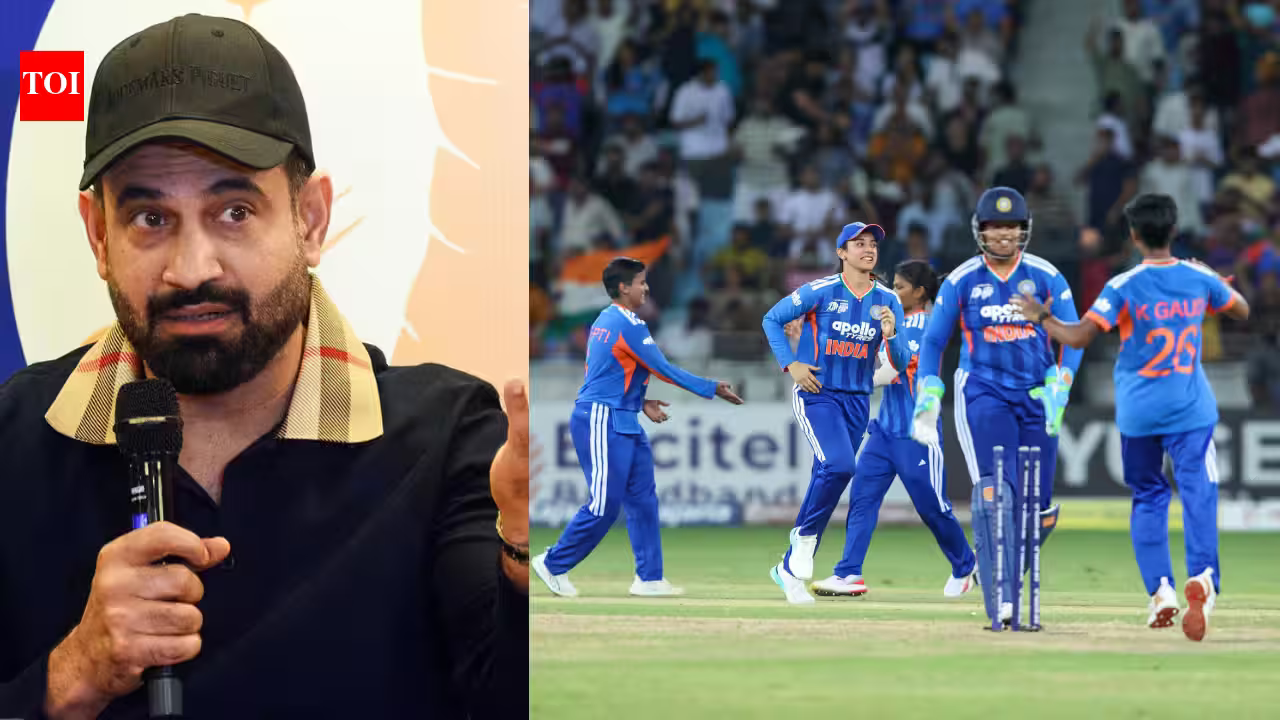
“Aaj Sunday hai kya?” – With those four words, Irfan Pathan reignited one of cricket’s most colorful social media sagas, once again turning the heat on Pakistan following India’s clinical demolition of their arch-rivals in the Women’s Asia Cup 2026.
The former Indian all-rounder, now a sharp-tongued pundit, took to X (formerly Twitter) just minutes after the final ball was bowled on Saturday. His post was a nostalgic, albeit biting, callback to his viral 2023 campaign, where he famously poked fun at Pakistan after India secured victories on three consecutive Sundays. By invoking the phrase, Pathan signaled that while the personnel on the field may have changed, the trend of Indian dominance remains a constant force.
## Spin Twins Strangle Pakistan in Record-Breaking Collapse
If the social media chatter provided the entertainment, the action on the pitch provided the substance. The Group A clash was billed as a high-stakes encounter, but it quickly devolved into a one-sided procession as India’s spin-dominant bowling attack left Pakistan in tatters.
Pakistan’s innings was nothing short of a nightmare. After a relatively stable start—reaching 27 for no loss—the batting lineup crumbled under the pressure of spin. What followed was a historical collapse: Pakistan was bowled out for a mere 55 runs in 18.1 overs, marking their lowest-ever total in the history of T20 International cricket.
The architect of this destruction was the young spin duo of Shree Charani and Prema Rawat. The 22-year-old Charani, bowling with guile and precision, suffocated the middle order to finish with a stellar 3/7 from her four-over spell. Complementing her beautifully was 24-year-old leg-spinner Prema Rawat, who carved through the lineup to claim 3/9.
The depth of India’s bowling quality was further highlighted by the statistics: the Indian bowlers forced a staggering 78 dot balls during the 18.1-over stint. Deepti Sharma provided the finishing touches with 2/5, and Shafali Verma chipped in with 1/10, ensuring that Pakistan’s middle and lower order had virtually zero room to breathe. The collapse was absolute—at one stage, Pakistan lost six wickets for just nine runs, sliding from a hopeful position to a disastrous 36/6 within the 10th over.
## Harmanpreet Kaur’s Milestone Mastery
Beyond the numbers, the match served as a historic occasion for Indian captain Harmanpreet Kaur. By taking the field on Saturday, the legendary leader became the first Indian cricketer—male or female—to captain the national side in 150 T20Is.
It was a day that perfectly encapsulated the “Harmanpreet era.” Recognizing early that the pitch was offering significant assistance to the spinners, she rotated her bowlers with surgical precision, allowing them to exploit the turn and bounce that ultimately dismantled Pakistan.
With the ball, her leadership was flawless; with the bat, she provided the finality. While India’s chase saw a few minor hiccups—losing Shafali Verma for 12, Smriti Mandhana for 9, and Pratika Rawal for 4—the target of 56 was never going to be an insurmountable hurdle. Harmanpreet ensured there would be no late drama, remaining unbeaten on 18 and smashing a towering six down the ground to seal the victory in just 8.4 overs. Deepti Sharma stood alongside her, finishing on 12 not out to cap off a professional performance.
## A Legacy of Dominance
The seven-wicket victory reinforces a trend that has defined the rivalry in the Women’s T20 Asia Cup for years. India’s grip on this fixture is ironclad; they have now claimed victory in seven of their eight meetings against Pakistan in the tournament’s history.
For the Pakistani side, this match represents a significant reality check. Conversely, for the Indian team, the win serves as a testament to their superior depth, technical adaptability, and composure under pressure. As the tournament progresses, the clinical nature of this performance will serve as a warning sign to other contenders.
As the dust settled on the stadium, Pathan’s punchline echoed across the digital landscape. “Aaj Sunday hai kya?” may have been written in jest, but it serves as a stark reminder of the current power balance between the two cricketing neighbors. In the arena of the 2026 Women’s Asia Cup, India remains the undisputed titan, and for the fans watching, the result was as routine as a Sunday afternoon.
Disclaimer: This content is auto-generated and paraphrased.
Source: Read Original News