








Crackdown in the Capital: Delhi Under Lockdown as Voter Roll Protests Escalate
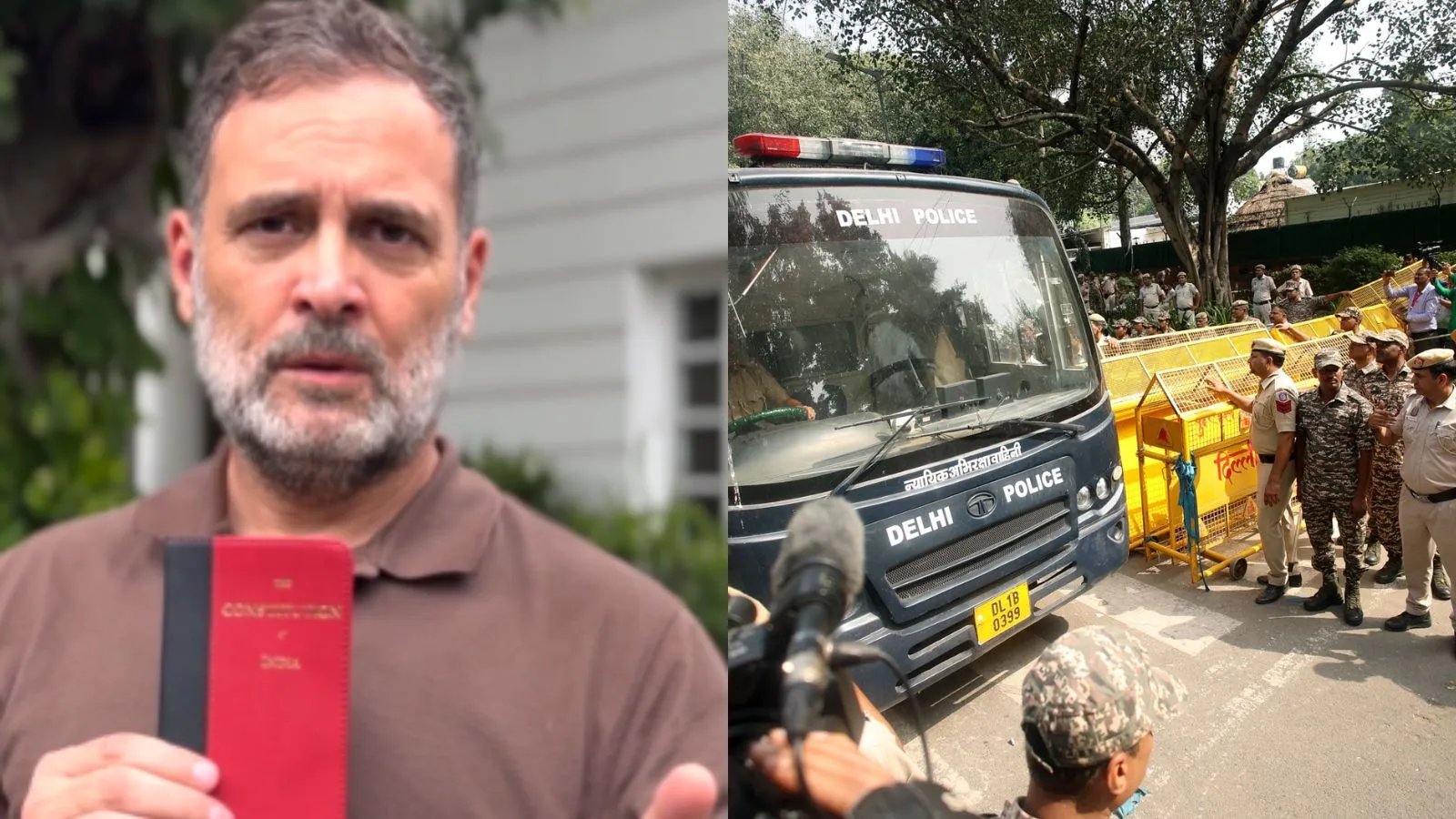
New Delhi was plunged into a state of extreme securitization this weekend as authorities deployed over 20,000 police and paramilitary personnel to neutralize mass protests against the Election Commission of India (ECI). The city, which has been the site of growing civil unrest for two weeks, saw its primary protest venue, Jantar Mantar, completely barricaded by security forces to prevent a planned demonstration.
The surge in public anger stems from a bombshell report by The Indian Express, which alleged that the ECI had purged more than 130 million citizens from voter rolls without adherence to standard legal procedures. The mobilization was spearheaded by the Cockroach Janata Party (CJP), a youth-led group that gained national prominence in July after successfully organizing demonstrations that led to the resignation of then-Education Minister Dharmendra Pradhan.
A City Under Siege
The government’s response to the anticipated gathering was swift and forceful. In a move that signaled deep anxiety within the administration, authorities reportedly diverted security forces from sensitive border regions—including Kashmir—to secure the capital.
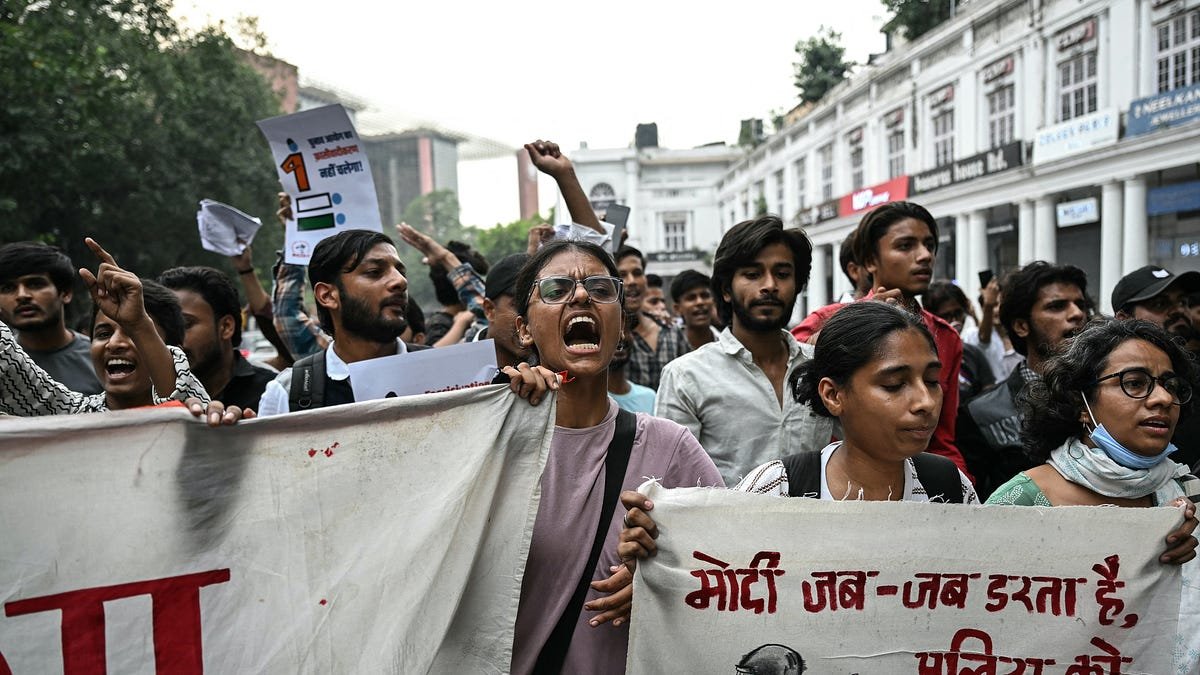
The CJP’s leadership faced immediate suppression. Founder Abhijeet Dipke and several senior organizers were apprehended directly on their flight upon arrival at the Delhi airport and held in custody through the weekend. Despite the decapitation of their leadership, protesters navigated a city effectively under lockdown. Many who managed to bypass police cordons were detained simply for attempting to reach central Delhi, while others were plucked from random locations throughout the city.
By Sunday, reports indicated that over 2,000 individuals had been taken into custody. Among those detained was renowned welfare economist Jean Drèze, who described the scale of the state’s repression as unprecedented in his five decades of working in India.
Violence and Solidarity
As the state applied heavy-handed tactics, reports emerged of right-wing groups, such as the Hindu Raksha Dal, actively harassing protesters. Viral footage from the city captured instances of activists being assaulted by groups claiming ideological alignment with the government, often while security personnel stood by without intervening.
The atmosphere of tension spilled into religious spaces. Witnesses reported that police entered the Gurudwara Bangla Sahib, a prominent Sikh temple, to detain protesters who had sought refuge. Medical professionals on the scene alleged that detainees were subjected to physical abuse, specifically targeting their hands and fingers, rather than traditional baton use, in an apparent effort to cause injury while avoiding the appearance of conventional police violence.
The Rise of Grassroots Aid
Amidst the crackdown, a resilient network of civilian support has emerged. The “Protest Support Initiative,” a volunteer group comprising doctors, therapists, and logistics coordinators, has become the backbone of the movement. Born out of the necessity to assist those abandoned or injured during previous demonstrations, the initiative provides everything from emergency first aid and trauma counseling to transportation for detainees released at random, remote locations.
Founders of the initiative, such as journalist Meghnad and filmmaker Satvik Soni, emphasize that the current climate requires more than just political activism; it requires survival infrastructure. “The leaders left, so we had to step in,” Soni explained, noting that the group is operating entirely on personal savings to ensure that protesters are not left vulnerable to the state’s intimidation tactics.
As of Sunday evening, spontaneous pockets of resistance continued to flare up in high-traffic areas like Connaught Place and the Safdarjung flyover. Despite the heavy security presence and the threat of arbitrary detention, the spirit of the protests appears to be hardening. For many of the participants, the experience of police brutality has only served to strengthen their resolve to challenge the legitimacy of the recent electoral roll purges.
Disclaimer: This content is auto-generated for informational purposes only.
Source: Read Original News