






And in February, a Houston firm that had been planning a $9.2 billion clean energy project at the Port of Greater Baton Rouge since 2020 was acquired by a Silicon Valley company that has shelved the project — Grön Fuels — for the foreseeable future, if not altogether.

Artist’s rendering of the first phase of the proposed Grön Fuels LLC renewable diesel manufacturing facility.
Taken together, the projects totaled more than $15 billion in planned investments in the state and promised hundreds of permanent new jobs, though Louisiana Economic Development Secretary Susan Bourgeois said none of them was among the $110 billion worth of new capital spending that Louisiana has secured since 2024.
Still, the recent decisions raise questions about the future of an industrial boom in the state that was predicated, at least in part, on state and federal policies that incentivized companies to reduce their carbon footprint by capturing emissions and burying them underground.
Those policies, under President Donald Trump, are changing, at a time when Gov. Jeff Landry’s administration has paused permitting for new carbon injection wells amid growing environmental concerns from local communities.
“We thought the renaissance was going to be this energy transformation,” said Tim Barfield, president and CEO of Baton Rouge-based consulting firm CSRS, which was working with the developers of the Grön Fuels project. “Some of those projects have dropped down on the priority list because of broader, macroeconomic factors.”
“I do think it will come back,” he said. “Maybe not with the same kind of vigor and blind optimism we had at one time but eventually.”
Different priorities
Nearly two decades ago, as a growing body of research established the impact of greenhouse gas emissions on climate change, the federal government began offering federal tax credits to companies that lowered their carbon footprint by capturing and storing carbon dioxide.
President Joe Biden’s administration expanded the program in an effort to boost projects that would limit the impacts of climate change. That led to the proliferation of carbon capture and sequestration projects along the Gulf Coast.
Though Trump has not done away with the tax credits in his second term, he has questioned the effects of human activity on climate change and focused on increasing traditional fossil fuel production, shifting the focus away from low-carbon projects.
At the same time, the global market for lower carbon products like the so-called “blue” ammonia that Air Products planned to make in Ascension Parish has chilled somewhat, experts say, reducing the demand.

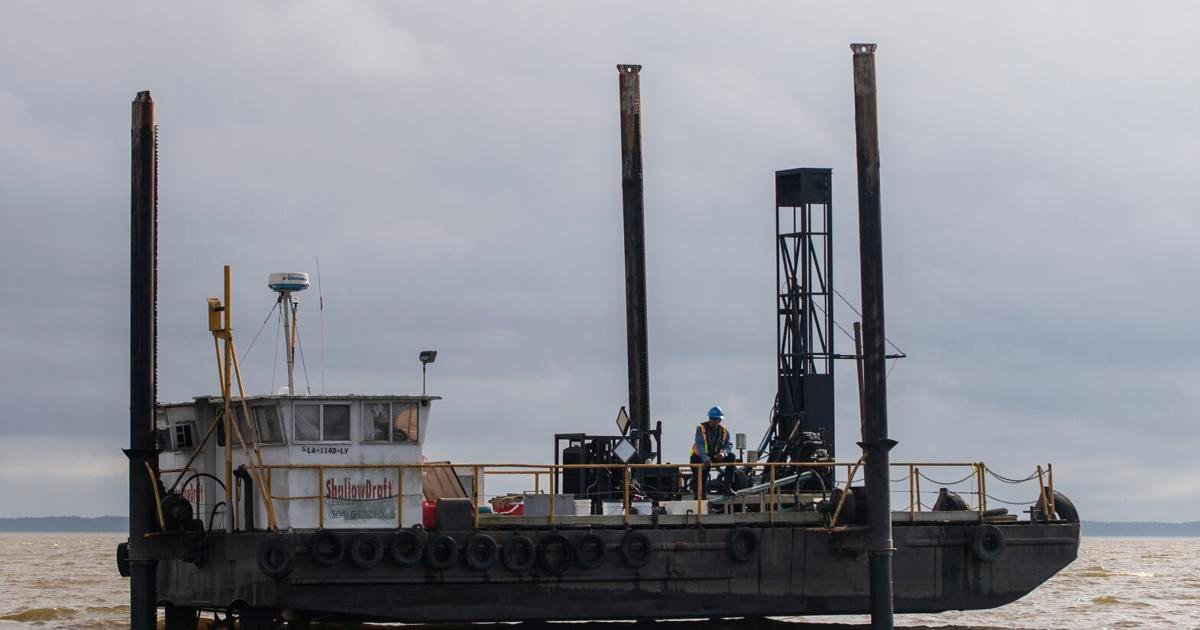
Crew members from Air Products wait for the detonation on Lake Maurepas from test the company hosted to demonstrate to locals on Monday, December 5, 2022 in Akers, Louisiana.
Closer to home, Landry has given credence to concerns about the impact carbon injection wells could have on aquifers and communities near where they’re located, imposing a moratorium on new well permits in 2025.
The combination of factors, experts say, is making some companies rethink decisions they made several years ago.
“It’s fair to say that that regulatory uncertainty has been one of the factors that contributed to some of these projects maybe not moving forward,” said Greg Upton, executive director of the LSU Energy Institute.
Instability, unpredictability
While regulatory uncertainty impacted each of the recently canceled or shelved clean energy projects once planned for Louisiana, each project also faced unique circumstances.
As far back as last year, Air Products indicated to investors it was looking to sell off the ammonia and carbon-capture components of its project to focus on its core business of transporting and selling industrial gases.
Last week, its Norwegian partner in the deal announced that it would not acquire the ammonia component of Air Products’ Louisiana project, citing low projected financial returns.
In the case of Beaver Lake, the proposed wood fiber-to-low carbon methanol facility planned for a former paper mill in central Louisiana, SunGas blamed several factors for its decision not to move forward. Among them: “slower-than-expected market adoption of low carbon methanol, uncertainty regarding the carbon capture and storage pathway for the project and clarity on the available regulatory support and financing conditions needed to support a project of this scale.”

The former International Paper facility in Rapides Parish is pictured Thursday, August 31, 2023, in Pineville, La.
Grön Fuels, a low-carbon project planned for the west bank of Baton Rouge that would have used soybean and canola oil, tallow and used cooking oil to produce renewable diesel fuel, was put on the back burner after the Houston firm behind the project, Fidelis Energy, was acquired by California-based Nscale.
Though Nscale did not say outright that it is canceling the project, a release announcing the Fidelis acquisition said the deal would enable Nscale to focus on artificial intelligence data center construction.
Barfield, who worked with Fidelis on the Grön project for more than five years, said the country’s energy industry is in a different place than it was in 2020, with different priorities and mandates.
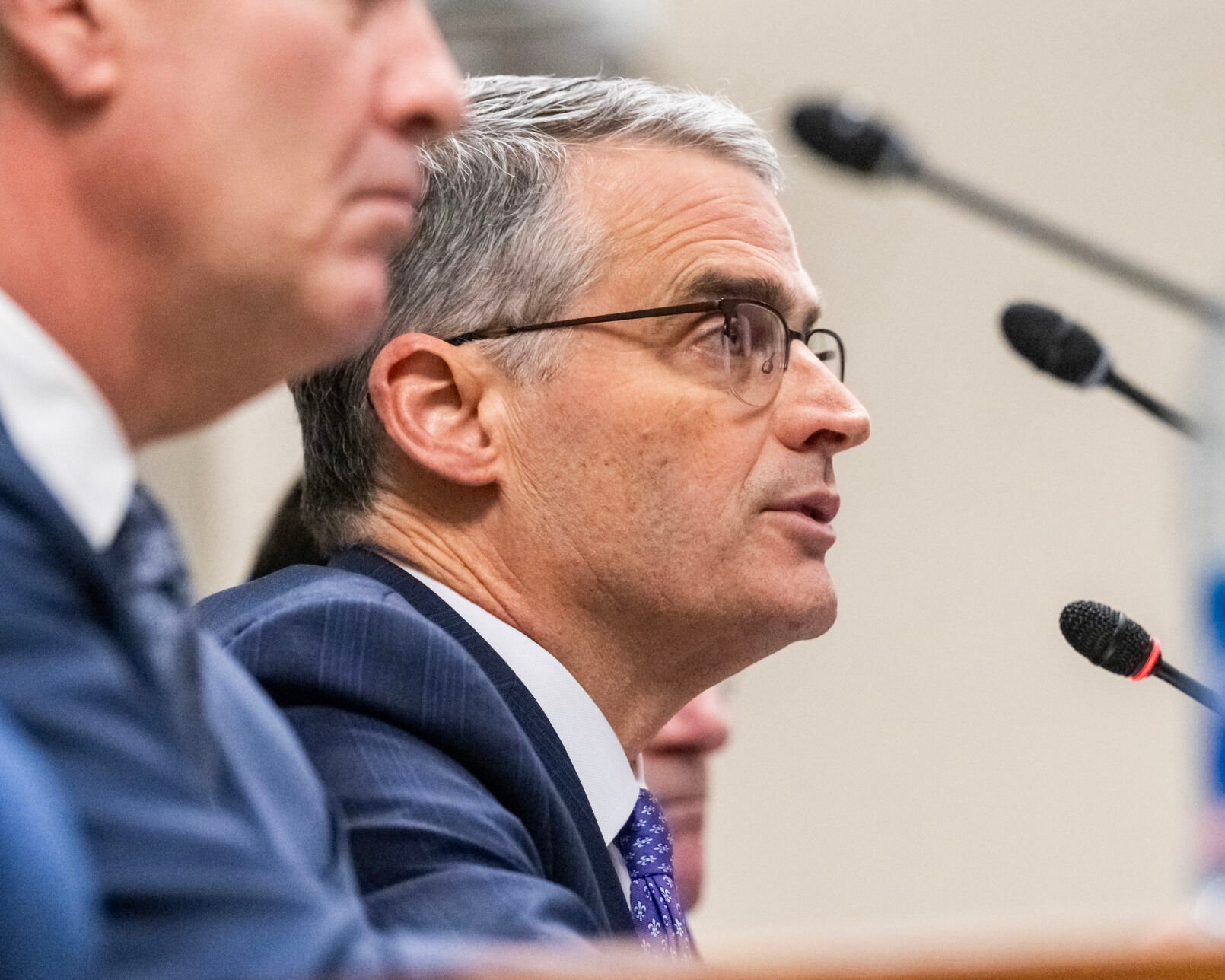
Tim Barfield, president and CEO of CSRS, on Monday, February 5, 2024 at the state capitol building in Baton Rouge, Louisiana.
“There is more geopolitical instability, there is more unpredictability, the world was moving in one direction and now it is swinging back the other way,” he said. “Some of these projects that were good projects may have missed their window.”
Changing dynamics?
LED’s Bourgeois cautions against drawing too many parallels between recent company decisions and said the state’s energy policy is not based on carbon capture and sequestration.
“We have an all-of-the above energy strategy and carbon capture was never the driver of that,” she said. “It was a valuable component but I do not think the dynamics are changing as much as people think they are.”
To that point, on the same day Air Products canceled its project, a $2 billion renewable diesel project planned for Caldwell Parish in north Louisiana received a permit from the state to inject captured carbon in several deep underground wells. The project was one of several to have applied for permits before Landry’s moratorium last year.
Bourgeois said while low-carbon projects may be on the back burner at the moment, she doesn’t think they’re dead.
“I still think that is the longer play,” Bourgeois said. “But when the Strait of Hormuz is closed, people quit worrying about sustainable jet fuel and just start worrying about jet fuel.”