





New Delhi Firm on National Security: Pakistan Objects to Defence Minister’s Warning
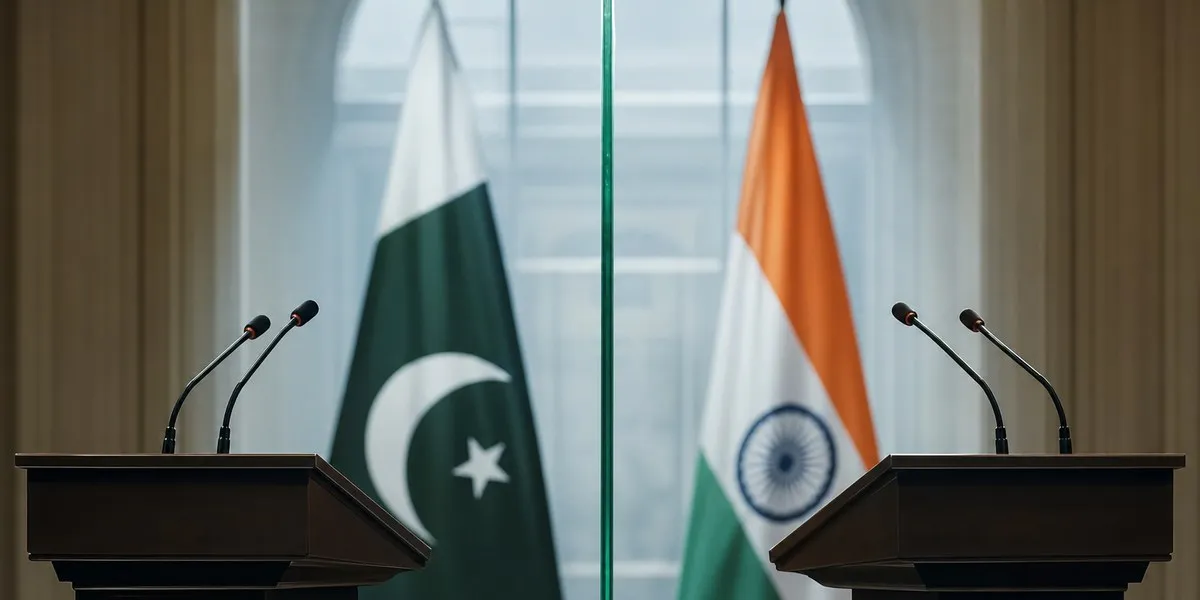
New Delhi: Tensions in the subcontinent have simmered again following a stern warning from India’s Defence Minister, Rajnath Singh, regarding cross-border terrorism. The minister’s recent remarks, which suggested that any future act of terror emanating from across the border would be met with a significantly larger military response, have triggered a sharp reaction from Islamabad.
The Defence Minister’s Stance
During a recent public engagement, Rajnath Singh issued a clear signal to hostile elements operating from outside Indian territory. Referring to past surgical strikes and India’s evolving military posture, Singh indicated that New Delhi would not hesitate to escalate its response if provocations continue. According to reports cited by the Indian news agency ANI, the Defence Minister emphasized that the nation is fully prepared to defend its borders and that any new terrorist activity would be met with a response “larger than the previous one.”
This statement is seen as a reinforcement of the Narendra Modi government’s “zero-tolerance” policy toward cross-border terrorism. It underscores India’s shift from a reactive security doctrine to one that prioritizes proactive deterrence to ensure regional stability and safeguard its sovereign borders.
Islamabad’s Response
Pakistan’s Ministry of Foreign Affairs was quick to push back against these assertions. On October 16, a spokesperson for the Pakistani Foreign Ministry, Sajjad Haider Khan, officially condemned the remarks, labeling them as “provocative” and accusing New Delhi of harboring a hegemonic agenda.
In a weekly media briefing, the Pakistani spokesperson characterized the Defence Minister’s rhetoric as a threat of aggression that undermines the fragile peace in South Asia. Khan went on to invoke the military exchanges between the two nations from last year, asserting that Pakistan possesses both the capability and the resolve to protect its territorial integrity.
“Pakistan’s commitment to peace should not be misinterpreted as a lack of resolve or weakness,” Khan stated, urging India to move away from what he described as “bellicose rhetoric” and toward a more responsible diplomatic posture.
A History of Strategic Friction
The latest diplomatic skirmish arrives at a time when the Line of Control (LoC) remains a point of intense focus for Indian security planners. New Delhi has consistently maintained that the onus is on Islamabad to dismantle the infrastructure of terror that supports militants operating against India. For years, the Indian establishment has argued that dialogue and terrorism cannot coexist, a sentiment that was clearly reflected in the Defence Minister’s recent warnings.
Analysts view the exchange as a continuation of the established pattern in Indo-Pakistani relations, where verbal sparring often accompanies heightened security alerts. While Pakistan frames India’s assertive stance as a threat to regional peace, India continues to maintain that its military readiness is essential to prevent infiltration and maintain internal stability.
As both sides remain firm in their respective positions, the international community continues to monitor the situation, hoping for a de-escalation of rhetoric to prevent further volatility in the South Asian region. For now, however, New Delhi remains steadfast in its intent to leverage its military strength as a primary tool for securing its borders against cross-border threats.
Disclaimer: This content is auto-generated for informational purposes only.
Source: Read Original News