








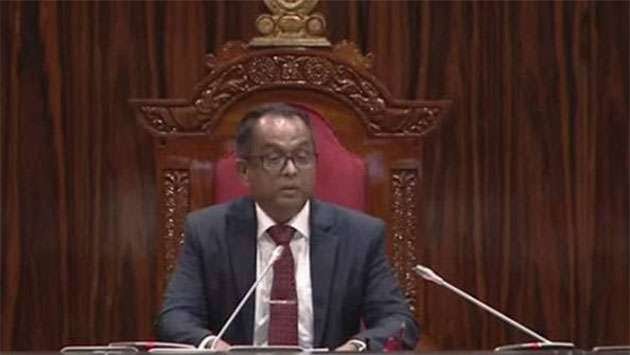
COLOMBO — In a significant legislative development, Speaker Jagath Wickramaratne announced in Parliament today that the Supreme Court has cleared the path for the 22nd Amendment to the Constitution to proceed without the requirement of a national referendum.
The announcement, delivered during the parliamentary session, marks a pivotal moment in the government’s ongoing efforts to enact constitutional reforms. By determining that the Bill does not require approval by the people through a referendum, the Supreme Court has effectively green-lit the process for Parliament to vote on the amendment. Under the Sri Lankan Constitution, a referendum is typically mandated for changes that alter fundamental constitutional structures or protected rights; however, the Court’s ruling confirms that the 22nd Amendment falls within the ambit of legislative power vested in the House.
Despite this clearance, the Supreme Court did impose a specific legal qualification regarding the tenure of judicial officers. The Court held that the proposed six-year term limit stipulated in the Bill cannot be applied retroactively to the incumbent Chief Justice. Consequently, the current Chief Justice will remain exempt from the new term restrictions while holding their current office, ensuring that the amendment does not interfere with the existing judicial mandate.
Furthermore, Speaker Wickramaratne informed the House that the Supreme Court has also reviewed the Judicature Amendment Bill. The Court determined that this piece of legislation satisfies constitutional requirements and can be passed by a simple majority in Parliament. This ruling simplifies the government’s path toward implementing the proposed changes to the judicial system, as it avoids the more rigorous two-thirds majority requirement that often necessitates complex negotiations with opposition factions.
The Supreme Court’s determinations provide much-needed clarity for lawmakers as they prepare for upcoming debates on these bills. Political analysts suggest that the ruling will likely accelerate the government’s legislative agenda, as the primary legal hurdles concerning the mode of enactment have now been addressed.
While the government maintains that these amendments are essential for streamlining governance and enhancing institutional efficiency, the debate is expected to remain contentious. Opposition parties are likely to scrutinize the substance of the bills when they reach the committee stage.
With the legal prerequisites now established by the Supreme Court, the bills are expected to be placed on the parliamentary order paper in the coming days. The Speaker’s announcement has effectively neutralized arguments that the government was attempting to bypass public mandates, though critics are expected to continue focusing on the broader implications of the constitutional shifts. For now, the administration appears to have secured the necessary legal footing to move forward with its reform package in the immediate legislative window.
Disclaimer: This content is auto-generated for informational purposes only.
Source: Read Original News