






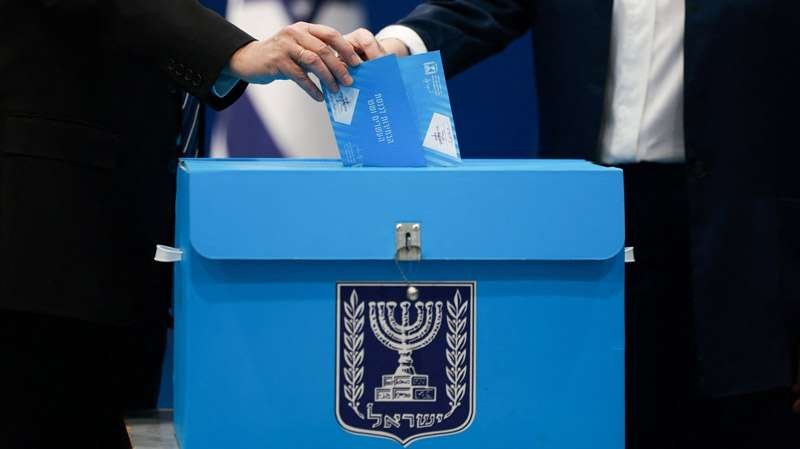
JERUSALEM – Israel has been plunged into a period of profound political paralysis following the confirmation of final election results that leave the nation without a clear governing majority. Neither the right-wing bloc led by Prime Minister Benjamin Netanyahu’s Likud party nor the centrist opposition alliance headed by Gadi Eisenkot of the Yashar party reached the 61-seat threshold required to command the 120-member Knesset.
The stalemate sets the stage for weeks, and potentially months, of grueling coalition negotiations. With deep ideological trenches separating the factions, any potential government is expected to be inherently fragile, raising the specter of a seventh general election in just eight years.
The path to power for the opposition remains fraught with significant hurdles, most notably the reliance on Arab political parties. While the Joint List and Raam could technically provide the numbers to unseat Netanyahu, prominent figures within the opposition—specifically former Prime Minister Naftali Bennett and former Defence Minister Avigdor Liberman—have firmly rejected any administration reliant on such support. Their resolve has notably hardened in the wake of the 7 October 2023 Hamas-led attacks, rendering the prospect of an Arab-backed coalition increasingly unlikely.
In the absence of a straightforward majority, other, more complex scenarios are emerging. Analysts suggest the potential for a national unity government, though such a move would require seismic political compromises. While Netanyahu is reportedly open to distancing himself from far-right National Security Minister Itamar Ben-Gvir, he remains tethered to ultra-Orthodox parties and Finance Minister Bezalel Smotrich. Conversely, Eisenkot has explicitly ruled out serving under Netanyahu, fearing that a reversal would be viewed as a betrayal by the electorate.
With Netanyahu’s bloc currently sitting eight seats short of a majority, his only other viable path involves poaching individual defectors from the opposition. However, the leaders of the opposition coalition—including Eisenkot, Bennett, Liberman, and Yair Golan—have publicly pledged to remain united against a Netanyahu-led administration.
The political spotlight now turns to President Isaac Herzog, who is set to begin formal consultations with party leaders to determine who will receive the first mandate to attempt to form a government. Arab parties have indicated they will support Eisenkot, which may lead the President to grant him the initial 28-day window to negotiate a coalition.
If the designated candidate fails to secure a majority within the allotted 12-week total period, the constitutional process dictates that the country may be forced back to the polls. Until then, Netanyahu remains as caretaker prime minister, overseeing a government with limited authority. As the political maneuvering intensifies behind closed doors, Israel faces the stark reality of a governing vacuum, leaving the nation’s future as uncertain as ever.
Disclaimer: This content is auto-generated for informational purposes only.
Source: Read Original News