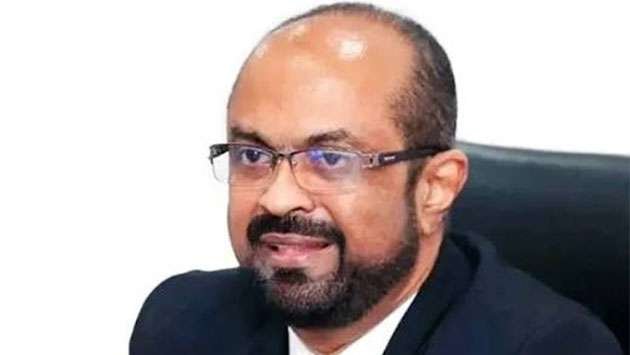








Former Sri Lankan Ambassador Kana Kananathan has issued a stark warning to Colombo, urging the government to pivot from mere IMF-led stabilization toward a radical, export-driven economic restructuring. Drawing parallels to India’s historic 1991 balance-of-payments crisis, Kananathan argues that Sri Lanka’s current trajectory risks trapping the nation in an endless cycle of debt and dependency.
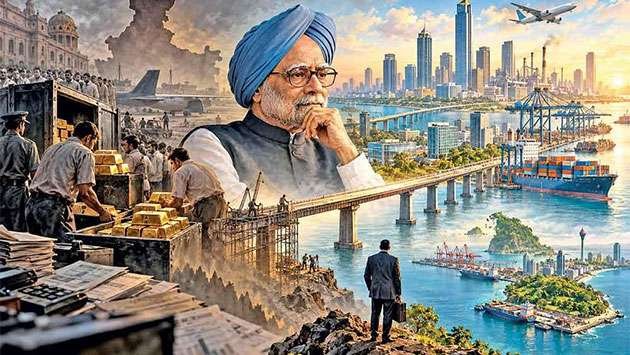
In a detailed assessment, Kananathan highlights how the era of Dr. Manmohan Singh—serving as Finance Minister under Prime Minister P.V. Narasimha Rao—provides a blueprint for survival. When India faced the brink of insolvency in 1991, it did not treat the IMF as a permanent growth strategy. Instead, New Delhi used the IMF’s financial bridge to overhaul its domestic economy, dismantle industrial licensing, liberalize foreign direct investment (FDI), and force Indian firms to compete globally.
“The objective of an IMF programme should eventually be to make another IMF programme unnecessary,” Kananathan wrote. “India stopped asking, ‘How much money can the IMF lend us?’ and increasingly asked, ‘How can India earn the foreign exchange that will make IMF lending unnecessary?’”
The former diplomat notes that Sri Lanka is currently at a crossroads. While the country has achieved initial stabilization and improved political order, he cites a recent U.S. Department of State Investment Climate report that flags significant hurdles, including regulatory unpredictability, project reversals, and slow decision-making. Kananathan expressed particular concern over the government’s recent hesitation regarding the privatization of state-owned enterprises (SOEs), noting that some officials are continuing to advocate for greater state participation in the economy—a move he warns will continue to undermine investor confidence.
To break this cycle, Kananathan proposes an urgent, aggressive reform of the investment environment. He advocates for the implementation of a “One-Stop Investment Center,” modeled after successful frameworks in India and several African nations. Under this system, investors would deal with a single, empowered authority capable of granting approvals across all government departments, effectively eliminating the bureaucratic “red tape” that currently drives capital to more welcoming jurisdictions.
Kananathan argues that without these structural changes, Sri Lanka risks a dangerous loop: crisis, IMF assistance, temporary stability, and then renewed pressure that requires further borrowing. He warned that simply completing an IMF program is not the finish line; rather, the ultimate success of the program is determined by whether a nation builds an economy resilient enough to never require another bailout.
“The strongest exit from the IMF is not political rhetoric against the Fund,” Kananathan concluded. “It is building an economy strong enough that you no longer need to borrow from it.”
For the Sri Lankan government, the message is clear: the breathing space provided by the IMF is fleeting, and the transition from stabilization to investment-led growth must happen now to prevent a future fiscal collapse.
Disclaimer: This content is auto-generated for informational purposes only.
Source: Read Original News