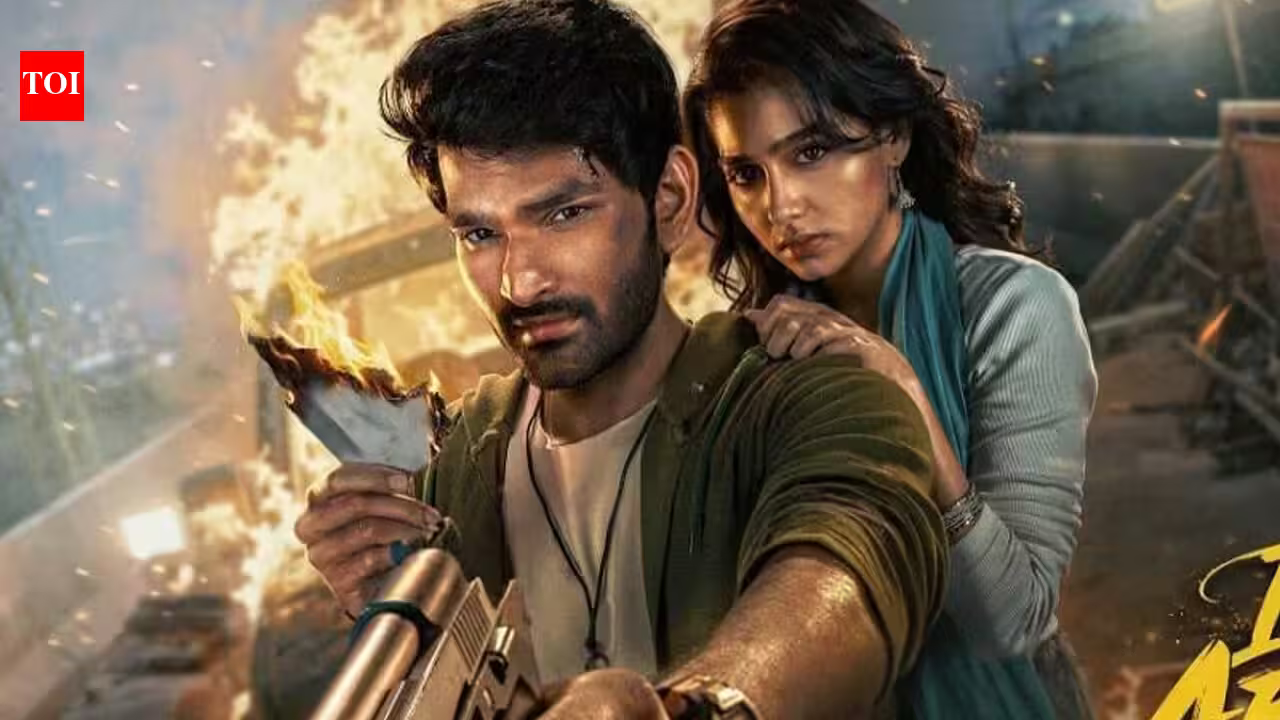









The Telugu film industry has long mastered the art of balancing high-octane spectacle with grounded emotional arcs, and director Mahesh Uppala’s latest offering, Itllu Arjuna, is the latest project attempting to thread that needle. Released on November 13, 2026, the film arrived with a flurry of anticipation, largely driven by the casting of breakout star Anaswara Rajan opposite debutant Sai Aniesh. Yet, as the curtain falls on its opening weekend, the consensus is as fractured as the film’s tonal shifts, leaving critics and audiences in a heated debate over whether style can truly compensate for a lack of narrative cohesion.
At its heart, Itllu Arjuna is a story of redemption and the yearning for a “normal” life. The protagonist, a mute young man raised in the shadow of his father’s criminal activities, spends his days dodging both police scrutiny and the crushing weight of social stigma. His world shifts on its axis when he encounters Keerthi, a medical student living in the apartment above him. It is a classic “opposites attract” trope, set against the backdrop of a gritty urban landscape. While the premise promised a compelling character study, the final product has left many moviegoers feeling like they’ve watched two different films spliced together.
The Chemistry That Anchors the Chaos
If there is one aspect of Itllu Arjuna that has silenced the detractors, it is the undeniable spark between the leads. Anaswara Rajan, a powerhouse of expressive performances, brings a refined grace to the role of Keerthi. Paired with the raw, untested energy of debutant Sai Aniesh, the two manage to sustain the film’s first act, which largely unfolds as a breezy, charming romantic comedy.
“Both Aniesh and Anaswara look like such a fresh pair,” one viewer noted on social media, echoing a sentiment shared by many who found the initial romance to be the film’s strongest hook. When the two are on screen, the film feels grounded and intimate. Their interactions provide a necessary warmth that tempers the bleaker aspects of the protagonist’s backstory. Even those who found the screenplay lacking were quick to concede that the performances—specifically the emotional weight of the climax—carried the film across the finish line. For many, the heart-touching conclusion was enough to justify the price of a ticket.
Technical Brilliance Meets Narrative Stumbles
It would be remiss to discuss Itllu Arjuna without acknowledging the massive heavy lifting done by the technical crew. Cinematography and production design are top-tier, giving the film a polished, premium aesthetic that rivals much larger budget productions. However, the true MVP of the technical department is undoubtedly S.S. Thaman.
Thaman’s background score is being hailed as the glue holding the disparate scenes together. In the second half, when the narrative pivots sharply from a sweet romance to a tension-filled crime action thriller, it is Thaman’s music that prevents the film from feeling entirely disconnected. While some viewers praised this shift as a daring move, others felt that the transition was jarring. The pivot to an “action mode” has been a point of contention; while it allows for some visually stunning sequences, it also highlights the film’s primary weakness: the writing.
The Writing Dilemma: A Tale of Two Halves
The primary criticism leveled against Itllu Arjuna is its inconsistent pacing and disjointed screenplay. The film starts with a clear identity—a lighthearted rom-com with a touch of drama—but struggles to reconcile that with the heavier, more cynical themes of its crime-focused second half.
Several viewers have pointed out that while the first half is “decent despite familiar tropes,” the momentum evaporates once the plot attempts to escalate the stakes. The transition into crime-thriller territory feels rushed, leaving little room for the audience to digest the shift in character motivations. For some, this was a dealbreaker. “It never fully capitalizes on the setup,” wrote one frustrated viewer, noting that the narrative felt “dragged” as it pushed toward the finale. While the climax is emotional, the road to get there is paved with narrative convenience and a sudden reliance on forced comedy that, according to some critiques, feels entirely at odds with the serious tone the director aimed to establish.
The Verdict: Watchable, But Imperfect
So, where does that leave Itllu Arjuna? The film currently sits in that awkward middle ground of “mixed reception,” earning solid marks for its aesthetic appeal and the performances of its leads, while suffering under the weight of a script that couldn’t quite decide what it wanted to be.
It is a film of “near misses.” The supporting cast, which features heavyweights like Vennela Kishore, Mukesh Rishi, and the reliable Brahmaji, is clearly underutilized, tasked with populating a world that occasionally feels more like a collection of stylish music videos than a cohesive drama.
Ultimately, Itllu Arjuna is worth a watch for the performances and the sheer energy of the production, provided you are willing to overlook the structural cracks. It serves as a strong calling card for Sai Aniesh, who handles a challenging, non-verbal role with nuance, and it further cements Anaswara Rajan’s versatility in Telugu cinema. But for director Mahesh Uppala, the lesson seems clear: no amount of top-tier music or stunning visuals can replace the need for a tightly woven, consistent story. If you’re looking for a film that leans into its emotional heart, you’ll find plenty to like here; just don’t expect a masterclass in screenwriting.
Disclaimer: This content is auto-generated for informational purposes only.
Source: Read Original News