







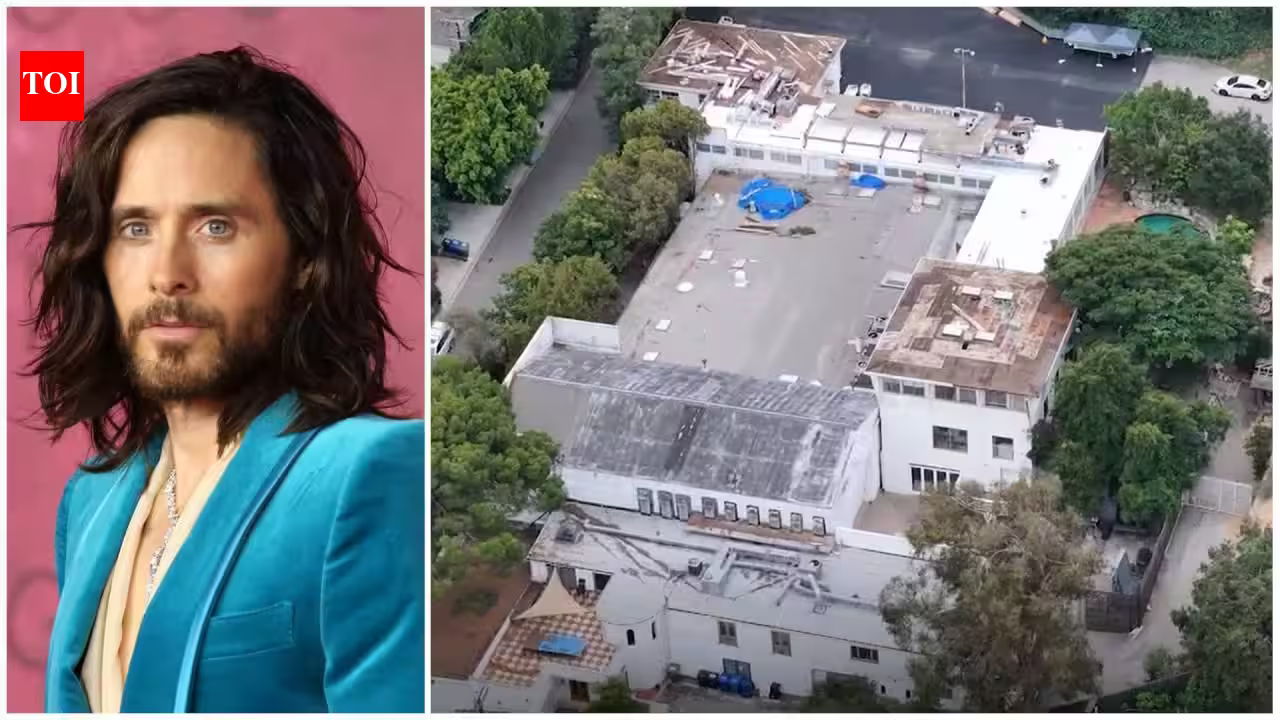
In the high-stakes world of Hollywood real estate, few sales capture the imagination quite like the unloading of a former military black-site. Jared Leto, the enigmatic Oscar winner and frontman for Thirty Seconds to Mars, has officially parted ways with his sprawling Los Angeles compound—a property that served as both a creative fortress and a historical enigma for nearly a decade.
The transaction, which closed quietly in May, saw the 14,649-square-foot estate fetch a cool $12 million. While the price tag is impressive, the real story lies in the transition: Leto purchased the site in 2015 for $5 million, effectively more than doubling his investment on a piece of property that is as structurally intimidating as it is legendary.
A Legacy of Secrets: From Cold War Bunker to Artist’s Haven
Perched on 1.4 acres of Southern California soil, this wasn’t your typical Hollywood hills mansion. Known historically as the Lookout Mountain Air Force Station, the site served as a vital, albeit clandestine, nerve center for the U.S. military’s atomic bomb testing program.
Constructed in 1941 as a radar facility, it evolved into a top-secret film studio for the Air Force’s 1352nd Photographic Group after World War II. Between 1947 and 1969, the very walls that Leto would later call home were responsible for churning out Cold War newsreels and training films that shaped the public’s perception of the nuclear age. It was a place where history was captured on celluloid, often with the help of the era’s biggest luminaries. Legends like Bob Hope, Jimmy Stewart, and even Ronald Reagan walked these grounds, lending their voices and faces to government-produced projects. It is a strange sort of kismet that an actor like Leto, known for his own intense devotion to the craft, ended up operating out of a facility literally designed to house the machinery of cinematic production.
Behind the Blast-Resistant Doors: Inside the Compound
The architecture of the mansion reflects its utilitarian past. To own such a property is to live within a structure that wasn’t built for comfort, but for endurance. The facility is famously fortified, featuring thick concrete walls and blast-resistant doors—a nod to the sensitivity of the films once stored in its temperature-controlled vaults.
Under Leto’s tenure, the space was transformed into a hybrid creative hub. It served as a private residence, but more importantly, it functioned as the primary headquarters for his band, Thirty Seconds to Mars. The property included three separate 35mm screening rooms and a professional-grade soundstage, allowing Leto to blur the lines between his domestic life and his recording career. For a performer who has often been described as “method” in every aspect of his existence, the house seemed like a perfect fit: a secure, industrial-grade workspace isolated from the rest of the industry, yet sitting right in the heart of the capital of entertainment.
Market Movements and the Mystery of the Sale
In the luxury real estate game, a $7 million profit over nine years is a stellar return, but the lack of fanfare surrounding the exit is notable. Neither the identity of the new buyer nor the specific motivation for the sale has been disclosed. When a celebrity of Leto’s stature offloads a property that served as their primary creative base, industry observers usually look for clues. Was the space becoming too small for his evolving projects, or was it simply time to move on from a relic of the Cold War?
While real estate moves are often purely financial, this particular sale has become inextricably linked to the actor’s public image. The timing of the transaction has provided a focal point for critics and fans alike, coming as it did in a year defined by increasing scrutiny of the star’s personal history.
A Turbulent Year: Allegations Loom Over the Star
The sale occurred during one of the most challenging periods of Leto’s career. Mere months after the transaction was finalized, the discourse surrounding the actor shifted from his real estate portfolio to the dark allegations that have followed him for years. The BBC documentary Jared Leto: Hollywood’s Dark Secret brought to light the accounts of ten women, detailing allegations of sexual misconduct ranging from coercion to statutory rape, spanning from 2002 to 2016.
These accounts, which include corroborated messages and photographs, have cast a long shadow over the actor’s professional reputation. The documentary arrived on the heels of a 2025 investigative report by Air Mail, which brought similar claims of inappropriate behavior toward underage individuals to the forefront of the news cycle.
Leto has issued firm denials, stating, “I have never sexually assaulted anyone in my entire life. These claims are absolutely and categorically false.” Regardless of the legal or professional ramifications, the reality of the situation is that the “Hollywood Dark Secret” documentary has fundamentally altered the context in which his career, and his public persona, are viewed.
The Final Curtain on the Lookout Mountain Station
For now, the Lookout Mountain compound is under new ownership, its blast-resistant doors and temperature-controlled vaults destined to be repurposed yet again. It is a property defined by its history—a history of nuclear secrets, mid-century propaganda, and, finally, the intense, high-energy output of a modern rock star.
As the dust settles on this $12 million deal, the mansion remains an artifact of a bygone era, standing as a testament to the peculiar ways in which the military-industrial complex and the Hollywood star machine collide. For Jared Leto, the sale represents the end of an era. Whether this move signals a pivot in his personal trajectory or simply a routine portfolio adjustment, the property will undoubtedly remain one of the most storied addresses in Los Angeles—a place where the ghosts of the Cold War met the relentless, often controversial, intensity of modern celebrity.
Disclaimer: This content is auto-generated for informational purposes only.
Source: Read Original News