






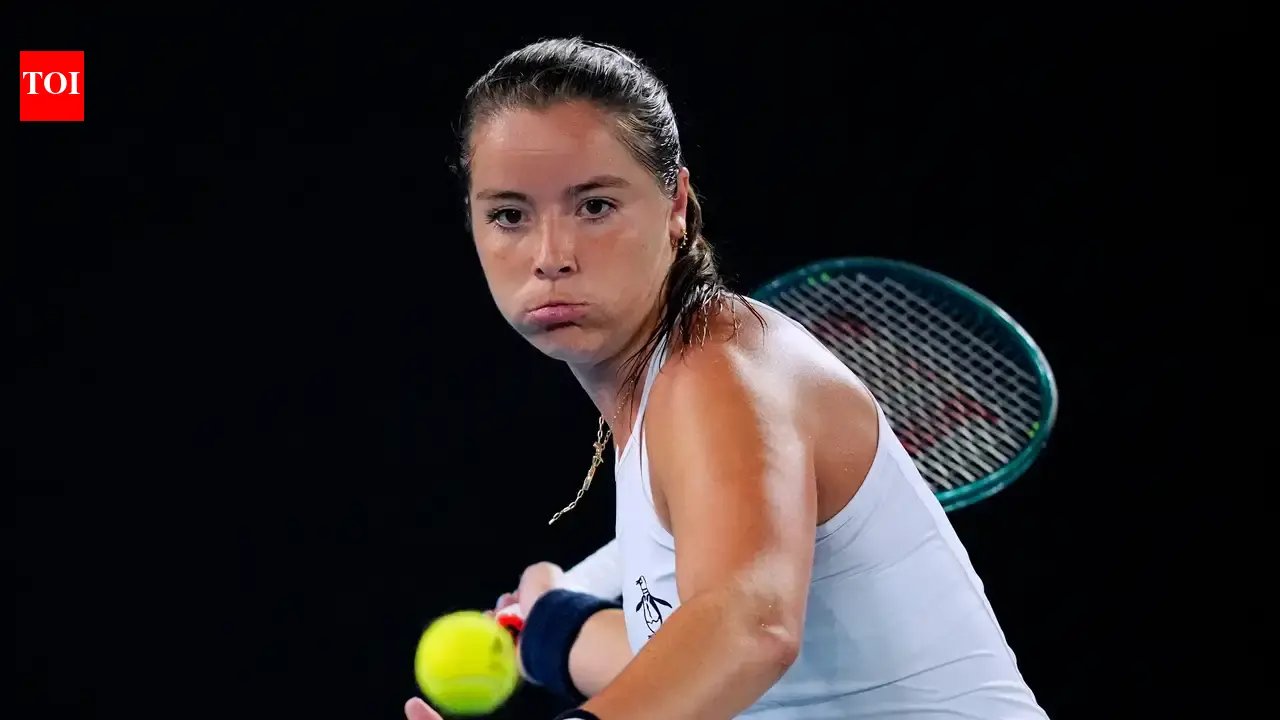
Jodie Burrage, the British tennis standout, has reignited a critical conversation regarding athlete safety in the digital age after being subjected to a harrowing barrage of death threats and misogynistic abuse following her return to the WTA Tour.
The 27-year-old, currently ranked 474th in the world and Britain’s No. 15, was participating in the Chennai Open this week—her first main draw appearance in a WTA event since July 2025. While the sport should have been celebrating her return to the professional circuit after a 16-month absence, Burrage was instead forced to shine a light on the dark underbelly of online sports culture.
A Hostile “Welcome Back”
The match, a hard-fought three-set encounter against India’s Vaishnavi Adkar, ended in a 3-6, 6-3, 7-5 defeat for the Briton. Despite the competitive nature of the contest, the reaction on social media turned vitriolic almost immediately.
Taking to her Instagram stories, Burrage shared raw screenshots of the direct messages she received, exposing the extreme nature of the harassment. One particularly disturbing message read: “Your a quitter… You truly are a disgrace to the sport. You got your ass whooped today and you are the exact reason women’s sports are a joke. Hope you go home and kill yourself bc honestly that’s what’s best. You will never compare to a man.”
Other messages included threats such as “Die n riot on the streets” and various forms of explicit, misogynistic slurs. Faced with this onslaught, a clearly shaken Burrage tagged both the WTA and Instagram in her post, writing, “Nice welcome back to tour. I remember why I left. When will something be done?”
Her public stand received immediate backing from peers, including German player Eva Lys, who shared the screenshots to her own social media platforms, echoing Burrage’s frustration by demanding accountability from the platforms that host such behavior.
The Growing Shadow of Gambling-Related Abuse
The abuse directed at Burrage is unfortunately far from an isolated incident. Her experience mirrors that of fellow Briton Katie Boulter, who, in 2025, revealed the horrific nature of the threats she faced following a victory at the French Open.
Boulter’s experience included vile threats aimed at her family, including claims that her grandmother’s grave would be desecrated and threats of violence against her relatives. Research indicates that a driving force behind much of this vitriol is the rise of online gambling. A report by the Signify Group, which utilizes AI-led threat detection to monitor harassment, previously identified that angry gamblers were responsible for nearly half of all abuse classified as targeted harassment.
In 2025, that trend held firm. Data suggests that bettors accounted for 42 percent of all verified abuse against female tennis players, and a staggering 59 percent of messages classified as “serious abuse.” These individuals, often reacting to personal financial losses, treat the professional athletes as targets for their displaced anger.
An Industry at a Breaking Point
The statistics surrounding the issue are sobering. A report released earlier in 2026 revealed that over 12,000 abusive posts and messages were directed at female tennis players throughout the previous calendar year. Despite constant calls for change, the volume of abuse has remained stubbornly consistent, leaving many players to wonder if the governing bodies and tech giants are doing enough to safeguard them.
The WTA player board has officially condemned the behavior, labeling it “unacceptable” and acknowledging the “significant” mental and emotional impact these incidents have on the athletes. However, players are increasingly calling for more aggressive, structural interventions. Chief among these requests is the implementation of mandatory identity verification on social media platforms, a move that would hold users accountable for their words by removing the veil of anonymity that often encourages such cowardly outbursts.
As Burrage attempts to navigate her return to professional tennis, the reality she faces is a sobering reminder that the greatest challenge for today’s athletes often lies not on the court, but on the screens they are forced to engage with after the final point is played. For now, the question remains: when will the platforms provide more than just automated moderation tools to protect the people whose hard work fuels the very ecosystem that these abusers exploit?
Disclaimer: This content is auto-generated for informational purposes only.
Source: Read Original News