




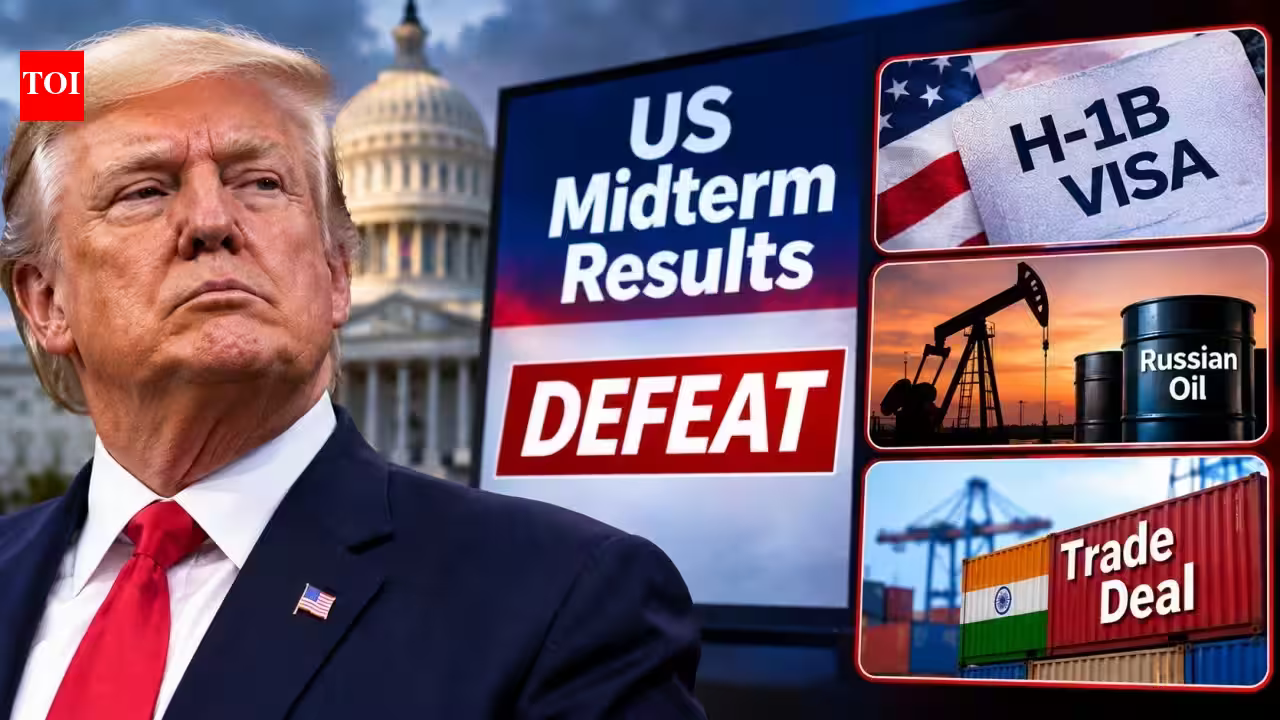
The recent midterm election results in the United States, which saw the opposition Democratic Party secure control of both the House of Representatives and the Senate, represent a significant political realignment. As the dust settles on this rebuke to the Trump administration’s legislative agenda, global markets are bracing for the resulting shifts in policy. For India, a nation deeply integrated into the American economy through trade, technology services, and energy procurement, these results create a complex landscape of persistent challenges and emerging strategic pressures.
Understanding the implications of this shift requires moving beyond immediate headlines and examining the underlying bipartisan consensus that governs American economic policy. While the change in congressional control suggests a more restrained executive branch, the fundamental approach toward trade and immigration remains largely consistent across party lines.
The Persistent Status Quo for H-1B Visa Holders
A primary concern for the Indian technology sector and its vast workforce is the future of the H-1B visa program. Recent years have seen the implementation of a $100,000 fee and a wage-weighted selection system, designed to prioritize high-salary recruits and curb the reliance on lower-cost foreign talent. Simultaneously, the suspension of specific technology companies from the PERM green card program has created a bottleneck for long-term residency.
Despite the Democratic victory in the midterms, professionals and firms should not anticipate a reversal of these restrictive measures. Immigration policy in the United States has evolved into a domestic employment issue that enjoys strong support from both sides of the aisle. The political narrative has shifted toward the protection of American workers and the perceived displacement caused by outsourcing. Consequently, even with a Democratic-led Congress, the administrative hurdles for Indian IT professionals are likely to persist. The debate is no longer defined by political party affiliations but by a fundamental national imperative to restructure the immigration system. For Indian businesses, this necessitates a strategic pivot toward higher-value service offerings that can justify the escalating costs of human capital in the American market.
Energy Security and the Russian Oil Conundrum
The geopolitical dimensions of the US midterm results are perhaps most visible in the energy sector. Earlier this year, the Lindsey O. Graham Sanctioning Russia and Iran Act of 2026 provided the executive branch with the power to impose tariffs of up to 100 percent on nations importing oil from Russia or Iran. While India received a 60-day waiver on these potential tariffs, the sword of Damocles continues to hang over its energy import strategy.
The shift in Congress is unlikely to provide a reprieve from this pressure. The legislation targeting Russian energy partners garnered broad bipartisan support, suggesting that the United States will remain committed to isolating the Russian economy. However, domestic American economic pressures—specifically the need to keep inflation and fuel prices in check—create a contradictory incentive. Sanctioning major buyers of Russian oil could inadvertently spike global prices, a outcome the current administration and its political rivals are equally desperate to avoid. For India, this creates a narrow corridor of maneuverability. While the threat of punitive tariffs remains a potent diplomatic tool for Washington, the pragmatic need for stable global oil prices will likely ensure that India’s energy procurement strategy is tolerated, provided it serves as a bargaining chip for broader trade negotiations.
Trade Negotiations and the Quest for Bilateral Wins
The prospect of an India-US trade deal stands at a critical juncture. Commerce Minister Piyush Goyal has indicated that a first-phase agreement is nearing the final drafting stage, with New Delhi rightfully maintaining a cautious stance. India is seeking structural advantages—specifically preferential tariff rates—that would allow its exporters to remain competitive against rivals in other emerging markets.
The midterm results may paradoxically accelerate the urgency for such a deal. Following setbacks in foreign policy leverage against key global actors like China and Iran, the Trump administration faces a heightened requirement for a visible diplomatic and economic victory. A trade deal with India could serve this purpose, proving the viability of the current administration’s economic statecraft. Nevertheless, experts from organizations such as the Global Trade Research Initiative emphasize that the core tenets of American trade policy—economic nationalism, a focus on domestic manufacturing, and the shortening of supply chains—are deeply rooted in both parties. Indian exporters should expect continued pressure to align with American standards while navigating an environment where access to the US market remains tied to concessions in domestic Indian sectors.
Navigating Uncertainty for Indian Exporters
For the Indian export community, particularly Micro, Small, and Medium Enterprises (MSMEs), the post-midterm environment demands a high degree of operational resilience. These enterprises rely on predictable policy environments to price their orders and coordinate long-term supply chain logistics. With the US political climate shifting toward greater volatility, the ability to plan months in advance has become significantly compromised.
The Federation of Indian Export Organisations has highlighted that while the US remains an indispensable destination for Indian goods and services, the nature of this relationship is undergoing a structural transformation. Indian businesses must transition away from relying on cost-arbitrage models and instead focus on quality, reliability, and regulatory compliance. As the US Congress shifts its focus toward protectionist measures, the traditional export strategy of competing solely on price will face mounting risks. Companies that invest in sophisticated, high-margin export capabilities will be better positioned to weather the potential shocks associated with revised US tariff regimes.
Strategic Outlook: A Pragmatic Path Forward
The transition of power in the US Congress acts as a mirror, reflecting the intensifying focus on domestic economic stability over international consensus. For India, the message is clear: the era of expecting shifts in US administration to bring significant policy reversals is over. Whether the issue is visa access, energy imports, or tariff structures, the US is moving toward a more guarded and self-interested economic stance.
The Indian business establishment must adopt a nuanced approach that acknowledges this bipartisan consensus. Rather than waiting for political cycles to favor specific sectors, the strategy should focus on aligning with the long-term goals of the American market, such as diversifying supply chains away from adversarial regions and contributing to the digital infrastructure of the US economy. By positioning itself as a strategic partner rather than just a trade participant, India can navigate the challenges posed by a more introspective Washington. The midterm results underscore that while the political actors may change, the underlying challenges—the protection of labor, the management of energy costs, and the drive for a favorable trade balance—remain the permanent pillars of the modern American economic agenda. Success in this environment will depend on adaptability, diplomatic pragmatism, and a commitment to high-value exports that are difficult for the American market to replicate or replace.
Disclaimer: This content is auto-generated for informational purposes only.
Source: Read Original News