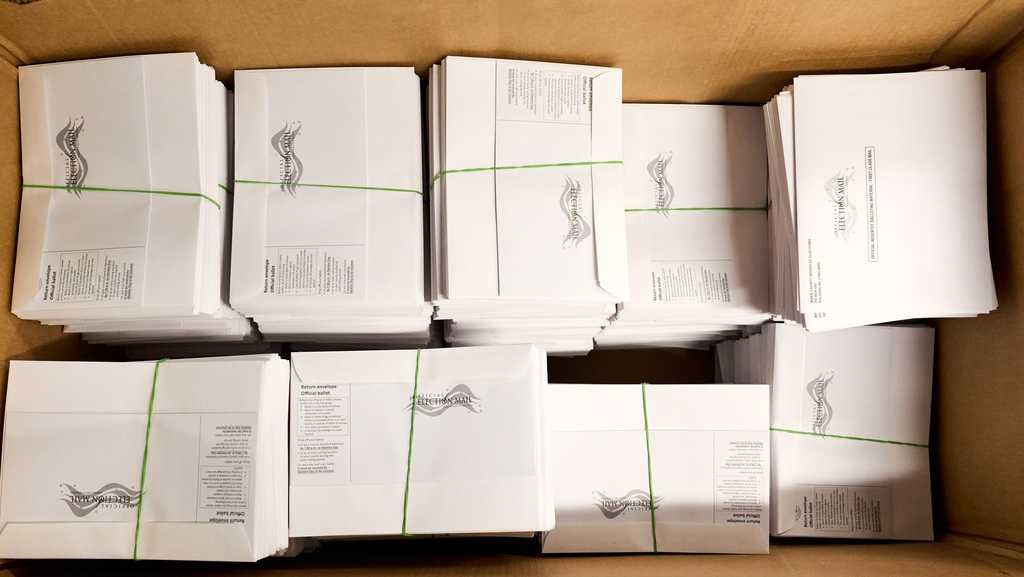







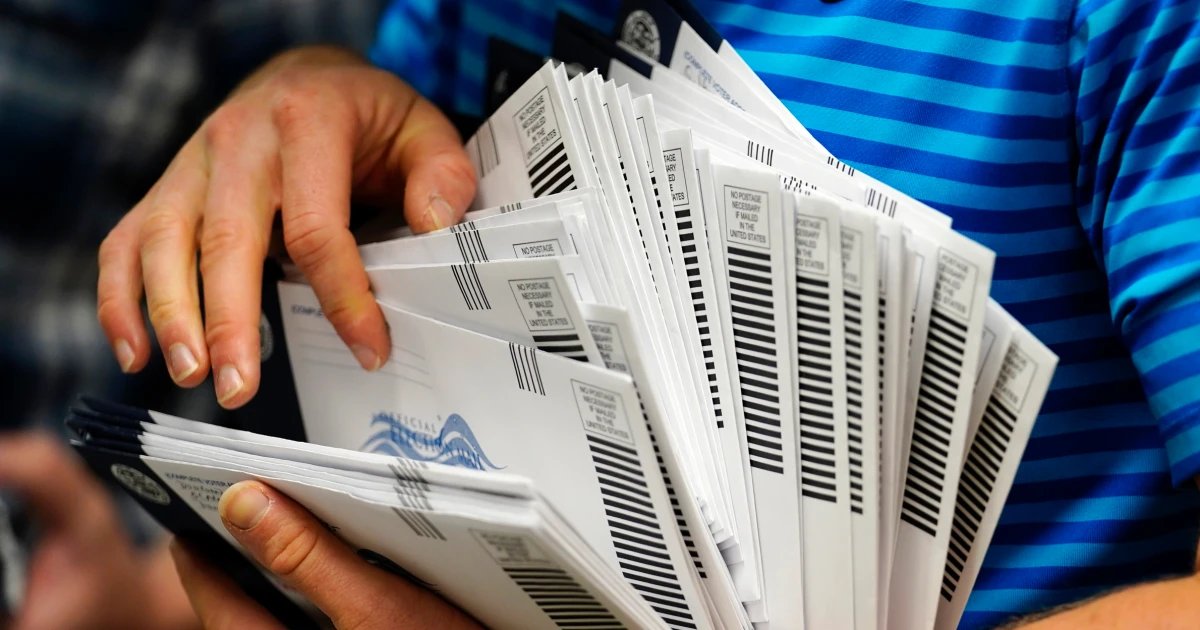
A federal judge in Boston issued a preliminary injunction on Friday, temporarily blocking a Trump administration Postal Service regulation that threatened to upend the distribution of mail-in ballots just weeks before the 2026 midterm elections.
U.S. District Judge Indira Talwani ruled that the new U.S. Postal Service (USPS) rule—which mandates strict, centralized control over how mail-in ballots are designed and processed—is likely unconstitutional and unlawful. In her opinion, Talwani warned that the policy’s “rushed implementation” makes the disenfranchisement of millions of American voters “practically inevitable.”
The regulation, which stems from a March executive order by President Trump regarding election integrity, requires election officials to seek advance USPS approval for ballot envelopes and utilize a new electronic portal to upload specific voter data. Talwani’s ruling strikes at the core of the administration’s timeline, noting that officials have neither the time nor the funding to overhaul their systems, train staff, and secure USPS certification with the election now just two months away.
“The court finds, on one side, that immediate implementation of the Final Rule… threatens disenfranchisement of millions of United States citizens who seek to vote by mail,” Talwani wrote. “On the other side, the record includes no evidence relating to fraudulent mail voting to support the rushed implementation.”
The ruling comes at a critical juncture. North Carolina began mailing out ballots on Friday, as required by state law. State Attorney General Jeff Jackson warned that federal intervention in the eleventh hour would “throw our election into chaos,” a sentiment shared by voting rights groups who argue the rule unconstitutionally usurps states’ traditional power to manage their own elections.
The Justice Department immediately requested that Talwani pause her order while they pursue an appeal, but the judge denied the request. She also explicitly noted that her ruling does not forbid states from voluntarily adhering to the new rules if they choose to do so. However, she emphasized that the mandate itself creates irreparable harm, whereas future elections would allow for more orderly judicial review.
The administration has already escalated the fight, asking the Supreme Court on Thursday to override the lower court’s temporary halt. In the filing, U.S. Solicitor General John Sauer argued that the regulation consists of only “modest” changes and contended that Talwani’s order actually risks creating more confusion by making compliance voluntary rather than mandatory.
This marks the latest chapter in a high-stakes legal battle over the administration’s authority to regulate ballot processing. While the Supreme Court previously handed the administration a partial win regarding the executive order, the court at that time noted that its decision did not guarantee the eventual finalized rule would be considered lawful.
With ballots already in the mail in North Carolina, the legal maneuvering is expected to move rapidly through the high court as both sides prepare for the November 3, 2026, contest.
Disclaimer: This content is auto-generated for informational purposes only. It has been rewritten and paraphrased from the original source.
Source: Read Original News