






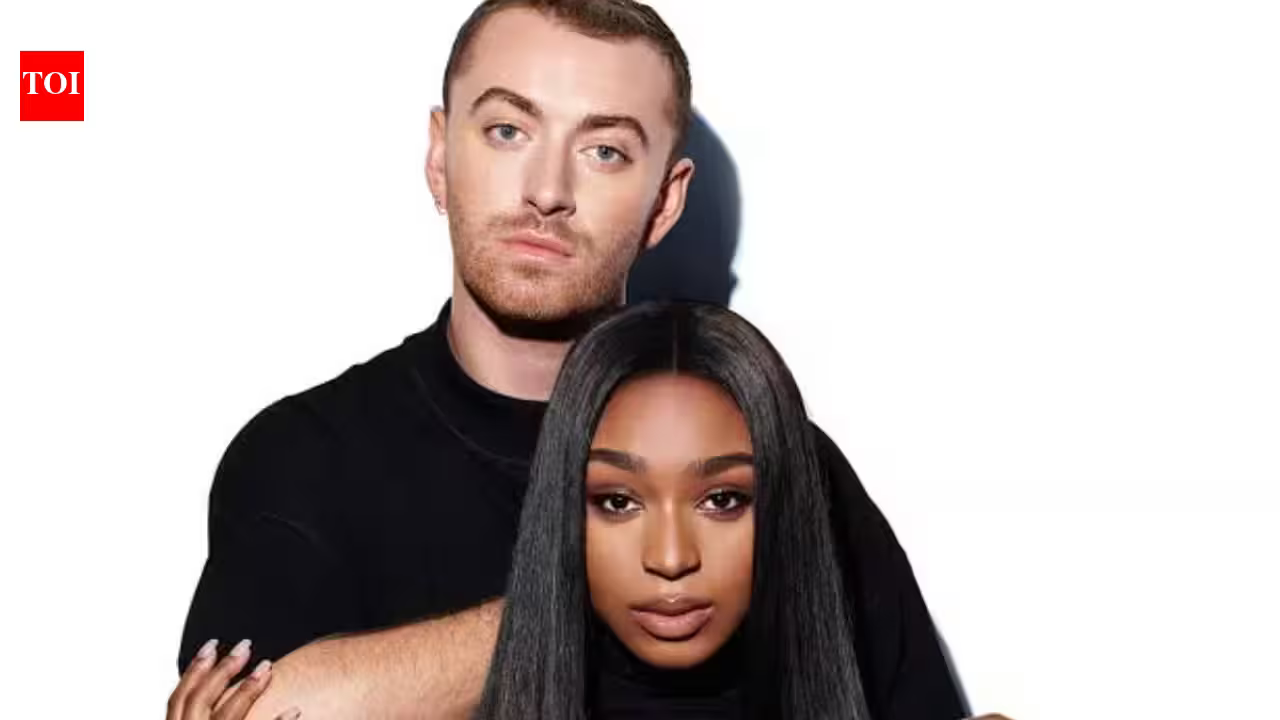
The legal machinery of the music industry rarely grinds to a halt, but for Sam Smith and Normani, it has just shifted into a more daunting gear. What began as a chart-topping collaboration that defined the sound of 2019 has become a protracted courtroom saga. This week, a federal judge in Los Angeles delivered a reality check to the pop stars, rejecting their motion to dismiss a long-standing copyright infringement lawsuit. The verdict? A jury, not a judge, will ultimately decide the fate of their global hit, Dancing with a Stranger.
The Long Road to a Jury Trial
For those who haven’t been tracking the minutiae of this case, the legal battle over Dancing with a Stranger is not a new development. The suit was initially brought forth by songwriters Jordan Vincent, Christopher Miranda, and Rosco Banlaoi, who claim that Smith and Normani’s 2019 smash track borrows heavily from their own 2015 song of the same name.
The legal journey has been a rollercoaster. The case was initially dismissed by a lower court, only to be resurrected on appeal. Now, with Judge Wesley L. Hsu’s recent 27-page ruling, the legal strategy of the pop icons has hit a significant wall. In a blow to the defendants, Judge Hsu determined that the question of “independent creation”—a central defense in copyright law—is too murky to be decided summarily. Instead of letting the stars walk away, the court is essentially signaling that there is enough “there” there to warrant a deeper look by a jury of their peers.
Examining the Claims of Plagiarism
At the heart of the dispute is the age-old question of musical coincidence versus creative theft. The plaintiffs argue that the melodic structure, lyrical themes, and overall composition of the 2019 hit are too similar to their 2015 track to be a mere accident.
In their motion to dismiss, Smith and Normani’s legal team argued that the songs lacked significant enough similarities to sustain a copyright claim, and even went as far as to challenge the copyright status of the material itself. However, Judge Hsu was unmoved. In his ruling, he noted that the defendants failed to provide sufficient legal evidence to warrant an early exit from the litigation. The judge’s statement was blunt: “The court finds the question of independent creation should be left for the jury to decide.”
This puts the burden of proof squarely back on the legal teams to justify the creative process that birthed Dancing with a Stranger. The outcome of this trial could set a precedent for how “vibe-based” lawsuits—cases where the song doesn’t copy a melody note-for-note but rather mimics an intangible “feel”—are treated in the streaming era.
The Problem of ‘Inaudible’ Elements
One of the most intriguing aspects of Judge Hsu’s ruling involved the nuance of the technical allegations. The defense had argued that certain elements cited by the plaintiffs were practically impossible to discern, even going so far as to describe the samples as “difficult to identify or even hear within Plaintiff’s song due to their low volume.”
While the defense hoped this would prove the insignificance of the alleged theft, the court interpreted the matter differently. The judge noted that even if a lay listener might struggle to pick up a specific sample at low volume, that doesn’t automatically negate a copyright violation. He observed that “the average audience could very well fail to recognize the appropriation of the sampled songs when listening to plaintiff’s song,” effectively suggesting that subtle plagiarism is still plagiarism. By pushing this to a jury, the court is acknowledging that the “average listener” standard is subjective and requires a jury’s verdict to determine if the similarities are substantial enough to cross the line from inspiration to infringement.
The High Stakes of Pop Success
Dancing with a Stranger was more than just a radio hit; it was a career-defining moment for Normani and a continued streak of dominance for Sam Smith. Reaching number seven on the Billboard Hot 100, the track became a staple of late-night playlists and streaming giants. When a song achieves that level of saturation, it becomes a massive target for litigation.
The irony here is palpable: a song designed to be universal and catchy now sits at the center of a battle over exclusivity. If the plaintiffs prevail, the financial implications would be staggering. In the world of high-charting pop, damages are calculated based on the massive commercial success of the track—an amount that could climb into the millions when streaming royalties, licensing fees, and performance rights are factored in.
What Happens Next?
As it stands, the case is officially heading toward a trial. For Sam Smith and Normani, this is a significant hurdle. Trials are expensive, time-consuming, and—perhaps most importantly—public. They open up the inner workings of a recording artist’s creative process to public scrutiny. Expert musicologists will likely be called to testify, dissecting the tracks bar by bar, frequency by frequency.
It is important to remember that as of now, these are still allegations. The court has not ruled that any theft occurred; it has merely ruled that the evidence is strong enough to avoid a summary dismissal. However, in the high-stakes world of music copyright, the “denial of dismissal” is often a signal that the defendants are in for a long, grueling fight.
For the fans, the legal drama will surely fade into the background when the beat drops, but for the industry, eyes will be glued to the courtroom. We are entering a phase where the definition of “originality” is being stress-tested in real-time. Whether Dancing with a Stranger will eventually be remembered as a pioneer of pop or a cautionary tale of litigation remains to be seen. But one thing is clear: the dance isn’t over, and the courtroom floor is the only place left to move.
Disclaimer: This content is auto-generated for informational purposes only.
Source: Read Original News