







Behind the Scenes of a Masterpiece: How Kamal Amrohi Rewrote the Economics of Screenwriting for ‘Mughal-E-Azam’
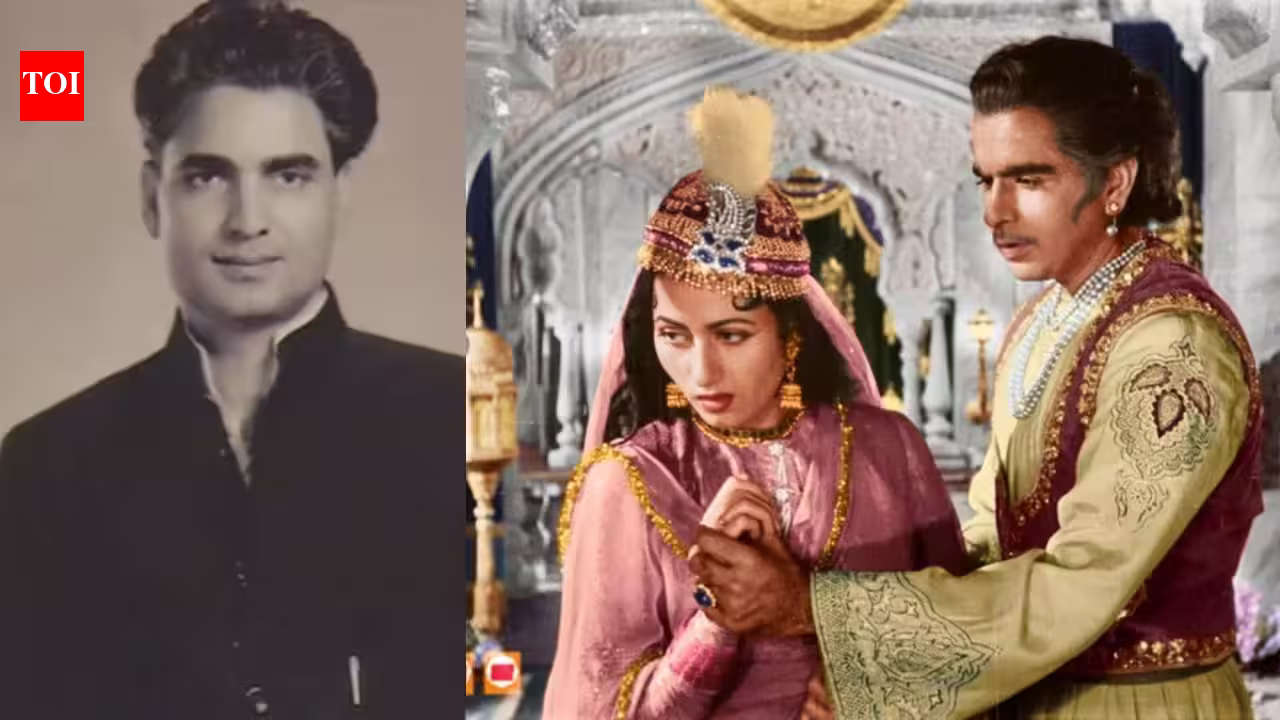
Decades after its historic release, Mughal-E-Azam continues to be hailed as the pinnacle of Indian cinema. With its opulent sets, legendary performances, and iconic dialogue, K. Asif’s 1960 period epic remains a masterclass in filmmaking. However, the film’s legacy is now being revisited through the lens of its writing room, as Tajdar Amrohi, son of the acclaimed filmmaker and writer Kamal Amrohi, has made startling claims regarding his father’s pivotal role in the production.
A Controversial Writing Credit
In a recent interview, Tajdar Amrohi asserted that his father was the primary force behind the film’s celebrated dialogue, despite official credits being shared with writers like Vajahat Mirza and Amanullah Khan. Tajdar contends that K. Asif deliberately diluted Kamal Amrohi’s credit to prevent him from becoming the sole face of the project’s literary success.
"With all due respect to K. Asif, he didn’t want Kamal Amrohi to get full credit," Tajdar stated. "He feared that if my father were given sole credit, the public would assume he had written the entire film." According to Tajdar, his father was a visionary who had a hand in the scripts of his own directorial gems, such as Pakeezah, Mahal, and Razia Sultan, and brought that same signature genius to Mughal-E-Azam.
Defying the ‘Munshi’ Era
Perhaps more significantly, Tajdar highlighted how his father transformed the professional status of screenwriters in the Hindi film industry. At a time when writers were often dismissed as mere "munshis"—low-paid workers who were rarely treated as essential creative partners—Kamal Amrohi demanded, and received, unprecedented compensation.
Tajdar revealed that after a heated fallout between his father and K. Asif, the latter struggled to find a writer who could replicate Amrohi’s brilliance. When Asif eventually approached him to return to the project, Amrohi, still incensed by their previous disputes, demanded an astonishing Rs 10,000 per scene. To the surprise of many, Asif agreed.
"At a time when people charged between Rs 200 to Rs 4,000, Kamal Amrohi earned about Rs 2 lakh for the film," Tajdar claimed. Adjusted for inflation, that figure would be worth roughly Rs 2 crore in today’s currency, marking a significant milestone for the valuation of creative labor in Indian cinema.
A Legacy of Integrity
The tension between the two titans did not end with the paycheck. Tajdar recalled that his father was deeply wounded when the film was released with shared writing credits. "My father was too hurt… he told Asif that these writers wouldn’t be able to recreate his work because the soul of the script was entirely his," he added.
Despite the complexities of the production, the impact of Kamal Amrohi’s prose is undeniable. The legendary Prithviraj Kapoor, who played Emperor Akbar in the film, was reportedly an ardent admirer of Amrohi’s writing style, further cementing his reputation as a master of the craft.
As fans continue to analyze the Mughal-E-Azam production, Tajdar’s revelations offer a rare glimpse into the volatile yet brilliant creative environment that birthed one of the most successful films in the history of the industry.