








A major proposed renewable energy development in Shetland has hit a significant roadblock after two of the region’s most prominent public bodies lodged formal objections. The Neshion Energy Park, a project spearheaded by Shetland Aerogenerators near the Sullom Voe Terminal, is facing intense scrutiny over its potential impacts on protected peatland, cultural heritage, and wildlife.
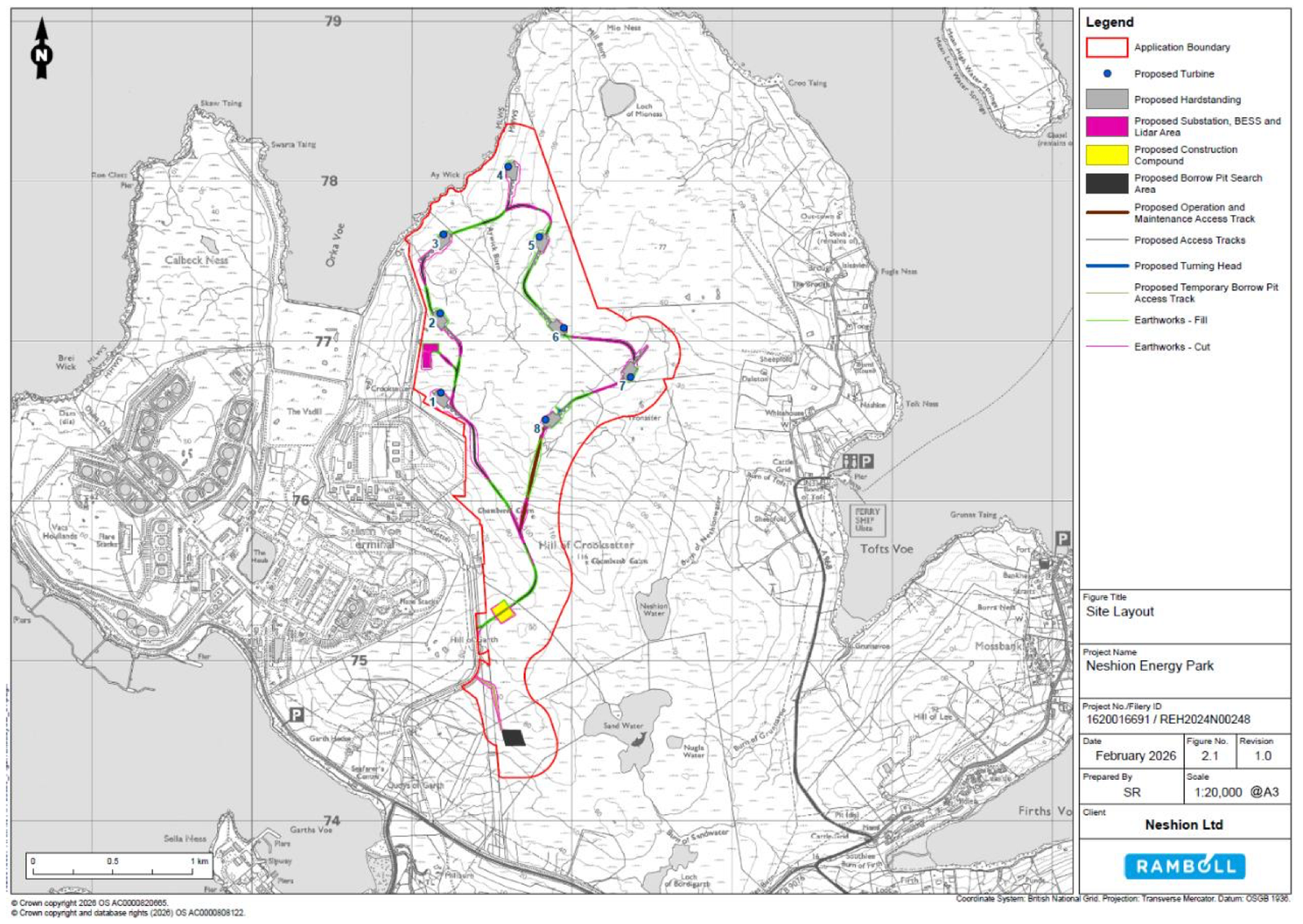
The proposal currently includes eight wind turbines reaching 200 metres in height—the largest ever planned for the islands—alongside 25MW of battery storage. While the developer emphasizes the project’s contribution to climate goals, energy security, and an estimated £310 million economic boost over its 40-year lifespan, critics argue that these benefits come at too high an environmental cost.
The Shetland Amenity Trust (SAT) has formally objected, citing deep concerns over the siting of the turbines on “comparatively high-quality” blanket bog. The Trust argues that the application has failed to demonstrate how ecological and landscape impacts can be adequately avoided. “Restoration should not be regarded as an equivalent substitute for avoiding impacts on functioning peatland systems in the first instance,” the Trust stated, noting that the developer has not sufficiently explored alternative sites to protect the carbon-rich soil.
Beyond ecological concerns, the Trust highlighted the cumulative visual impact the turbines would have on the North Mainland. They have called upon the Scottish Government to establish a Shetland-wide ornithological monitoring group to better track how such large-scale developments affect bird populations, specifically mentioning the whimbrel, which is particularly sensitive to industrial disruption.
Historic Environment Scotland (HES) has also submitted an objection, focusing on the cultural impact of the development. The agency warned that the wind farm would threaten the setting of two chambered cairns—ancient, scheduled burial monuments on the nearby Hill of Crooksetter. HES maintained that there are no “exceptional circumstances” that would justify the damage to the integrity of these historic sites, though they have suggested that a significant reduction in the number of turbines or a major relocation might mitigate their concerns.
NatureScot has similarly signaled its intent to object unless strict mitigation conditions are met. Their primary concerns lie with the potential “significant effects” on the East Mainland Coast Special Protection Area (SPA), specifically regarding breeding red-throated divers, and the Sullom Voe Special Area of Conservation (SAC), which provides a habitat for otters.
In response, the developers, Shetland Aerogenerators, maintain that their design has been an iterative process, refined through “mitigation by design.” They point out that they have already reduced the turbine count from ten to eight and that the project is consistent with national planning policies. Addressing the environmental pushback, the firm stated that they have gone to “considerable lengths” to avoid the deepest peat and minimize visual impacts, while also stressing the national importance of the project in achieving energy independence.
To bolster local support, the company has pledged to establish a “private wire” with the Sullom Voe Terminal to support synthetic fuel development and has proposed a local energy discount scheme to help residents tackle fuel poverty. The project developer recently became the first to sign the Shetland Development Charter, a move intended to align their corporate ambitions with the expectations of the local community.
Because the energy park has a capacity exceeding 50MW, the final decision rests with the Scottish Government’s energy consents unit. As the planning process continues, the developer faces the challenge of balancing the national imperative for green energy with the concerns of local stakeholders who are wary of the long-term changes to the island’s landscape and biodiversity. For now, the future of the project remains under formal review as officials weigh the proposed economic gains against the substantial environmental and heritage objections raised by key statutory bodies.
Disclaimer: This content is auto-generated for informational purposes only.
Source: Read Original News