







It is a tale as old as time in the landscape of Kollywood: a high-profile production is announced, the industry buzzes with excitement, and within forty-eight hours, the legal and social machinery of Tamil Nadu grinds to a halt over a single word. This time, the lightning rod is Kamal Haasan’s latest cinematic venture under the direction of the critically acclaimed SU Arun Kumar. The film, titled Sandiyar, has ignited a firestorm of controversy that feels uncomfortably familiar to those who remember the landscape of Tamil cinema two decades ago.
As the industry and the public trade barbs, the question remains: is Sandiyar a harmless evocative title, or a trigger for the very social frictions that the Tamil film industry has struggled to outgrow?
The Ghost of 2003: A Cycle Repeats
For the seasoned Kamal Haasan fan, the word Sandiyar evokes a specific historical tremor. Back in 2003, the Ulaganayagan himself faced a formidable wall of opposition when he first announced a film with this very title. At the time, the backlash was fierce and uncompromising, forcing the star to pivot. The project was eventually rechristened Virumaandi, a film that went on to become a cult classic and a masterclass in rural storytelling.
The fact that the title has surfaced again in 2024 has invited immediate scrutiny. Critics and political observers are asking why, given the sensitivity surrounding the term, the production team chose to revisit a title that carries such heavy historical baggage. While cinema is a medium of creative freedom, the shadow of 2003 serves as a sobering reminder that in Tamil Nadu, titles are never just strings of letters—they are social signals that carry the weight of caste identity and community perception.
Producers Council Clears the Air
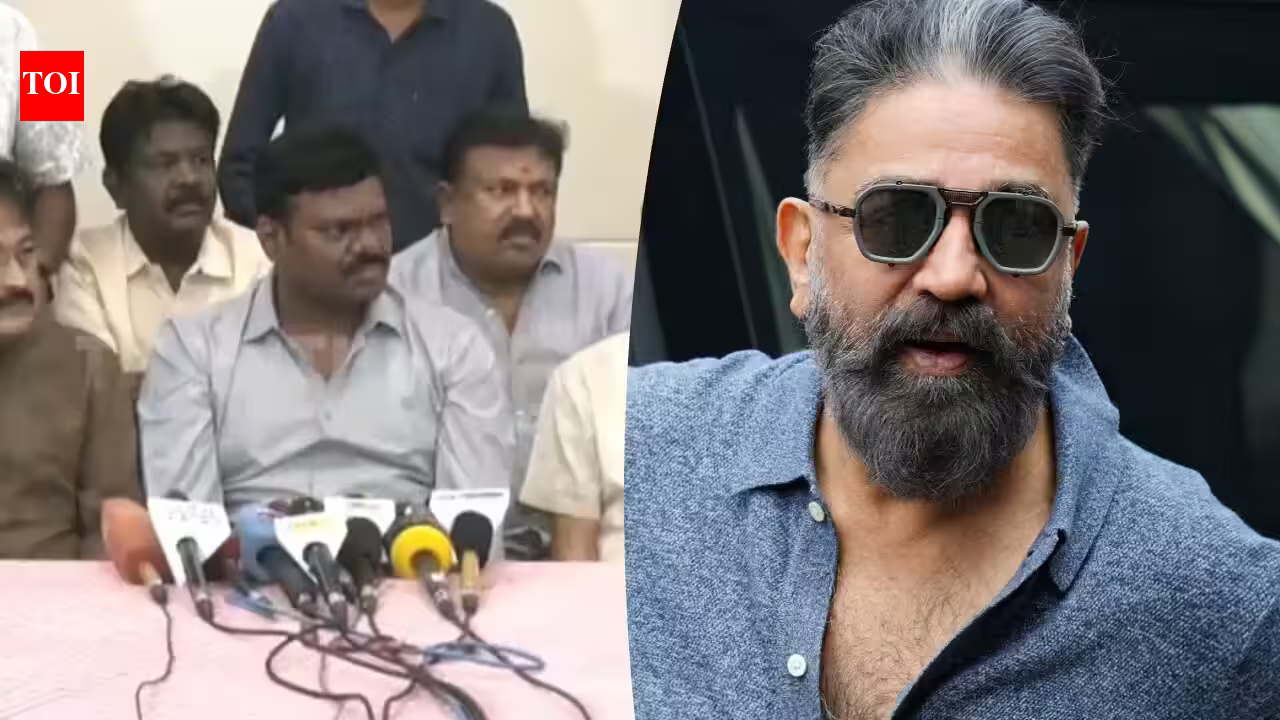
Caught in the crosshairs of the debate is the Tamil Film Producers Council (TFPC). With pressure mounting from political factions, TFPC President Tamil Kumaran recently stepped into the fray to clarify the administrative reality behind the controversy. According to the Council, the allocation of the title was a procedural matter, not a political statement.
“If a title is registered with the council, we retain it for 10 years,” Kumaran explained to reporters, attempting to decouple the Council’s bureaucratic function from the political storm. “Beyond that period, if the producer gives permission, anyone can use it. A film with the same title was made 13 years ago. Kamal’s team approached us, we checked the availability, and we granted it.”
While the Council’s defense is rooted in the “first-come, first-served” logic of intellectual property management, it highlights a disconnect between the legalities of the film trade and the sensibilities of the socio-political climate. To the TFPC, it was a title waiting to be claimed; to the stakeholders outside the industry, it is a provocation that the council seemingly failed to screen through a social impact lens.
The Political Ultimatum: Krishnasamy’s Stand
The most vocal antagonist to the film’s current title is Dr. K. Krishnasamy, leader of the Puthiya Tamilagam party. His opposition is not merely symbolic; it is a direct ultimatum. Krishnasamy has argued vehemently that the title serves as a glorification of specific caste identities, warning that it invites, rather than discourages, social unrest in southern Tamil Nadu.
The threat is explicit: the party has demanded that the producers retract the title within a week. Beyond the local protests he has threatened to organize at filming locations, Krishnasamy has signaled a willingness to escalate the matter to the Central Government. By framing the title as an incitement to caste-based conflict, he has moved the debate from the halls of the Producers Council to the more volatile arena of public security and state order. It is a familiar tactic in regional politics, where cinema is frequently treated as a front line for cultural warfare.
Silence from the Camp of the Auteur
As of now, the production team led by SU Arun Kumar has maintained a strategic silence. In an industry where public relations usually dictate the pace of the narrative, this lack of a formal rebuttal is notable. Is it a sign of confidence that the title will hold, or is the team waiting for the tempest to pass?
SU Arun Kumar, known for his gritty, grounded storytelling in films like Chithha and Sethupathi, surely understands that the success of his film rests on its substance rather than its moniker. However, the film is now facing a dual challenge: it must navigate the potential for state-imposed roadblocks while simultaneously trying to manage the public perception that the movie is already “controversial.” In the court of public opinion, a film often loses half the battle when its identity becomes synonymous with a dispute before the first trailer even hits the screens.
Looking Ahead: The TFPC’s Critical Meeting
All eyes are now turned toward the upcoming Tamil Film Producers Council meeting. This gathering will be the true crucible for the future of Sandiyar. The Council is currently stuck between a rock and a hard place: upholding the sanctity of their own registration processes versus keeping the peace with political leaders who wield significant influence on the ground.
Will the Council demand a change to protect the production from potential protests, or will they stand by their initial approval, setting a precedent for creative independence?
The controversy surrounding Kamal Haasan’s latest project is more than just a squabble over a name. It is a reflection of a fractured dialogue between the entertainment industry and the political pulse of the state. As the industry awaits the final verdict, one thing is certain: in the world of high-stakes Tamil cinema, the name on the poster is often just the beginning of a much longer, much more complicated story. Whether this film follows the path of Virumaandi—transcending its controversy through brilliance—or finds itself caught in an endless cycle of litigation remains to be seen. For now, the set of Sandiyar remains a space of high tension, proving once again that in the eyes of the public, the title is indeed the message.
Disclaimer: This content is auto-generated for informational purposes only.
Source: Read Original News