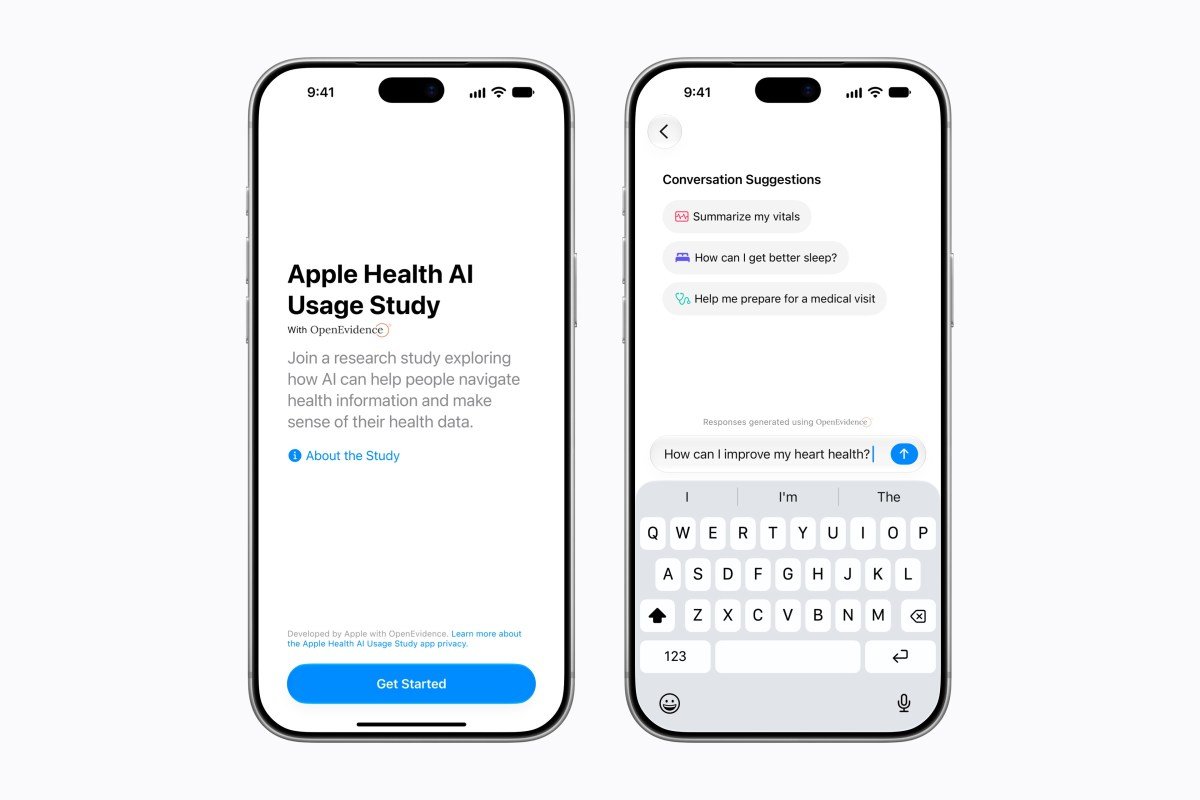










The intersection of artificial intelligence and personal health management has rapidly expanded, with millions of users turning to digital assistants for medical guidance. However, this shift has brought significant concerns regarding the accuracy, reliability, and safety of the information provided. In response to these challenges, Apple has introduced the Apple Health AI Usage Study, a research initiative designed to evaluate how generative AI can function as a bridge to, rather than a barrier from, traditional medical care.
A New Framework for Medically Grounded Responses
The core objective of the Apple Health AI Usage Study is to provide users with health information that is tethered strictly to verified medical research. Unlike general-purpose chatbots that often synthesize information from broad and potentially unverified web data, the Apple study utilizes the OpenEvidence platform. This tool is specifically built for healthcare professionals and is trained on authoritative sources, including peer-reviewed medical journals.
When a user poses a question to the study app, the system performs a retrieval process that links answers to specific clinical citations. By providing direct access to the source material, Apple aims to improve transparency, allowing users to verify the clinical foundation of the advice they receive. Apple’s proprietary technology then translates this dense, technical data into language that is accessible and actionable for the layperson, addressing the significant gap between raw medical guidance and patient comprehension.
The Role of Personalization and Health Data
A unique feature of this study is its optional integration with the user’s existing health metrics. Participants may choose to share data collected by their iPhone and wearable devices, such as resting heart rate, sleep duration, physical activity levels, and blood test results. When this data is provided, the AI can offer responses that are personalized to the individual rather than relying on generalized medical benchmarks.
This approach acknowledges a critical hurdle in digital health: while data collection via wearables is ubiquitous, translating that data into meaningful daily decisions remains difficult for many. By grounding recommendations in the user’s personal history, the study aims to foster better health literacy and enable patients to have more productive, informed conversations with their healthcare providers during clinical visits.
Evaluating Trust and Clinical Communication
Beyond technical accuracy, the study seeks to understand the human component of AI adoption in medicine. Researchers are looking to determine whether users correctly comprehend the information provided and whether that information effectively changes how they interact with their doctors. To gather this data, the app incorporates survey mechanisms that allow users to rate the quality of responses and provide feedback on their overall experience.
According to Dr. John Brownstein, a professor of pediatrics and biomedical informatics at Harvard Medical School, the urgency of this research stems from the fact that people are already relying on AI for health decisions despite the inherent risks. If information is incomplete or confusing, it can lead to false reassurance or unnecessary delays in seeking professional care. The study aims to determine not just if the AI provides the “correct” answer, but whether it empowers the user to make better, more confident healthcare decisions.
Privacy Protections and Security Safeguards
Apple has implemented rigorous protocols to ensure user privacy throughout the duration of the study. All inquiries undergo a process to remove identifying information before they are transmitted to the OpenEvidence engine. Furthermore, the company has established strict data retention policies: OpenEvidence is required to delete all query and response data within 24 hours of processing, and it is prohibited from using the study participants’ queries to train its machine learning models.
In addition to privacy, the system is equipped with diagnostic safeguards designed to identify instances that require urgent attention. If a user’s query touches upon potentially life-threatening symptoms or dangerous health scenarios, the application is programmed to recognize these cues and direct the user to seek immediate professional medical assistance. Apple explicitly states that the app does not provide live monitoring, nor is it intended to function as a replacement for a doctor.
Eligibility and Long-Term Research Impact
The study is currently open to adults in the United States who are at least 21 years of age. Participation requires an iPhone capable of supporting Apple Intelligence, which currently limits eligibility to the iPhone 15 Pro series or newer, running the necessary iOS versions. Prospective participants must go through an informed consent process via a dedicated study application to begin sharing their usage patterns.
While Apple intends to use these findings to refine their internal product development, the company has also stated that they plan to release the research results publicly. By sharing these insights, Apple aims to contribute to the broader scientific community, helping to establish best practices for computer-assisted health communication. As AI continues to influence the medical landscape, the results of this study could provide a critical roadmap for ensuring that digital tools serve to enhance, rather than compromise, the standard of patient care.
Disclaimer: This content is auto-generated for informational purposes only.
Source: Read Original News