






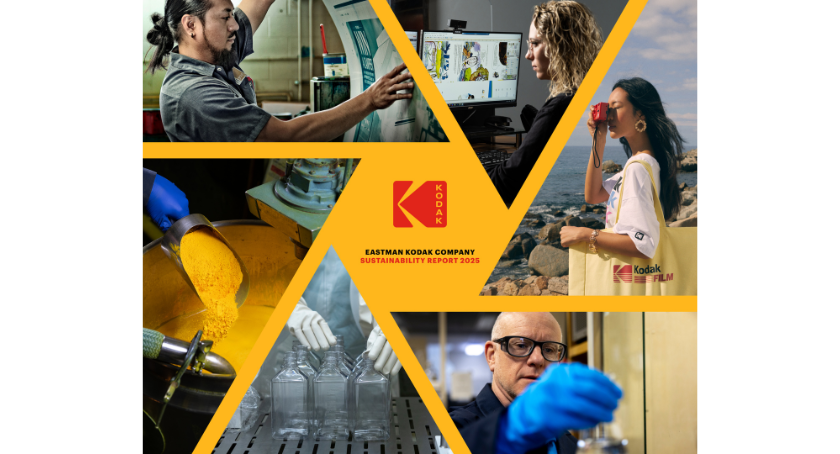
Eastman Kodak Company has officially released its 2025 Sustainability Report, providing a comprehensive roadmap of the firm’s progress in environmental stewardship, social responsibility, and corporate governance. The report underscores a renewed organizational focus on “responsible innovation,” framing sustainability not just as an ethical mandate, but as a core engine for operational efficiency and long-term value creation.
At the heart of the report is Kodak’s three-pillar strategy: “One Kodak, One Planet, and One People.” These guiding principles serve as the framework for the company’s ongoing efforts to shrink its ecological footprint while fostering a more inclusive and skilled workforce. Notably, the data reveals significant improvements compared to the company’s 2016 baseline, with measurable reductions in greenhouse gas (GHG) emissions and water withdrawal. Furthermore, Kodak continues to demonstrate strong performance in waste diversion and the scaling of circular economy initiatives, such as sophisticated solvent recovery systems.
A significant portion of the report highlights how Kodak is leveraging its technological heritage to aid its customers in achieving their own sustainability goals. Central to this effort are the KODAK SONORA Process Free Plates and the KODAK PROSPER digital printing technology. By utilizing water-based inks and advanced workflow software like KODAK PRINERGY, the company is helping the global printing industry slash waste and enhance production efficiency.
Beyond printing, Kodak is finding new relevance for its legacy expertise in materials science and chemistry. The report details a surge in global demand for KODAK Motion Picture Film, bolstered by innovation in manufacturing. A standout development for 2025 is the introduction of a new Anti-Halation Undercoat (AHU) structure for VISION3 Color Negative Films. This design innovation directly reduces the water, chemical, and energy requirements during the film processing stage, proving that image quality and environmental consciousness can coexist.
Looking toward the future, the company is actively pivoting into emerging markets that support a lower-carbon economy. Kodak is expanding its advanced battery coating activities, offering production-scale electrode and primed foil coating services that are critical to the development of next-generation energy storage. Concurrently, the company is utilizing its complex process engineering capabilities to support the production of essential pharmaceutical ingredients, demonstrating how its industrial infrastructure can contribute to critical supply chains.
“Sustainability is an important part of how Kodak innovates, operates and serves customers,” said Jim Continenza, executive chairman and CEO of Kodak. “Our 2025 report reflects the progress we are making while recognizing the work still ahead as we continue to work to reduce environmental impact and strengthen our business for the future.”
As Kodak navigates the transition toward these high-tech sectors, the 2025 report signals a company that is successfully repurposing its foundational chemistry expertise to meet the demands of a modern, sustainable global market.
Disclaimer: This content is auto-generated for informational purposes only.
Source: Read Original News