








A New Era for the Epic Games Launcher
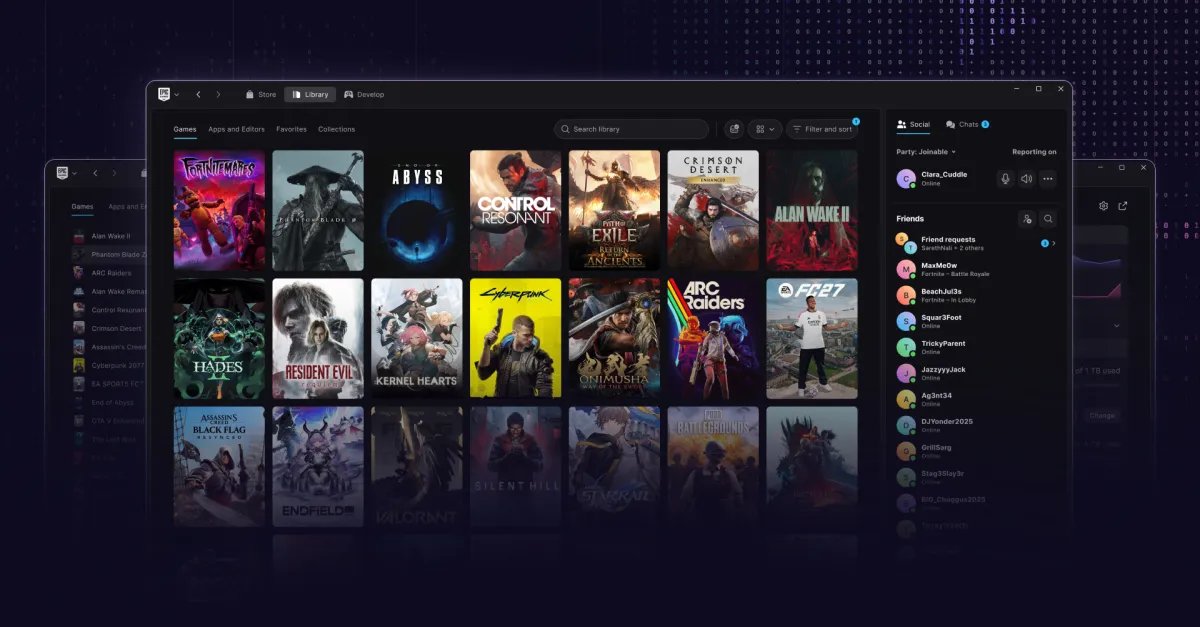
Epic Games has officially unveiled a significant overhaul of its PC games launcher, marking a departure from the legacy architecture that has powered the storefront since its inception. Currently available in a preview capacity, this refreshed iteration promises substantial performance gains, a modernized user interface, and long-awaited support for the Linux operating system. This update represents more than just a visual refresh; it serves as a technical showcase for how the company intends to utilize artificial intelligence to accelerate software development and deployment cycles across its ecosystem.
For end users, the most immediate change will be the responsiveness of the application. The previous launcher was often criticized for its resource usage and load times. By rebuilding the core foundation, Epic claims to have achieved a leaner, more efficient software client that handles library management and store navigation with increased speed. This transition is aimed at reducing the overhead that players experience when attempting to launch games or manage their digital collections, directly addressing user feedback regarding the performance of the software.
Leveraging Artificial Intelligence in Development
A noteworthy aspect of this development cycle is the methodology used to engineer the update. Epic Games has explicitly integrated AI-assisted development tools to manage the migration of core features from the existing launcher to the new framework. According to company leadership, AI agents were utilized to write and review significant portions of the codebase. This approach allowed the team to replicate existing, complex functionality at an accelerated rate compared to traditional manual coding processes.
Martin Keely, Vice President and General Manager of the Epic Games Store and Epic Online Services, clarified that while AI played a central role, the project remained under strict human oversight. The development team managed the process and supervised the entirety of the output generated by the AI agents. This model highlights a shift in industry standard practices, where AI is increasingly viewed as an engine for productivity and a means to automate the translation of legacy logic into modern, performant codebases. This development pipeline is aligned with CEO Tim Sweeney’s vision of retooling the company for maximum AI integration, aiming to enable internal teams to build higher quality software more efficiently.
Expanding to the Linux Ecosystem
The introduction of native Linux support is perhaps the most significant technical milestone in this update. By utilizing the new, streamlined architecture, Epic is finally extending its storefront accessibility to the Linux community. This move is historically significant for the gaming industry, as it signals a deeper commitment to cross-platform compatibility.
Alongside the arrival of the launcher on Linux, Epic has confirmed plans to bring its flagship title, Fortnite, to the Linux platform. This expansion is designed to provide a cohesive experience for players who prefer alternative operating systems, ensuring that they can manage their games and access the Epic Games Store without relying on emulation layers or third-party workarounds. The technical challenges of ensuring parity across Windows, macOS, and Linux are substantial, but the reliance on modern development tools appears to have provided the necessary efficiency to bring these platforms in line.
Strategic Alignment and Future Scalability
The release of the new launcher serves as a proof of concept for Epic’s broader organizational pivot toward AI-accelerated workflows. By successfully deploying this update, Epic is gathering data on the stability and reliability of AI-generated code in a live, high-traffic consumer environment. The leadership team views the launcher as a demonstrative project that confirms their direction is both sustainable and capable of delivering professional-grade software.
While reports have suggested an internal shift toward minimizing hand-written code for future projects, the launcher team maintains that their current focus is on quality and functionality parity. The preview phase will allow the engineering team to gather performance metrics and user telemetry, ensuring that the new client reaches a level of stability that meets the standards of the global gaming audience. Once these requirements are met, the company will proceed with a full rollout, eventually sunsetting the legacy launcher to consolidate the user experience across all supported platforms.
Performance and User Impact
As the company moves through this transition, the overarching goal remains the improvement of the developer and user experience. By offloading repetitive coding tasks to AI systems, the engineers can dedicate more time to refining the store’s feature set and addressing technical debt. The new launcher is designed to be a foundation for future iterations, capable of scaling as the Epic Games Store grows.
For the end user, this change translates to a more robust platform. The faster, more responsive interface is designed to make browsing, installing, and updating games a seamless operation. Furthermore, the commitment to maintaining feature parity across platforms ensures that whether a user is operating on Windows, macOS, or Linux, they will have access to the same library, social features, and storefront capabilities.
As Epic Games continues to implement this “AI-accelerated” strategy, the broader gaming industry will be watching closely. If the performance gains observed in this preview version translate into long-term stability and faster development cycles for high-complexity titles, it may signal a fundamental shift in how large-scale consumer applications are built and maintained. The preview is live today, and while the company has not yet set a hard deadline for the retirement of the older software version, the roadmap is clear: the future of the Epic Games Launcher is designed around speed, cross-platform accessibility, and advanced machine-assisted engineering.
Disclaimer: This content is auto-generated for informational purposes only.
Source: Read Original News