







From Rivals to Allies: Regional Groups Join Forces to Challenge ‘Hindi Imposition’ and Federal Neglect
BENGALURU – In an unexpected political realignment, two of India’s most vocal regional advocacy groups—the Karnataka Rakshana Vedike (KRV) and the Maharashtra Navnirman Sena (MNS)—have set aside a history of bitter territorial disputes to form a unified front against what they describe as the systematic erosion of state rights and local cultures.
The two organizations, often found at odds over sensitive issues like the Belagavi border dispute and water-sharing agreements involving the Krishna and Mahadayi rivers, are now seeking common ground to lobby against the perceived encroachment of Hindi and the socio-economic impacts of unregulated migration into major urban centers.
A New Pressure Group for Regional Identity
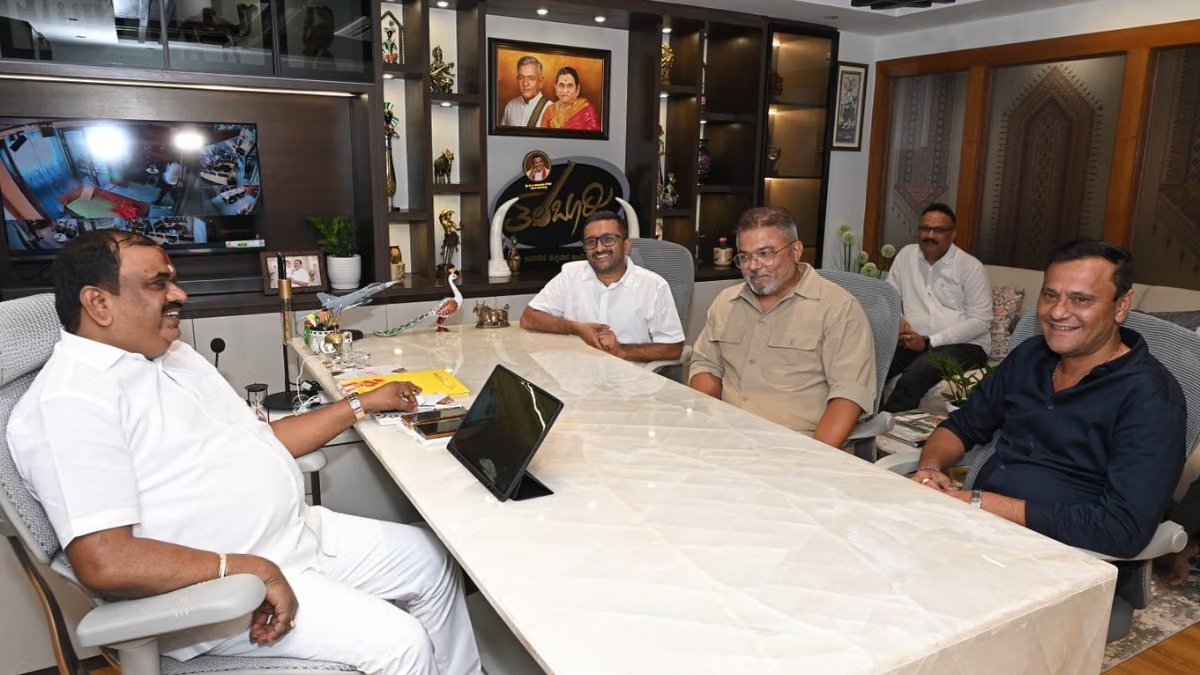
Arun Javagal, general secretary of the KRV—a massive grassroots organization boasting over 68 lakh active members—described the partnership as a necessary evolution in federal activism.
“This is going to be a pressure group on various federal issues,” Javagal told ThePrint. “More than Hindi imposition, it is a joint effort to ensure the eradication of language inequality.”
For the MNS, a party that frequently engages in electoral politics in Maharashtra, the alliance is a strategic push to challenge the status quo maintained by the central government. Sandeep Deshpande, the Mumbai city president of the MNS, accused the Bharatiya Janata Party (BJP)-led Centre of deliberately fostering interstate friction to distract from local grievances.
“These are problems that the Centre does not want to resolve. They want states to keep fighting each other,” Deshpande remarked. He alleged that national parties relentlessly dismiss legitimate state concerns as mere “regionalism,” effectively silencing local voices under the umbrella of national interest.
The ‘Common Minimum Programme’
The collaboration aims to develop a common minimum programme that will serve as a roadmap for outreach to like-minded organizations in states such as Tamil Nadu, Kerala, Andhra Pradesh, Telangana, and West Bengal.
Key areas of concern for the coalition include:
- Language Rights: Combating the mandatory imposition of Hindi in education and administration.
- Economic Representation: Addressing the disparity between high tax contributions from southern and western states and the relatively poor returns from the Union government.
- Demographic Shifts: Raising concerns regarding the impact of uncontrolled migration on local employment and cultural identity.
- Political Autonomy: Resisting the upcoming delimitation exercises, which critics fear will disproportionately favor northern states at the expense of southern and western states’ legislative representation.
Bridging a Divide
Both groups have a documented history of militant advocacy. The MNS has frequently been criticized for its aggressive stance on “Marathi pride,” while the KRV has built its reputation on protecting the sanctity of Nela, Jala, Bashe (land, water, and language) through assertive, and at times disruptive, protests.
Despite these aggressive tendencies and their historic clashes, leaders from both camps emphasize that the necessity of a unified regional voice outweighs their localized differences.
“We are neighbors and have several issues with each other,” Javagal noted. “But we are trying to find common ground as well, which would help dilute the other concerns over time.”
The Road Ahead
With the Greater Bengaluru Authority (GBA) elections approaching, the KRV is particularly sensitive to demographic shifts that could dilute the voting power of the local population. By coordinating with the MNS and attempting to build a broader pan-Indian coalition of regional movements, these groups hope to force the Union government to prioritize state-specific concerns.
As the alliance begins drafting its 10-point agenda—which they plan to finalize through upcoming leadership visits between Mumbai and Bengaluru—the message to the center is clear: a new, cross-state movement is emerging, one that views the current federal administration as a “one-party dictatorship” that must be held accountable to the diverse states that make up the Union.