








Beyond Access: The Urgent Need for Inclusive Higher Education in India
While India’s higher education policy has increasingly prioritized inclusion, a significant gap remains between the legislative mandate and the lived reality of students with disabilities (SwD). Despite the Rights of Persons with Disabilities Act (2016) and updated UGC guidelines, many students find that their journey after admission is fraught with systemic hurdles, academic exclusion, and a lack of necessary support structures.
The Gap Between Enrollment and Engagement
Current institutional attention is heavily skewed toward admission and physical infrastructure, such as ramps and Braille signage. However, as disability rights activist Dr. Satendra Singh notes, national data collection frequently fails to measure the academic experience once a student steps on campus. With only about 0.12% of total higher education enrollment consisting of students with benchmark disabilities, the focus must shift from merely “getting them in” to ensuring they can effectively “get through” their coursework.
A critical issue is the lack of standardized, granular data. The AISHE (All India Survey on Higher Education) database often pools diverse needs into a single category of “Students with Benchmark Disabilities.” This masks the reality that a student with dyslexia has vastly different requirements than a student who is deaf or one with a psychosocial disability. Without this nuance, institutions cannot implement effective, targeted academic interventions.
Redefining Reasonable Accommodation
“Inclusive education is not about eliminating specialized support; it is about creating an environment where the same curriculum can be accessed by everyone,” says Dr. Sanjay Kant Prasad, Director of the National Centre for Disability Studies at IGNOU.
True inclusivity requires a shift from a “one-size-fits-all” approach to a rights-based model of “reasonable accommodation.” This goes beyond basic physical access to include:
- Academic Support: Remedial classes, flexible timelines for assignments, and note-taking assistance.
- Faculty Orientation: Training educators to deliver content in accessible formats, such as screen-reader-compatible digital files, captions for recorded lectures, and tactile materials.
- Institutional Support: Dedicated cells that provide both administrative advocacy and emotional support to navigate the pressures of campus life.
The Digital Divide in Learning
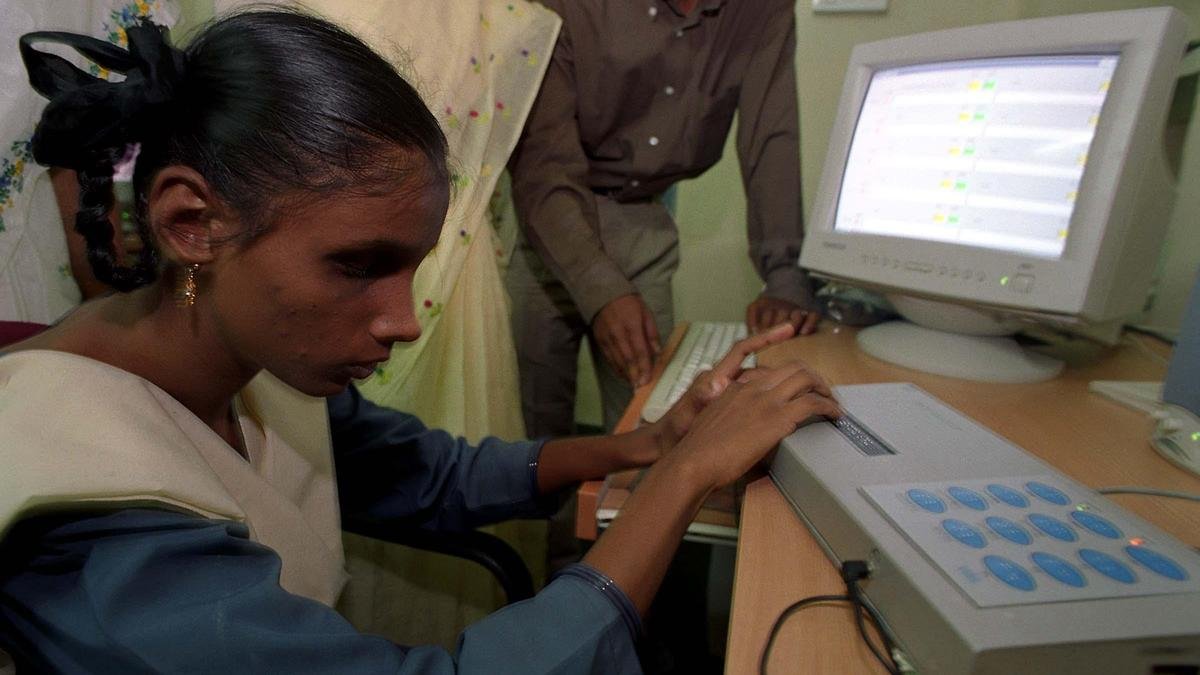
As higher education becomes increasingly digital—relying on Learning Management Systems (LMS), online journals, and virtual exams—the “digital divide” has emerged as a major barrier. An online portal that is not navigable via keyboard commands, or a PDF that exists only as an inaccessible image, effectively shuts out students with visual impairments.
As noted by Dr. Rajeshwari Muthukumaran of Christ (Deemed-to-be University), while some students arrive with their own assistive toolkits, they often lack the institutional guidance required to integrate these tools into specific domain-heavy software or complex digital learning platforms. The lack of digital accessibility standards in current institutional reporting—such as NAAC or NIRF rankings—means that colleges are rarely held accountable for the usability of their online infrastructure.
Case Study: The Institutional Hurdle
The experience of Ashutosh Singhal, a Delhi University alumnus, highlights that technology is often not the main problem; the institutional processes surrounding it are. Despite being a proficient user of screen-reading software for his exams, Singhal frequently encountered broken equipment, inadequate proctoring environments (such as noisy labs that drowned out screen readers), and a lack of flexibility regarding allotted time.
For many students, the exhaustion of constantly negotiating for accommodations—explaining needs to different departments and justifying basic rights—is as debilitating as the disability itself.
The Path Forward
To bridge the divide, experts emphasize that higher education institutions must move beyond passive compliance. The June 2024 Ministry of Education guidelines represent a positive step, requiring HEIs to report on their accessibility mechanisms via the Universities Activity Monitoring Portal (UAMP).
However, the real change will occur only when institutions internalize that accessibility is a proactive, systemic responsibility. This includes forming internal committees comprising teachers, parents, and students to oversee daily needs, and implementing a multi-tiered system of support—where universal access is the baseline, and intensive, individualized remediation is readily available when required. Only by evolving from a culture of “special requests” to one of “embedded accessibility” can India’s higher education system truly fulfill its promise of equality.
Disclaimer: This content is auto-generated for informational purposes only.
Source: Read Original News