








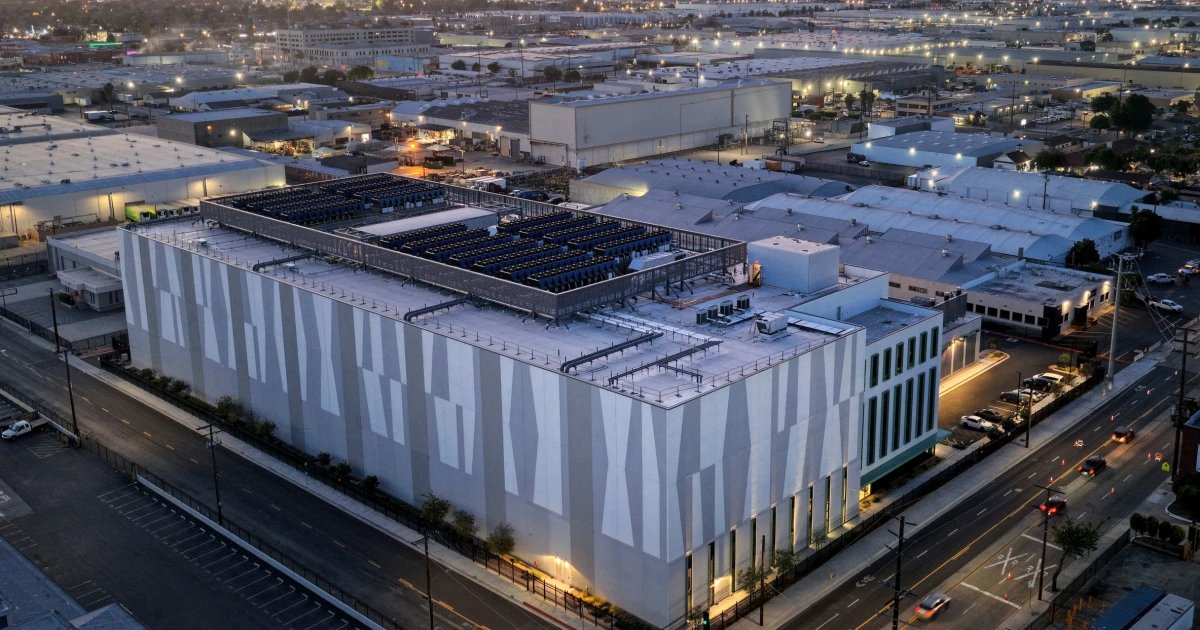
WASHINGTON — Under immense pressure to address the rising public backlash against the rapid proliferation of artificial intelligence infrastructure, the House of Representatives voted overwhelmingly on Wednesday to pass the Ratepayers Protection Act.
The bipartisan legislation, which cleared the chamber with a 417-3 vote, is designed to shield average consumers from the soaring energy costs associated with the construction of massive data centers. By shifting the financial burden of necessary grid and infrastructure upgrades from local utility customers to the tech companies themselves, lawmakers hope to mitigate the economic strain that these facilities have placed on communities.
The bill was co-sponsored by Reps. Gabe Evans, R-Colo., and Kathy Castor, D-Fla. For Evans, a freshman lawmaker facing a tight re-election battle, the vote marked a legislative victory on a pressing campaign issue. “Hardworking families should not have to subsidize the energy demands of data centers,” Evans said following the vote. “America needs the infrastructure to lead the world in AI, but we cannot have that growth at the expense of hardworking families, farmers, seniors, and small businesses.”
The vote serves as the only congressional action taken this week regarding artificial intelligence, despite growing alarms from industry experts regarding the long-term safety and societal implications of the technology. While the bill aims to address the fiscal impacts of AI’s physical footprint, it notably ignores the more existential warnings raised by researchers about the dangers of the software itself.
The legislation’s path forward remains uncertain. With the House adjourning for the November midterm elections and the Senate’s legislative calendar rapidly dwindling, it is unlikely that further action on broader AI regulation will occur until the post-election “lame-duck” session.
The lopsided tally—opposed only by progressive Reps. Summer Lee, D-Pa., Delia Ramirez, D-Ill., and Rashida Tlaib, D-Mich.—masked a deeper frustration among many lawmakers who viewed the bill as insufficient. While many Democrats supported the measure as a practical first step, some criticized it as a weak response to a volatile political issue.
“Our communities are so outraged, and they are understandably very angry that Congress isn’t doing enough,” said Rep. Veronica Escobar, D-Texas. While voting in favor of the bill, she characterized it as “the bare minimum” and “kind of pathetic.”
The urgency behind the vote is rooted in shifting public sentiment. A recent NBC News Decision Desk poll revealed that nearly 70% of respondents oppose the construction of AI data centers in their neighborhoods. As energy costs remain a dominant concern for voters, lawmakers in both parties are scrambling to balance the drive for technological dominance—frequently touted by President Donald Trump—against the immediate frustrations of constituents who feel their neighborhoods are being overrun by power-hungry facilities.
Disclaimer: This content is auto-generated for informational purposes only.
Source: Read Original News