







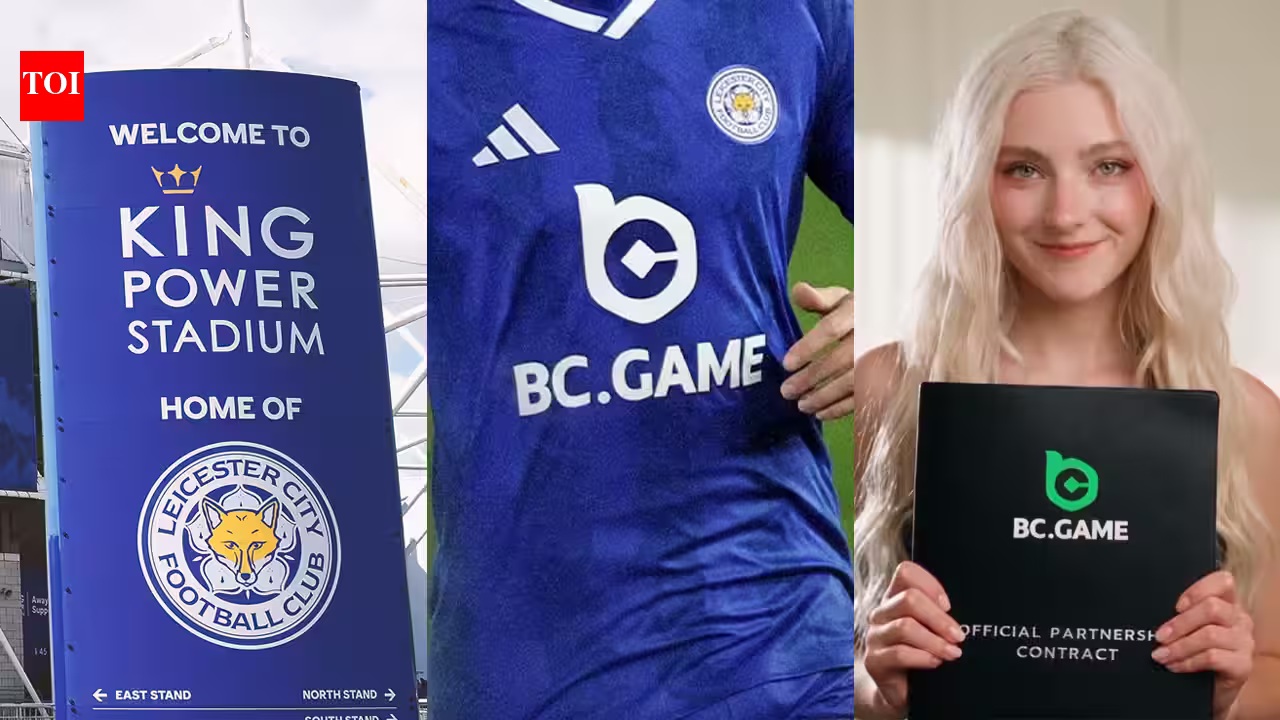
LEICESTER CITY has officially severed ties with their front-of-shirt sponsor, BC Game, following a wave of intense public pressure and fan backlash ignited by the gambling firm’s decision to appoint a Russian adult film star as a global brand ambassador.
The decision, announced Wednesday, concludes a partnership that was only in its infancy, having commenced at the start of the 2024-25 season. In a formal statement released to the public, the club confirmed that the separation was effective immediately, noting that both parties had engaged in “constructive discussions” regarding their divergent commercial trajectories. While the club opted for diplomatic language, the underlying reality points to a sharp realization by the Leicester board that their brand identity was being irreparably compromised by the optics of their sponsorship portfolio.
The Catalyst for Conflict
The crisis originated when BC Game announced Eva Elfie—a prominent Russian adult film actress—as their newest brand ambassador. The promotional materials, which included a lighthearted social media video featuring the actress and a delivery driver with the caption “Welcome to BC Game Eva Elfie! Let the fun begin,” struck a jarring chord with the Leicester City faithful.
For a club deeply embedded in the identity of its local community, the association was viewed as a step too far. The Foxes Trust, the club’s official supporters’ group, did not mince words. Their vocal opposition, which had been simmering since the initial betting sponsorship deal was struck, reached a boiling point upon the news of the ambassadorship. The Trust argued that the club had failed to consider the moral implications of pairing its iconic badge with industries—gambling and adult entertainment—that are known to have significant negative societal impacts, particularly on younger fans.
“Is this who we are now?” the Trust asked in a pointed statement on November 4, effectively questioning the core values of the club’s leadership. The pressure from the stands, amplified by social media discourse, forced the club to confront the possibility that their commercial revenue stream was costing them something far more valuable: their reputation.
Damage Control and Fan Restitution
Recognizing the gravity of the discontent, Leicester City did not merely terminate the contract; they took active steps to rectify the presence of the sponsor’s branding among the fan base. In an effort to appease supporters who felt uncomfortable wearing the club’s crest alongside a logo they no longer endorsed, the club announced an enhanced returns policy.
Fans who purchased 2024-25 kits featuring the BC Game branding since October 21 are now entitled to a full exchange or refund, regardless of whether the garments have been personalized or worn. This logistical and financial undertaking underscores the seriousness with which the club is approaching this rebranding exercise. By facilitating the return of the disputed shirts, Leicester is attempting to draw a clean line under the controversy and distance itself from the association as quickly as possible.
A Legacy in Transition
The turbulence surrounding this sponsorship deal comes at a particularly sensitive time for Leicester City. The club’s trajectory over the last decade has been one of the most volatile in English football history. Not long ago, the Midlands side was the toast of the sporting world—the 2015-16 Premier League champions who defied 5,000-to-1 odds to etch their name into folklore.
However, that zenith has been followed by a grueling decline. The euphoria of the title win and subsequent European nights has given way to the cold realities of professional instability, including back-to-back relegations that have left the club navigating the rigors of League One. In the world of lower-tier football, financial stability is often the holy grail, a necessity that frequently forces clubs into uncomfortable partnerships with high-risk industries like online gambling.
This incident serves as a cautionary tale for clubs throughout the English Football League regarding the dangers of “blind” sponsorship. While the financial injection offered by gambling entities can be transformative for a club’s budget, the risks associated with the brand values of those partners—and their subsequent marketing strategies—can prove to be a liability that outweighs the bottom-line benefit.
As Leicester City looks to turn the page, they are left with an empty space on the front of their kits and a pressing need to regain the trust of a fanbase that remains protective of the club’s integrity. The “Foxes” are currently in a period of intense rebuilding, both on the pitch and in the boardroom. Whether they can stabilize their commercial partnerships in a way that aligns with their historical identity remains to be seen, but for now, they have clearly chosen to prioritize their relationship with the fans over the allure of a lucrative, yet toxic, sponsorship deal.
Disclaimer: This content is auto-generated for informational purposes only.
Source: Read Original News