








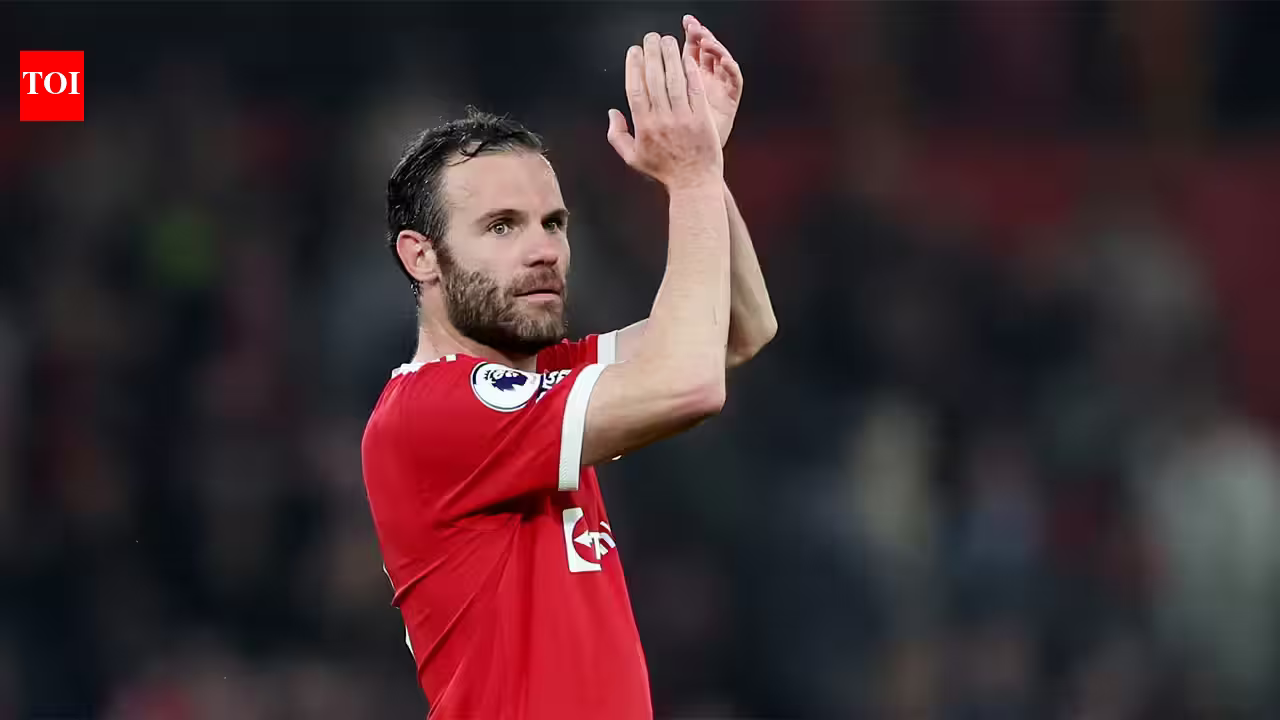
“Sometimes, to love is to let go… Thanks football.” With these poignant words, Juan Mata, the diminutive playmaker who carved his name into the annals of football history with elegance and tactical brilliance, has officially announced his retirement from professional football at the age of 38.
The news, delivered via a nostalgic video filmed in the dressing room of Juventud Estadio in Oviedo—the very ground where a 10-year-old Mata first learned to command a ball—marks the end of a glittering two-decade odyssey that saw him conquer Europe, the world, and eventually, hearts across the globe.
Mata departs the pitch not merely as a technician of the highest order, but as one of the most decorated players of his generation. His cabinet is overflowing with the game’s most prestigious honors, a testament to a career defined by vision, composure, and a rare ability to thrive under the immense pressure of football’s biggest stages.
From Spain’s Golden Generation to European Glory
To understand the stature of Juan Mata is to revisit the zenith of Spanish football. He was a quintessential component of the “Golden Generation” that redefined the sport between 2008 and 2012, a period of unprecedented dominance for the Iberian nation. Mata stood shoulder-to-shoulder with legends like Xavi, Iniesta, and Xabi Alonso, contributing to the squad that lifted the FIFA World Cup in South Africa in 2010.
Two years later, he etched his name into the folklore of the European Championships. With Spain leading Italy in the Euro 2012 final, a late substitute appearance allowed Mata to find the back of the net, sealing a comprehensive 4-0 victory and helping his nation retain their continental crown. Across 41 appearances for La Roja, Mata tallied 10 goals, leaving a legacy as an integral part of one of the greatest international dynasties in history.
Club Icon: A Decade of Brilliance in England
While his international pedigree was impeccable, Mata’s club career remains the stuff of legends. Emerging from the Real Madrid academy, he found his breakout form at Valencia, where he claimed the Copa del Rey in 2008. However, it was his 2011 move to Chelsea that catapulted him into global superstardom.
At Stamford Bridge, Mata was nothing short of a revelation. In his debut season, he served as the heartbeat of the team that captured the UEFA Champions League title in 2012, overcoming Bayern Munich in a dramatic final in their own backyard. That trophy-laden tenure also saw him secure an FA Cup and a Europa League title.
In January 2014, Mata made the high-profile switch to Manchester United. Over the next eight-and-a-half years, he became an Old Trafford favorite, making 285 appearances. Whether operating from the wing or the number ten role, Mata’s intelligence and creativity were constant fixtures, helping the Red Devils secure an FA Cup, another Europa League title, a League Cup, and the Community Shield.
A Global Ambassador and Final Act
Ever the adventurer, Mata’s career did not wind down upon leaving England in 2022; it simply shifted geographies. His appetite for silverware remained insatiable. He secured a Turkish league title with Galatasaray in the 2022-23 season, followed by a J.League crown with Vissel Kobe in Japan, proving his tactical acumen remained sharp even as his role evolved.
His final chapter took him to the A-League in Australia. Playing for Melbourne Victory during the 2025-26 season, Mata defied age and fatigue to put on a masterclass. Scoring five goals and providing 13 assists, he was crowned the league’s best player, securing the prestigious Johnny Warren Medal along with the best playmaker award.
Beyond the Touchline: A Legacy of Impact
Perhaps as significant as his trophy count is Mata’s impact off the field. In 2017, he co-founded Common Goal, an initiative that urges footballers to pledge one percent of their salary toward global social causes. It is a movement that has shifted the needle on how professional athletes use their platform to drive community change, cementing Mata’s reputation as a man of profound social conscience.
Following his departure from Melbourne Victory in September, Mata transitioned into a boardroom capacity, taking on an ownership interest in the club and stepping into the role of chair of its football committee. As he steps away from the rigors of professional play, he leaves behind a sport that is undoubtedly better for his presence.
Juan Mata bows out not with the roar of a stadium, but with the quiet, graceful dignity that defined his playing style. From the dirt pitches of Oviedo to the gleaming arenas of Europe and the lush fields of Australia, he played the game with a singular philosophy: that football, at its best, is an art form—and it is a game that will certainly miss his brushstrokes.
Disclaimer: This content is auto-generated for informational purposes only.
Source: Read Original News