







LG Display Unveils Revolutionary FLiPP OLED Technology: A Leap Forward in Display Innovation
Busan, South Korea – LG Display has officially unveiled a groundbreaking advancement in OLED manufacturing, introducing its innovative FLiPP (FMM-Less Innovative Pixel Patterning) technology. This new approach promises to redefine the landscape of RGB OLED displays, delivering superior performance, extended lifespan, and enhanced manufacturing efficiency compared to the traditional Fine Metal Mask (FMM) method.
The announcement, made ahead of its showcase at the IMID 2026 exhibition in Busan, highlights FLiPP’s potential to significantly improve brightness, extend panel longevity, reduce power consumption, and offer greater production flexibility, all while potentially lowering manufacturing costs.
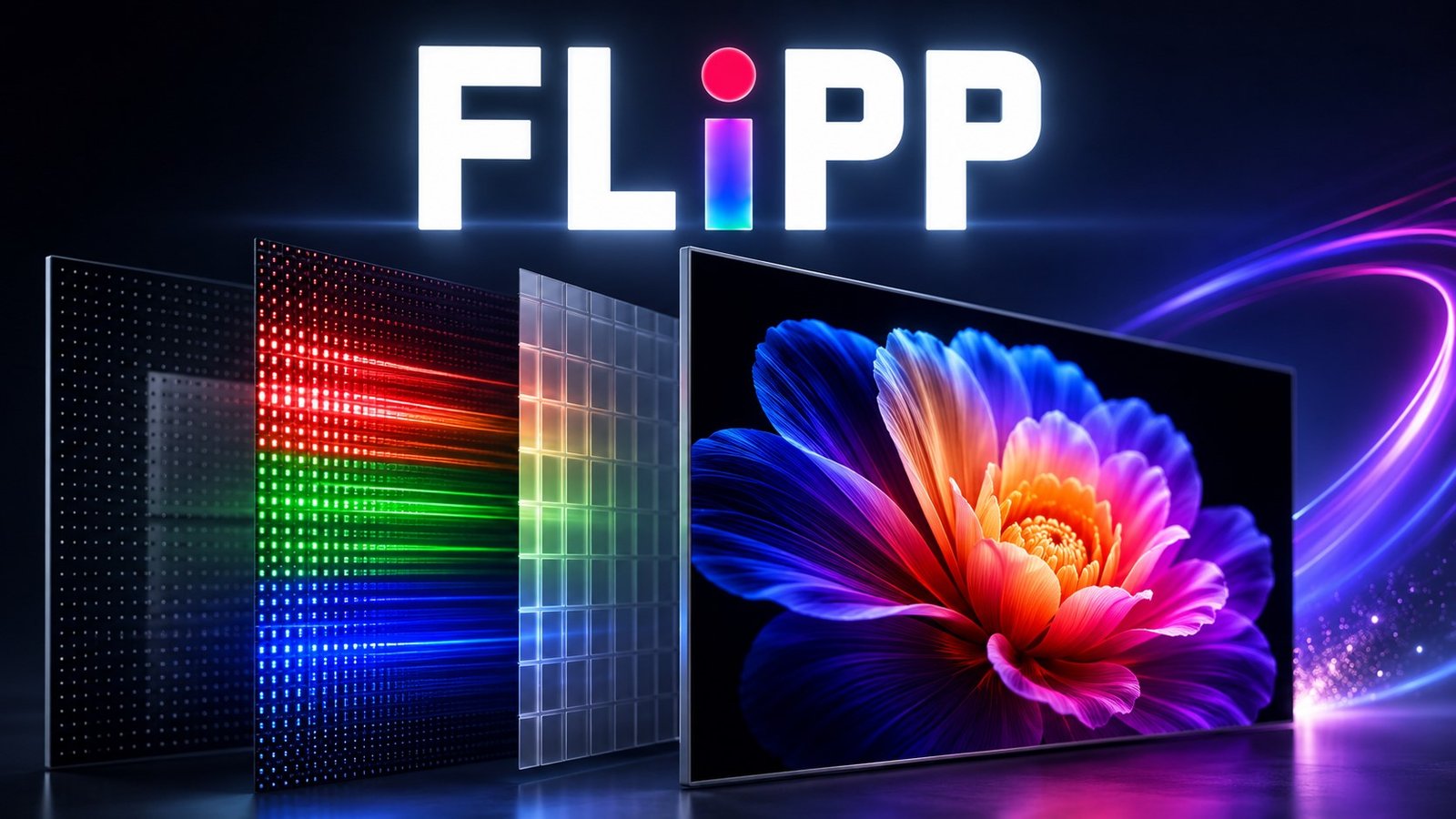
At the core of FLiPP’s innovation is its departure from the conventional FMM technique. Where FMM relies on extremely fine metal masks to deposit red, green, and blue organic materials onto a substrate, FLiPP employs a sophisticated photolithography-based patterning process. This involves sequentially coating RGB materials, precisely positioning them, and then utilizing a targeted ultraviolet light to remove unnecessary areas during the pixel-patterning stage.
LG Display emphasizes the inherent limitations of FMM, particularly with larger display sizes. "Large metal masks can sag under their own weight, which can cause alignment problems and color-mixing defects," a company spokesperson explained. Furthermore, FMMs require specific designs for different panel sizes and resolutions, adding layers of complexity and cost to the manufacturing process.
FLiPP directly addresses these challenges. By eliminating the need for bulky and delicate metal masks, the technology significantly improves the aperture ratio of OLED pixels. According to LG Display, FLiPP can achieve an approximately 55% higher aperture ratio compared to FMM-produced panels under identical conditions. This substantial increase in light-emitting area translates directly into tangible performance benefits.
The company reports that FLiPP-enabled panels can achieve 1.6 times higher brightness, a remarkable 2.4 times longer lifespan, and a 13% reduction in power consumption when compared to FMM counterparts. These improvements are crucial for a wide range of applications, from extending battery life in mobile devices to enhancing the visual impact of large-screen televisions and public displays.
Perhaps one of FLiPP’s most significant advantages lies in its manufacturing flexibility. The constraints imposed by FMM’s reliance on metal masks, especially when working with large mother-glass substrates, have historically limited the scalability of OLED production. FLiPP, by contrast, enables RGB OLED patterning on large substrates without the need for these restrictive metal plates, paving the way for larger and more cost-effective OLED panels.
While LG Display is showcasing FLiPP at IMID 2026, the company has yet to announce specific commercial products or provide a timeline for when consumers can expect to see this revolutionary technology integrated into displays. However, the unveiling of FLiPP marks a significant milestone in OLED development, promising a future of even brighter, more durable, and more efficient displays across various industries.
LG Display‘s continued investment in research and development solidifies its position at the forefront of display innovation, and FLiPP stands as a testament to its commitment to pushing the boundaries of what’s possible with OLED technology.