





Before marbles, stamps and trading cards, there were cicadas.
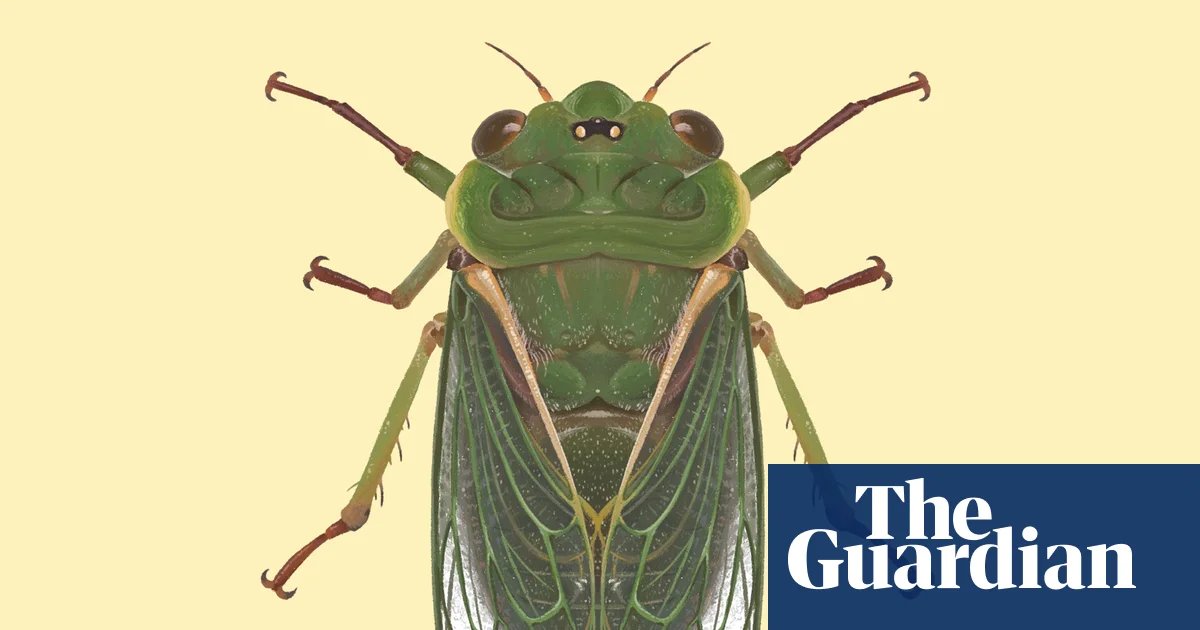
There are thousands of cicada species globally, but for Australian children the craze centres on one particularly collectible item: the greengrocer.
“In both Sydney and Melbourne, greengrocers come out every now and again in fairly decent numbers, and they’re coming out in leafy gardens and parks, quite close to where people are,” says the environmental consultant Dr Lindsay Popple. Searching for and collecting cicadas has become an activity firmly entrenched in children’s folklore, he says.
Most of their lives are spent as nymphs underground, but when they emerge in late spring, greengrocers are bright and abundant.
About the size of an eraser, this perfectly palm-sized minibeast comes in a variety of vividly coloured morphs, each with a nickname to match. There’s the yellow Monday, the masked devil, red warrior and chocolate soldier, and the appropriately rare, blue moon. Who wouldn’t want to collect them all?
Dom Yates, a Guardian reader from New Zealand, is a fan. “They sing joyously after living years underground so we should appreciate their happy efforts all the more,” he says.
Unlike the North American cicada, which emerges in a 17-year cycle, greengrocers materialise en masse in alternating batches, roughly at seven yearly intervals, with 2027 the next big event.
When cicada nymphs become adults, they shed their skins and grow wings, leaving behind their exoskeletons on trees and fences These are extra treasures for children to discover and stash inside lunchboxes.
Every cicada species has its own acoustic identity, Popple says, and the Australian greengrocer, found along the east coast in some of the most populated parts of the country, is one of the loudest.
Greengrocers produce two main tunes, one a continuous drone, and the other a kind of croaking pulse, using drum-like organs on either side of their bodies called tymbals, and amplifying the sound with their hollow abdomens.
Popple says the males broadcast at intervals throughout the day and often at dusk, trying to attract a mate. Its Queensland cousin, the northern greengrocer, is known as the “seven o’clock cicada” for its propensity to pipe up at dinnertime.
It’s a spectacular racket. “Close to them, it’s like being near a jet taking off, it’s really loud,” Popple says. “On a really, really, warm morning, if you get a really hot day, they can start up calling pretty early in the day, which can be a bit of a wake-up for some people.”
As the 16-year-old Guardian reader Matteo says: “They’re loud and gorgeous and they climb trees and shout. What’s not to love?” Indeed.
Greengrocer cicadas are among the loudest invertebrates on land, reportedly reaching volumes as high as 120 decibels at close range – that’s nearing the pain threshold for human hearing, according to the Australian museum.
In general, the closer you are the louder they sound.
But, perhaps luckily, if you get too close they’ll stop singing.
-
It’s invertebrate of the year again! From August 3-12, every day we’ll be celebrating one of the thousands of amazing invertebrates that our readers have nominated, and then, when you’ve got to hear about all of them, we’ll open the voting so you can choose your favourites. Don’t hesitate to get in touch with thoughts and ideas: email us at environment.desk@theguardian.com with Invertebrate in the subject line.