







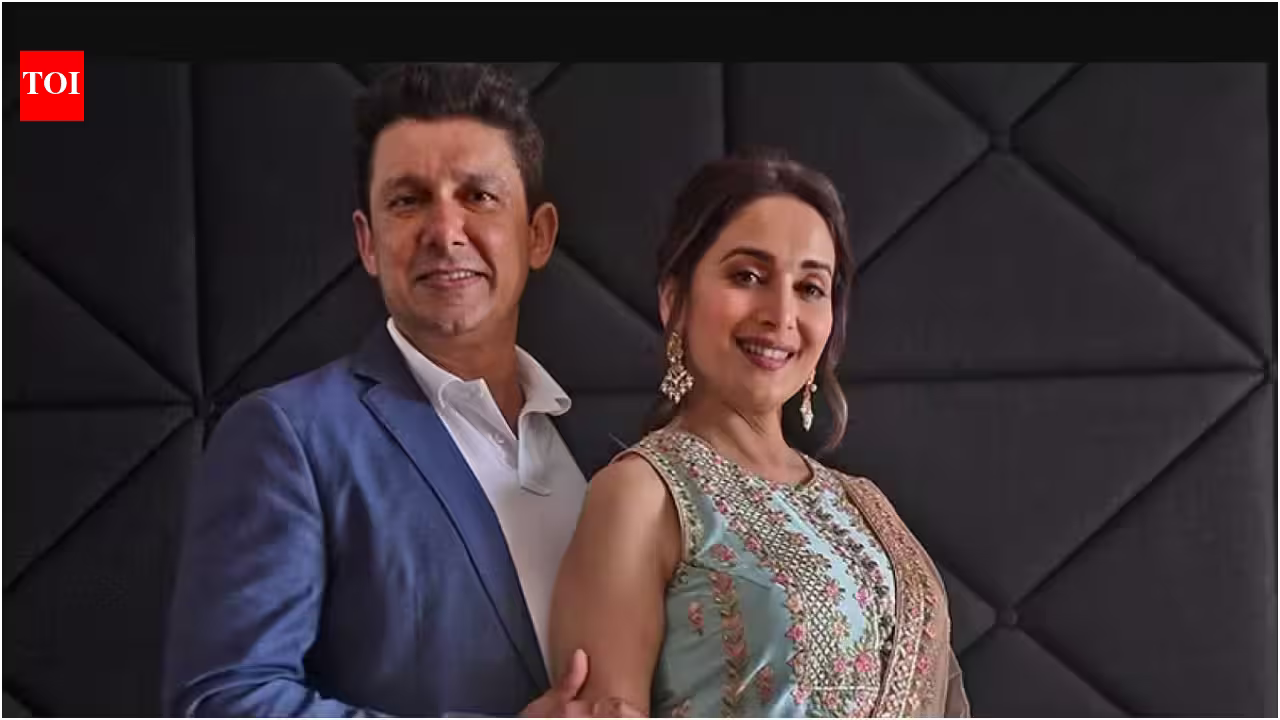
For millions of fans in the late 90s, the image of Madhuri Dixit was synonymous with the pinnacle of Bollywood stardom. She was the “Dhak Dhak” girl, a powerhouse of grace, rhythm, and unparalleled screen presence who commanded the box office with an effortless sway of her dupatta. Then, at the very zenith of her career, she did something that left the nation stunned: she stepped off the pedestal of fame and into the quiet, scrub-clad reality of a cardiovascular surgeon’s home in Denver, Colorado.
Looking back at the turn of the millennium, Madhuri’s marriage to Dr. Shriram Nene in October 1999 felt like a plot twist written for one of her own films. But as the actor herself later revealed in a candid, rare interview with the legendary Simi Garewal, the transition wasn’t a struggle—it was a liberation.
The 5:30 AM Wake-Up Call
In the dizzying world of Bollywood, mornings are often defined by vanity vans, makeup artists, and the relentless pressure of a camera lens. For the newlywed Madhuri, life in the United States offered a stark, refreshing contrast. Away from the flashing bulbs of Mumbai’s paparazzi, her days began long before the sun had fully risen over the Rockies.
“I used to make breakfast for my husband when he was in cardiovascular surgery,” Madhuri told Garewal, her eyes reflecting the warmth of those early years. “I used to wake up at 5:30, make breakfast for him, of course, he used to leave for work and I used to go back to sleep for some time.”
It is a jarring image for those who viewed her as a cinematic goddess—the woman who defined glamour, standing in a quiet American kitchen, peeling fruit or brewing coffee before dawn. Yet, there is a profound sense of peace in how she described it: “I savoured every minute of it.” That simple, domestic routine wasn’t a chore; it was the anchor for a life that was finally, and beautifully, her own.
A Meeting of Minds, Not Markets
One of the most intriguing aspects of the Madhuri-Nene dynamic was the deliberate lack of hierarchy. In an industry where everyone from the spot boy to the producers viewed Madhuri through the lens of her fame, Dr. Nene offered her something she hadn’t had in years: genuine anonymity.
When they first met, Dr. Nene hadn’t watched a single one of her films. He was a man of medicine, entirely detached from the manufactured mythos of Bollywood stardom. He saw a woman, not a brand. Madhuri admitted that this was exactly what drew her to him. They found common ground not in scripts or hit songs, but in their shared values.
“You always find some similarity when you meet a partner,” Madhuri reflected. “What he found about me was that I would go out of my way to do something.” It was a partnership of character. While the public obsessed over her grace on the dance floor, her husband was learning about her capacity for care—a trait that would later define their long and stable marriage.
Planting Roots in California
The wedding, held in Southern California, was a private, traditional affair that felt miles away from the glitz of a typical Bollywood nuptial. It served as the foundation for a life that allowed the actor to pivot toward motherhood. The birth of their sons, Arin in 2003 and Ryan in 2005, cemented her time away from the sets.
For years, the Indian audience could only speculate about her life across the ocean. There were no social media updates, no curated Instagram feeds—just the occasional tabloid report of the superstar living a “normal” life as a doctor’s wife and mother in a foreign land. It was a bold act of self-preservation that allowed her to return to the industry years later not as a fading star, but as a woman who had lived, loved, and grown away from the spotlight.
The Comeback and the Constant
The allure of the screen, however, is a persistent siren song. In 2007, the world saw the return of the queen with Aaja Nachle. It was a return to form, but it was also a different version of Madhuri—more grounded, more deliberate, and entirely in control of her craft.
Her return didn’t feel like a desperate grab for relevance; it felt like a seasoned artist deciding to share her talent on her own terms. Since then, she has navigated the changing landscape of Hindi cinema with ease, moving from the traditional theatrical releases of the 90s to the digital age of streaming. With projects like Netflix’s Maa Behen, she continues to prove that her longevity isn’t just about her legendary dancing or her million-dollar smile—it’s about her ability to evolve.
A Legacy Beyond the Spotlight
As we look at Madhuri Dixit today, appearing as a judge on reality shows or headlining prestige OTT projects, we see a woman who achieved the impossible: she successfully navigated the transition from “Bollywood Legend” to “Individual.”
Her memories of those quiet, pre-dawn mornings in America serve as a poignant reminder that even for the most famous among us, happiness is often found in the most mundane moments. She didn’t just survive her move to the U.S.; she thrived in it. By choosing to step away during her peak, Madhuri Dixit didn’t lose her crown—she simply proved that the person behind the stardom was, and always will be, more interesting than the character on screen.
She remains a testament to the idea that you don’t have to choose between a legendary career and a grounded, fulfilling personal life. Sometimes, with a little 5:30 AM discipline and the right partner, you can have both.
Disclaimer: This content is auto-generated for informational purposes only.
Source: Read Original News