
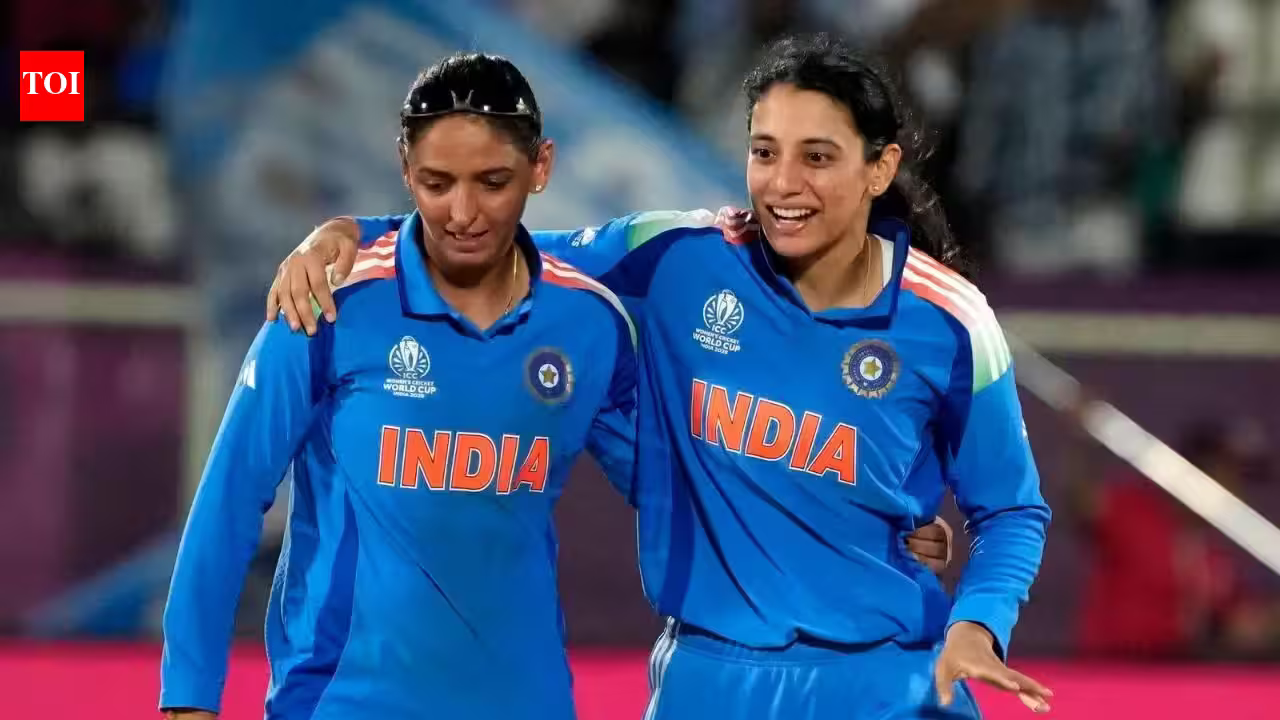

NEW DELHI: The landscape of Indian women’s cricket has officially shifted, signaling the dawn of a high-stakes, ambitious new era. In a major announcement on Tuesday, the Board of Control for Cricket in India (BCCI) confirmed that Smriti Mandhana has taken the reins as the full-time captain across all formats, stepping into the void left by the stalwart Harmanpreet Kaur. Complementing this transition, the board has strategically appointed Shafali Verma as the T20I vice-captain and Deepti Sharma as the ODI vice-captain, rounding out a leadership triumvirate designed to guide the squad through its next global cycle.
Harmanpreet Kaur, who has served as the backbone of the Indian team for years, has stepped down from the captaincy. However, the veteran remains a vital piece of the puzzle; she will continue to contribute her immense experience and tactical insight as a player, having been duly named in both the T20I and ODI squads for the upcoming home series against Zimbabwe.
A New Strategic Vision
The appointment of Smriti Mandhana marks a seamless passing of the torch. Having previously led India in 18 T20Is and four ODIs, Mandhana is no stranger to the pressures of the international stage. Her pedigree as a leader was solidified during her stellar tenure with the Royal Challengers Bengaluru, where she orchestrated back-to-back Women’s Premier League titles in 2024 and 2026.
“Being given the responsibility of leading India is a very special honour,” Mandhana stated in an official BCCI release. “Representing India has always meant a great deal to me, and to now have the opportunity to lead the team is something I will value deeply.”
Mandhana was quick to pay homage to her predecessor, recognizing the significant burden Kaur carried during her years at the helm. “I would also like to acknowledge Harmanpreet and the contribution she has made as captain over the years. She has led the team with great commitment and has been an important part of our journey.”
Empowering the Next Generation
The selection of Shafali Verma and Deepti Sharma as deputies is a calculated move to balance youthful aggression with calm, experienced stewardship. Shafali Verma, widely regarded as one of the most explosive openers in the modern game, has seen her influence grow rapidly since returning to the T20I setup. Her appointment as vice-captain signifies the management’s desire to inject dynamic energy into the team’s decision-making process.
Conversely, Deepti Sharma brings a veteran’s composure to the ODI format. As one of the world’s premier all-rounders, Sharma’s tactical awareness and familiarity with various match situations make her the perfect foil for Mandhana. By empowering these two, the selectors are clearly looking to build a collaborative leadership group capable of adapting to the rapid evolution of the women’s game.
The Zimbabwe Series: Testing Ground for the New Guard
The new leadership era faces its first test immediately with a six-match white-ball series against Zimbabwe. The T20I leg is scheduled to be played in Raipur on October 16, 18, and 20, followed by an ODI series in Vadodara on October 23, 25, and 28.
The squad selection reflects a blend of continuity and opportunity. In the T20I arena, the team sees the inclusion of Niki Prasad, Minnu Mani, Anushka Sharma, and Jintimani Kalita, all of whom impressed selectors during the recent grueling tour of Australia. Notable by her absence is Pratika Rawal, who drops out of the T20 roster to accommodate the fresh influx of talent.
The ODI squad presents a slightly different tactical composition. While Jemimah Rodrigues remains on the sidelines due to a hamstring injury, the team welcomes back Pratika Rawal and the talented Harleen Deol. Perhaps the most intriguing addition is Vaishnavi Sharma, who earned her call-up after a blistering six-wicket haul against Australia Women’s A, proving that domestic form is being heavily rewarded under the new regime.
As the team prepares to travel to Raipur, all eyes will be on the Mandhana-Verma-Sharma axis. They are not merely replacing a legend; they are tasked with cultivating a team culture that marries the grit of the past with a fresh, aggressive vision for the future. The Zimbabwe series will serve as the first chapter in this compelling story, offering fans their first glimpse into what this revitalized Indian side is capable of achieving on the world stage.
Disclaimer: This content is auto-generated for informational purposes only.
Source: Read Original News