



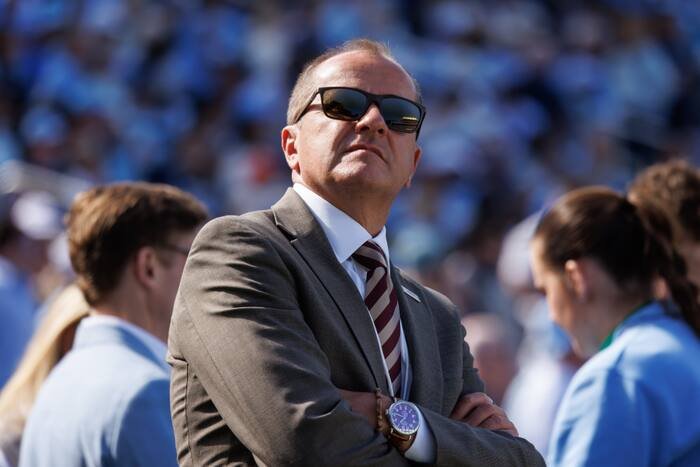
CHARLOTTE, N.C. – Atlantic Coast Conference Commissioner Jim Phillips is downplaying concerns after four of the league’s most prominent members petitioned Congress to weaken current restrictions on conference realignment.
Speaking Tuesday at the ACC’s preseason basketball media days, Phillips maintained a steady stance regarding a letter sent to House leaders by the presidents and chancellors of Clemson, Florida State, Miami, and North Carolina. The group is lobbying for amendments to the proposed “Protect College Sports Act,” which is currently moving through the federal legislative process after receiving U.S. Senate approval.
The four schools are seeking to raise the bill’s conference membership cap from 20 to 22 schools and, more controversially, to eliminate a clause that requires a departing school to remain independent for three years before joining a new conference.
The letter, first reported by Tomahawk Nation and verified by a North Carolina spokesperson, suggests a continued push by these institutions to maintain flexibility in an era of rapid industry change. However, Phillips expressed no public alarm, characterizing the communication as a standard exercise in institutional advocacy.
“We’ll continue to stay in contact with all the schools,” Phillips said. “My job is, again, to facilitate those conversations. At the end of the day, the people that have written the bill and are in charge of the bill, they can do what they think they should based on the information that they’re getting.”
The ACC has been in a period of intense legal and financial recalibration since 2023. Both Florida State and Clemson launched high-profile lawsuits against the conference to challenge the legality of massive exit fees. Those cases reached a settlement in early 2025, resulting in a restructured revenue-distribution model that rewards schools with higher television ratings—a move designed to bridge the growing financial chasm between the ACC and the Big Ten and Southeastern Conference.
Despite these efforts to stabilize the league, the 2030-31 season remains a critical horizon. Under the terms of the settlement, exit fees will gradually decline toward a $75 million floor as that date approaches, aligning with the expiration of media rights deals in other leagues. Analysts widely view this window as a potential catalyst for a new, industry-wide wave of realignment.
When pressed on whether the coordinated lobbying effort signaled an intent by these four schools to depart the ACC, Phillips declined to discuss “hypotheticals.” Instead, he pointed to the league’s current performance and collective growth as evidence of its stability.
“I’ve been very consistent: I have always tried to make sure that this was a conference that people wanted to be in,” Phillips added. “We’re as healthy as we’ve ever been. The conference is in a good place—healthy, functioning, achieving at a high level. We’ll see where all this takes us. You have to be ready for anything, but I feel good about where we’re at.”
Disclaimer: This content is auto-generated for informational purposes only.
Source: Read Original News