








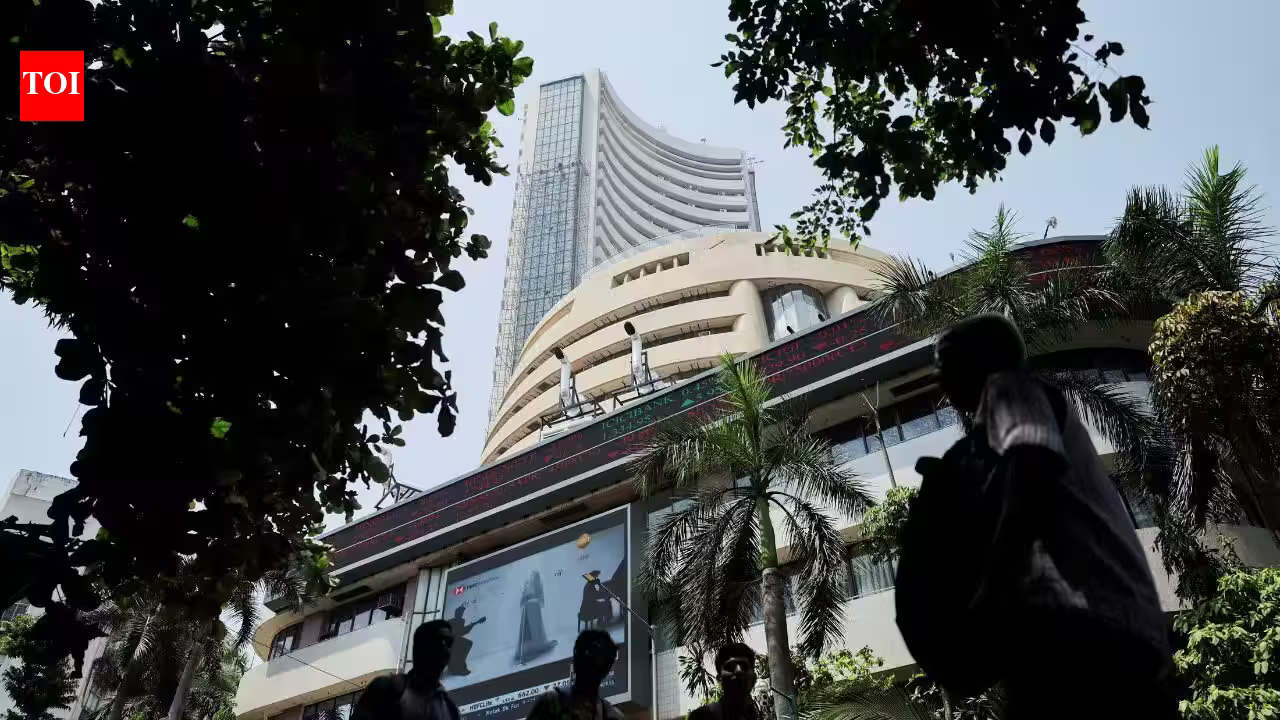
Market Volatility and the Geopolitical Risk Premium
The recent sharp downturn in the Indian equity markets, characterized by a significant correction in the BSE Sensex and Nifty50, serves as a poignant reminder of the fragility of investor sentiment when confronted with geopolitical instability. When major benchmarks shed over 1,100 points in a single session, it signals a systemic reassessment of risk rather than a mere profit-booking exercise. The core driver of this volatility is the intensifying conflict between Iran and the United States, a situation that exerts immediate pressure on global supply chains and energy security.
In the Indian context, the market is particularly sensitive to such developments due to the nation’s high dependence on imported crude oil. As tensions escalate in the Middle East, the global price of Brent crude tends to spike, creating a direct “import tax” on the Indian economy. When oil prices rise, the domestic manufacturing sector faces increased input costs, corporate margins shrink, and the fiscal deficit comes under scrutiny. Investors, anticipating a reduction in earnings per share for energy-intensive industries, rapidly reallocate capital toward safer assets. This flight to safety is further exacerbated by rising US bond yields, which draw foreign institutional investor (FII) capital away from emerging markets like India toward the perceived stability of the US dollar-denominated debt market.
The Mechanics of Wealth Erosion
The scale of the recent selloff, which saw approximately Rs 8.92 lakh crore evaporated from the combined market capitalization of BSE-listed companies, highlights the concentrated nature of wealth in the hands of institutional and retail participants alike. A market capitalization decline to Rs 474 lakh crore is not merely a number on a screen; it represents a psychological shift for millions of retail investors who have entered the Indian capital markets in record numbers over the last three years.
When indices fall by over 1.5 percent in a single trading session, it triggers automated sell orders and margin calls, compounding the initial decline. The Indian market has enjoyed a period of relative buoyancy, often decoupled from global headwinds due to strong domestic inflows via Systematic Investment Plans (SIPs). However, the intensity of this correction demonstrates that domestic resilience has limits. The erosion of nearly nine lakh crore in value forces a revaluation of portfolio compositions. Investors are now tasked with assessing whether this downturn is a temporary reaction to headline risk or the beginning of a sustained bearish trend driven by macroeconomic fundamentals such as persistent inflation and higher-for-longer interest rate regimes.
The Correlation Between Crude Oil and Domestic Inflation
India occupies a unique position in the global energy trade. As one of the world’s largest importers of oil, any geopolitical disruption in the Persian Gulf or surrounding territories translates into an immediate inflationary threat. The recent surge in crude prices complicates the Reserve Bank of India’s (RBI) monetary policy objectives. Should the geopolitical conflict persist, it will inevitably lead to imported inflation, potentially forcing the central bank to maintain elevated interest rates to stabilize the rupee and curb price pressures.
For businesses, this creates a dual challenge. First, high fuel costs lead to elevated logistics and transportation expenses, which are difficult to pass on to consumers in a demand-sensitive market. Second, the cost of borrowing for capital expenditure remains high, stalling the corporate investment cycle that is essential for long-term GDP growth. Analyzing the sectoral impact, it is clear that sectors such as aviation, paints, and oil marketing companies bear the brunt of these costs, while export-oriented sectors may find short-term relief if the rupee depreciates against the dollar. However, the net effect on the broader market remains negative, as the cost of capital generally impacts valuations across all sectors.
Foreign Institutional Capital and Global Yield Dynamics
The correlation between US bond yields and Indian equity performance is a critical indicator that warrants close scrutiny. When US Treasury yields climb, they offer a risk-free return that becomes highly attractive to global capital managers. As the “risk-free” rate rises, the relative attractiveness of Indian equities—which are considered “risky assets”—diminishes. This leads to a reversal of FII flows, often referred to as a “risk-off” environment.
The recent market correction underscores that Indian equities are not operating in a vacuum. Despite strong domestic macro indicators and resilient GDP growth figures, the Indian market remains susceptible to global liquidity conditions. When foreign investors pull liquidity out of the market to hedge against volatility or to capture higher yields in the US, the impact is magnified by the selling of large-cap stocks. This liquidity crunch is often what drives the sharp, indices-wide declines observed in the Sensex and Nifty50. For the Indian investor, this highlights the necessity of monitoring global macro indicators, such as the US 10-year Treasury yield, as closely as domestic earnings reports.
Strategies for Navigating High-Volatility Environments
In times of significant market turbulence, the primary objective for institutional and retail participants should be risk mitigation rather than speculative recovery. The recent event demonstrates that hedging strategies—such as utilizing put options or increasing allocations to gold and short-term debt instruments—are essential components of a robust investment framework. Furthermore, the reliance on high-beta stocks during periods of geopolitical uncertainty has proven to be a disadvantage. Investors who maintained a balance of defensive stocks—those with strong cash flows, low debt, and non-cyclical demand—likely navigated the crash with less portfolio degradation.
Looking ahead, the recovery of the Indian markets will depend on several variables: the containment of the Iran-US conflict, the stabilization of crude oil prices, and the subsequent trajectory of the Federal Reserve’s interest rate policy. Markets are inherently forward-looking, and while the current fear is driven by immediate headlines, the long-term trend in India is supported by robust demographic dividends and structural reforms. Nonetheless, the recent Rs 8.92 lakh crore correction acts as a sobering reality check. It emphasizes that while the growth story of the Indian economy remains intact, the journey toward maturity as a global financial powerhouse will be interspersed with bouts of significant volatility linked to global macroeconomic shifts. Investors who adopt a disciplined, long-term approach and maintain a diversified asset allocation are better positioned to weather these inevitable storms.
Disclaimer: This content is auto-generated for informational purposes only.
Source: Read Original News